
Meta Patents a Disambiguation System for Ray-Ban Glasses That Asks You to Clarify What You're Looking At
When you ask your smart glasses to do something with an object in front of you, they might not know exactly which one you mean — so Meta is filing a patent for a system that shows you a visual menu and asks you to pick.
What Meta's 'which object did you mean?' system actually does
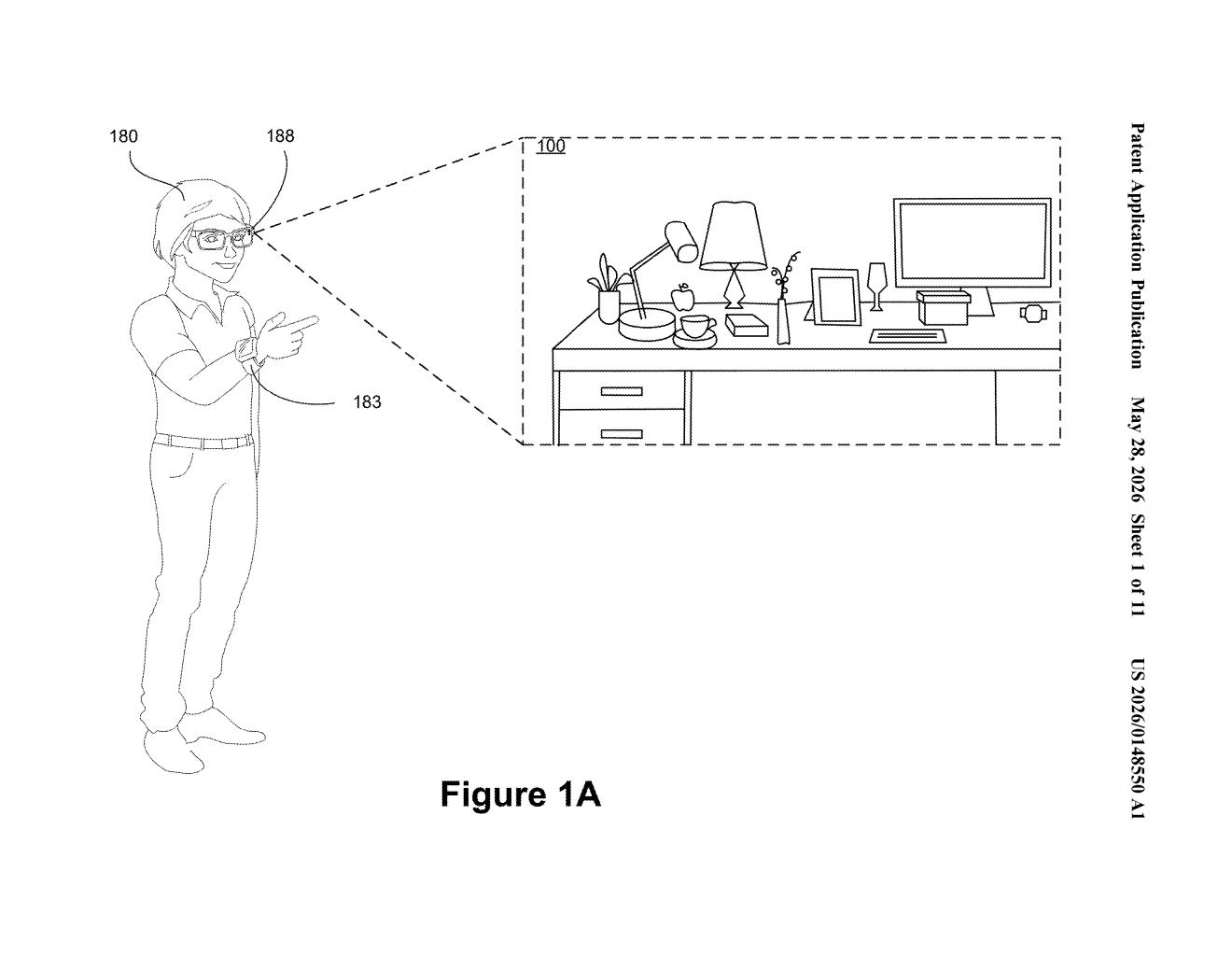
Imagine you're wearing smart glasses in a busy kitchen and you ask your AI assistant to look up the recipe on the box in front of you. There are three boxes on the counter. Your glasses see all of them — but they're not sure which one you meant.
That's the problem Meta is solving here. When your glasses can't confidently identify the target object you intended, they pop up a display showing you visual representations of all the candidate objects they spotted. You tap or select the one you meant, and the glasses carry on with the task — whether that's identifying a product, translating a label, or pulling up information.
It's a sensible UX fix for a real limitation. AI vision is good, but it's not telepathic. Rather than guessing wrong and frustrating you, or refusing to act at all, this system builds in a lightweight human-in-the-loop confirmation step. You stay in control, and the glasses stay useful.
How the confidence-score loop triggers a disambiguation overlay
The patent describes a pipeline triggered whenever a user issues a capture command — essentially a gesture or voice cue telling the head-wearable device to look at something and act on it.
Here's how the flow works:
- The device's cameras capture a point-of-view image from the user's perspective.
- A computer vision model identifies all objects visible in that image.
- The system computes a confidence score — a probability estimate of which object the user actually intended. If that score clears a threshold, the task runs automatically. If it doesn't, the device escalates to the user.
- When confidence is too low, representations of the candidate objects are presented on a display device (likely the glasses' own lens or a paired phone). The user selects the right one via a select input — think tap, gaze, or voice.
- With the target object confirmed, the original task is completed.
The patent is intentionally broad about what "tasks" means — it could be product lookup, translation, shopping, accessibility descriptions, or anything an AI assistant might do with a visual target. The display device is also deliberately vague, allowing for in-lens AR overlays or companion screens.
What this means for hands-free AI assistants on wearables
For AI-powered wearables, ambiguity is one of the core usability problems nobody talks about. A language model can handle an ambiguous question by asking a follow-up. Computer vision has no equivalent graceful fallback — it either guesses or fails. This patent gives Meta's glasses a structured way to handle uncertainty without breaking the user experience.
If Meta ships this in a future generation of Ray-Ban Meta smart glasses, it would meaningfully improve the reliability of object-aware AI tasks — the exact category of features Meta has been pushing hardest in its wearables roadmap. For users, the practical upshot is fewer wrong answers and less friction when the AI isn't quite sure what you're pointing at.
This is a quiet but genuinely practical piece of UX engineering. Meta isn't trying to make vision AI more accurate here — it's building a graceful fallback for when accuracy isn't enough. That's the kind of thinking that separates a frustrating product from one people actually use every day. Worth watching as Ray-Ban Meta glasses add more AI vision features.
There are more where this came from
We read every patent application Big Tech publishes and send you the ones worth knowing. Plain English, free, every week.
Want this weekly breakdown for a company we don't cover? Patentlyze Pro →