
Samsung Patents a Head-Worn Display That Adapts Its Input Mode to Whatever You're Holding
Samsung's new patent describes AR/smart glasses that can detect when you pick up a paired device — like a phone or controller — and automatically reconfigure how they accept input based on which sensors that device has.
What Samsung's auto-switching AR input mode actually does
Imagine you're wearing a pair of Samsung smart glasses. By default, they respond to hand gestures or head movements. Then you pick up your phone. The glasses notice — and instantly switch to using your phone's touchscreen as the control input instead.
That's the core idea here. The glasses identify a paired external device (your phone, a remote, a game controller) and read which touch sensors that device has available. Based on that, they shift from one input mode to another — so the controls always match whatever you're currently holding.
It's a bit like how your laptop automatically switches audio output when you plug in headphones, except here it's about how you control the headset, not what you hear. The goal is to make the transition feel seamless rather than requiring you to dig into a settings menu every time you pick something up.
How the headset detects grip sensors and swaps control modes
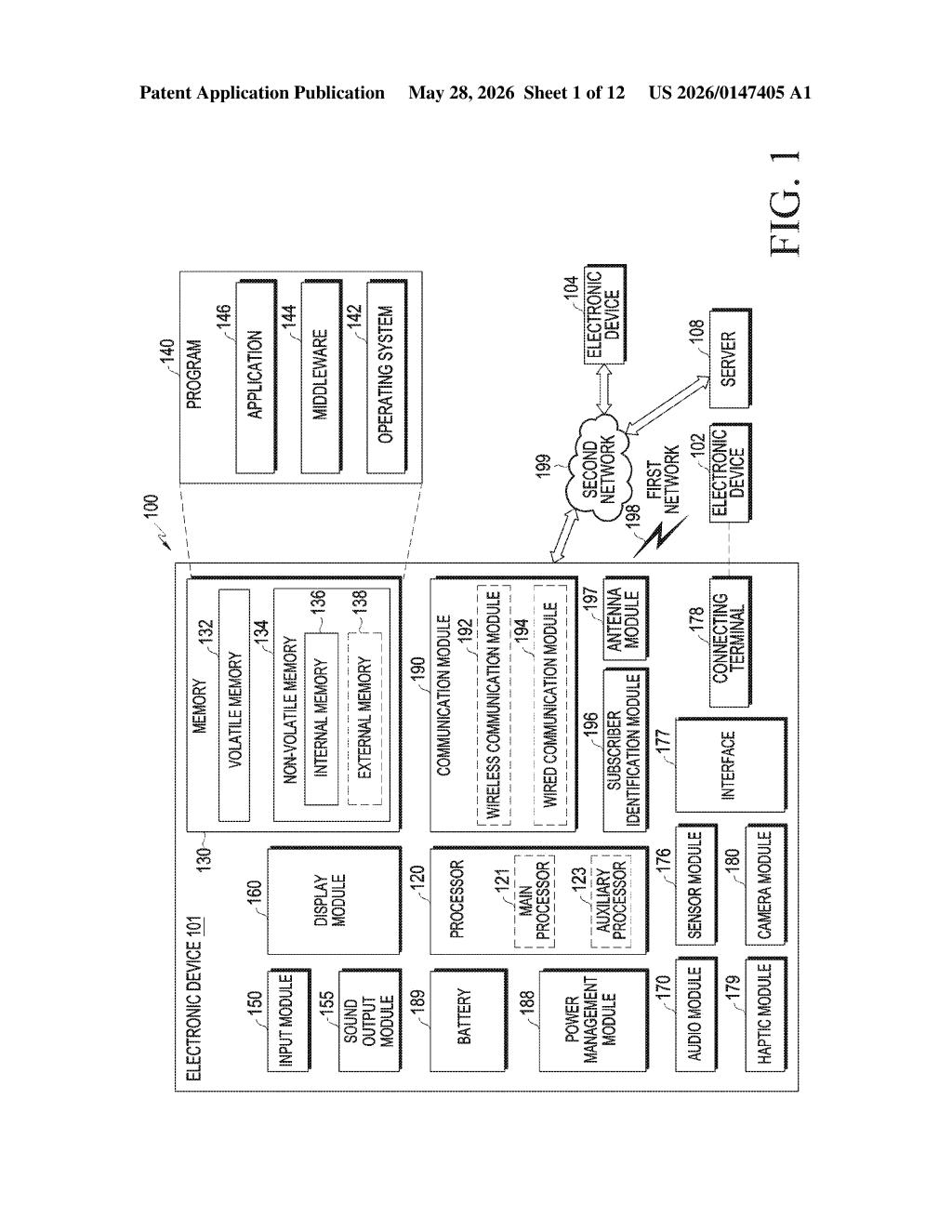
The patent describes a head-worn device with a camera, a wireless communication circuit, and a processor that monitors for paired external devices. The system operates in a first mode — some default input method, likely gestures or gaze-based control — while passively watching for a recognized external device to appear.
When it spots one, the headset requests sensor information from that device: specifically, which touch-sensing surfaces it has and how the user is gripping it. This could mean a phone's screen, a controller's grip sensors, or a stylus's pressure sensors.
- The headset identifies the external device (via camera or wireless pairing)
- It pulls sensor capability data over the communication link
- It maps those sensors to one of several pre-defined input modes
- It switches the active input method to match
The key technical nuance is that the mode selection isn't binary — the patent describes a plurality of modes, meaning the headset could behave differently depending on whether you're holding a phone flat, gripping a controller with two hands, or holding a stylus. The grip posture, not just the device type, appears to influence which mode is chosen.
What this means for Samsung's Galaxy glasses ambitions
For AR and mixed-reality headsets, input is still an unsolved UX problem. Air gestures are imprecise, voice is socially awkward, and dedicated controllers are bulky. A system that automatically hands off input control to whatever physical device you're already holding is a practical workaround that doesn't require new hardware.
Samsung has been building toward a Galaxy-ecosystem AR glasses product, and this patent fits neatly into a world where your Galaxy phone acts as a touchpad for your glasses without you ever opening a settings menu. If this behavior ships in a real product, it could meaningfully lower the friction of everyday AR use — which is exactly the kind of detail that separates a headset people actually wear from one that stays in a drawer.
This is a genuinely useful UX patent, not a speculative moonshot. The auto-switching input model solves a real and annoying problem in head-worn computing, and it's the kind of polish detail Samsung needs to nail if Galaxy glasses are going to compete with Meta's Ray-Bans and whatever Apple does next with Vision Pro. Worth paying attention to.
There are more where this came from
We read every patent application Big Tech publishes and send you the ones worth knowing. Plain English, free, every week.
Want this weekly breakdown for a company we don't cover? Patentlyze Pro →