
Adobe Patents an AI That Generates Content and Predicts Its Performance Simultaneously
Adobe's new patent describes a generative AI model that doesn't just create content — it predicts whether that content will actually work, all in one pass.
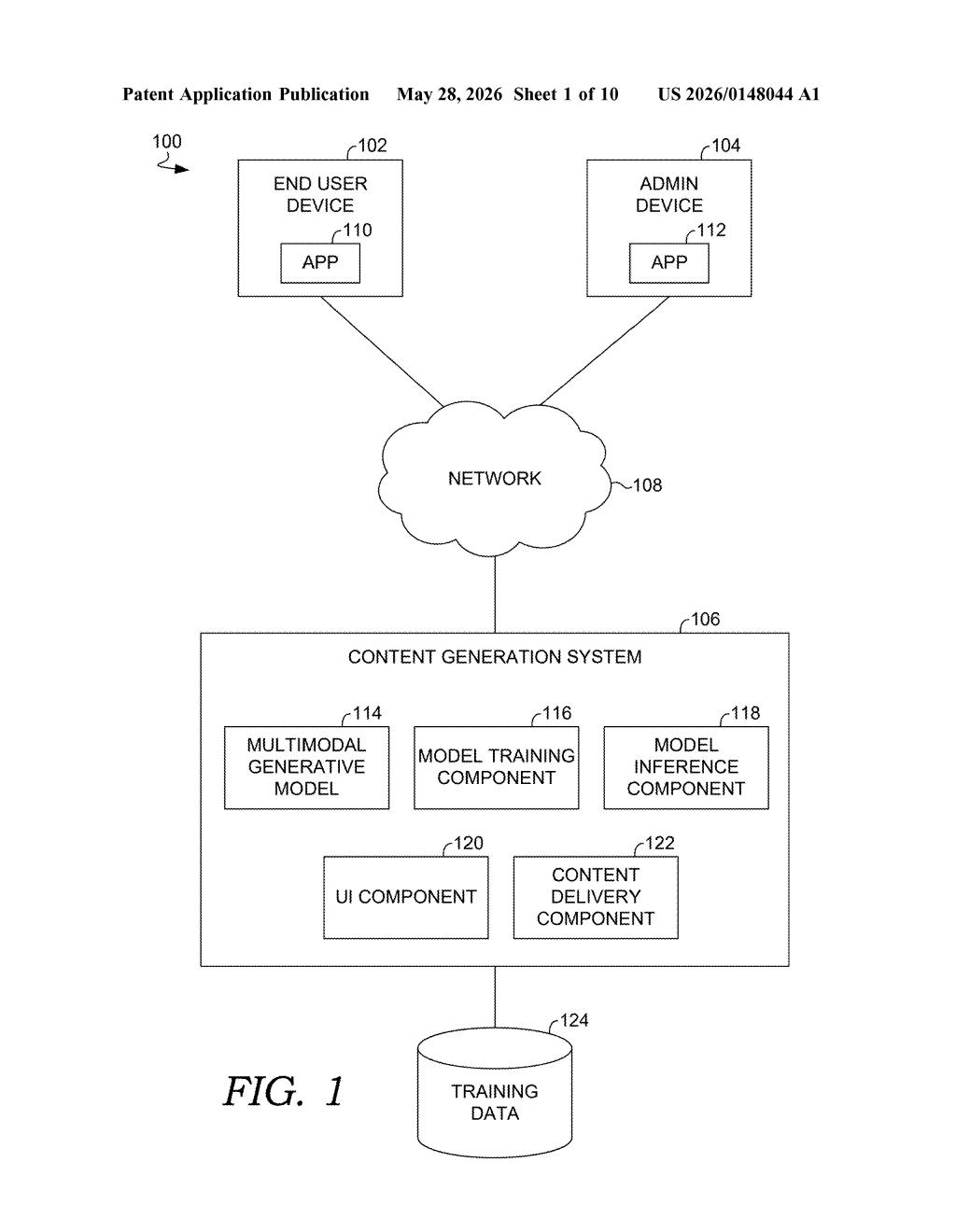
What Adobe's performance-guided content generator actually does
Imagine you're a marketer who needs to design a new banner ad. You could spend days A/B testing dozens of variations to see which one drives the most clicks. Adobe's patent describes a system that tries to skip most of that trial-and-error by predicting performance before you publish.
The idea is to train an AI on pairs of existing content — think ads or graphics — alongside their real-world performance data, like click-through rates or engagement scores. The model learns a shared mental map that connects what something looks like to how well it tends to perform. When you give it a new piece of content, it can explore variations that should, in theory, score better.
The output isn't just a new image or design — it comes bundled with a predicted performance score. So instead of picking a creative direction based on gut instinct, you'd have a data-backed estimate to guide your choices before anything goes live.
How the joint latent space links visuals to performance scores
At the core of the patent is a multimodal generative model with a joint latent space — a shared mathematical representation that encodes both visual content and performance metrics together. Training it on paired data (content + outcomes) forces the model to learn correlations between the two.
When you feed in a content item, one or more encoders compress it into a point in that joint latent space. A latent space transformation then moves that point — think of it like nudging a slider toward a region of the space associated with higher performance. The model doesn't just randomly explore; it navigates based on what the training data says performs well.
From that transformed point, two decoders run in parallel:
- A content decoder reconstructs an actual output image or design asset
- A performance metric decoder generates a predicted score (e.g., click-through rate, engagement) for that output
The key insight is that both outputs come from the same transformed representation, so the predicted score is directly tied to the generated content — not a separate post-hoc estimate. The patent also hints at interactive exploration, where users could navigate the latent space to browse a range of content variants along a performance gradient.
What this means for AI-assisted marketing creative
For anyone building or evaluating creative at scale — think large marketing teams, ad agencies, or e-commerce brands — the cost of A/B testing every variation is real. A system that co-generates content and performance predictions in a single model pass could meaningfully compress that feedback loop, letting teams focus testing budget on the most promising directions.
This also fits neatly into Adobe's broader push to embed AI throughout its Creative Cloud and Experience Cloud products. A tool like this would be a natural fit in something like Adobe Express or Adobe GenStudio, where marketers — not designers — are the primary users and performance data is already flowing in from campaign analytics.
This is a genuinely interesting architectural idea: training on content-plus-performance pairs so that generation and scoring share the same latent geometry. The real test is whether real-world performance data is clean and consistent enough to make those learned correlations meaningful — ad performance is notoriously noisy and context-dependent. But as a direction for AI-assisted creative tooling, it's a logical and well-motivated step for Adobe.
Get our take in your Top Stories
Liked this breakdown? Add Patentlyze as a preferred source on Google, and our plain-English take shows up more often in your Top Stories the next time Adobe patent news breaks.
There are more where this came from
We read every patent application Big Tech publishes and send you the ones worth knowing. Plain English, free, every week.
Want this weekly breakdown for a company we don't cover? Patentlyze Pro →