
Microsoft Patents an AI That Shuts Down Cyberattacks Without Waiting for a Human
Microsoft is patenting an AI model that doesn't just flag cyberattacks — it automatically disables the accounts, devices, and services involved, then uses what it learned to get better at stopping the next one.
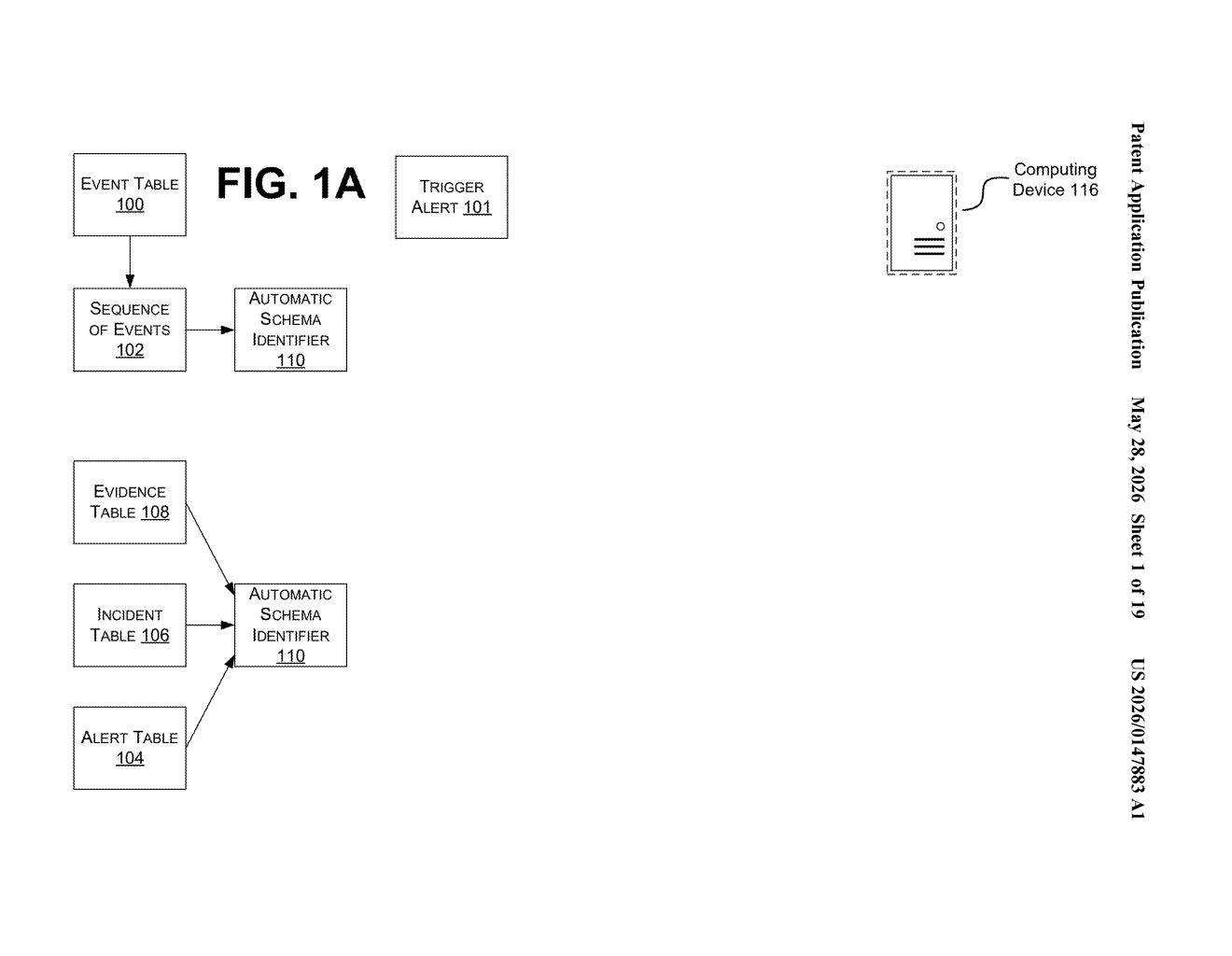
How Microsoft's AI spots and kills cyberattacks live
Imagine a security system that doesn't just send your IT team an alert when something goes wrong — it actually locks the doors itself, in real time, without waiting for a human to click anything. That's the core idea here.
Microsoft's patent describes an AI model that watches a stream of events across your organization's systems, identifies the fingerprint of a cyberattack as it's unfolding, and then automatically disables whatever accounts, devices, or services are involved in the attack. No ticket, no escalation queue — just an immediate shutdown.
What makes this interesting is the feedback loop. Every time the system disrupts an attack, that experience gets folded back into its training data. So the model learns from every real-world incident it handles, making it progressively harder for attackers to slip through using similar tactics.
Inside Microsoft's temporal attention model for threat detection
The system is built around a custom machine learning model that combines two complementary components: a feature extraction layer that looks at both recent and longer-term patterns in a stream of security events, and a temporal context-aware attention component — a modified version of the attention mechanism used in transformer-style models (the same basic architecture behind large language models).
The clever twist is in how positional encoding works here. Normally, attention models bake positional information (i.e., where in the sequence an event occurred) directly into the attention matrix as it's being built. This model generates the attention matrix first — without positional encoding — then combines the positional information afterward. That separation gives the model more flexibility in how it weighs the importance of events relative to each other over time.
Entities (think: user accounts, IP addresses, devices) are encoded by their entity type rather than their specific values. So the model learns "this pattern of behavior across an admin account, a server, and an external IP is suspicious" — without overfitting to a specific admin's username or a particular IP address. That's a meaningful design choice for generalization.
- Close-in-time feature extractor: catches fast-moving, burst-style attack patterns
- Long-term feature extractor: catches slow, stealthy lateral movement over hours or days
- Automated disruption: disables implicated entities without human intervention
- Continuous retraining: each disruption feeds back into future model training
What this means for enterprise security automation
The gap between detection and response is where breaches do their worst damage. Security operations teams are chronically overloaded, and alerts pile up faster than analysts can triage them. An AI that can act on a detection — not just report it — compresses that window dramatically. For large enterprises running Microsoft's security stack (Sentinel, Defender, Entra), this kind of automation could mean an attacker's lateral movement gets cut off in seconds rather than hours.
The self-improving loop is the other piece worth watching. Most deployed security models are static until someone manually retrains them. A system that continuously updates its training data from live incidents is structurally better equipped to keep pace with evolving attacker techniques — which is the actual hard problem in enterprise threat detection.
This is a genuinely substantive filing in the AI-security space, not a checkbox patent. The architectural decision to decouple positional encoding from attention matrix generation is a specific technical bet, and the entity-type encoding approach addresses a real overfitting problem that plagues signature-based detection systems. Microsoft's security division is already one of the largest in the world by revenue — this patent fits squarely into the trajectory of products like Microsoft Sentinel and Defender XDR getting more autonomous over time.
There are more where this came from
We read every patent application Big Tech publishes and send you the ones worth knowing. Plain English, free, every week.
Want this weekly breakdown for a company we don't cover? Patentlyze Pro →