
Nvidia Patents an AI System That Reads and Rewrites Contract Clauses Automatically
Nvidia is patenting an AI system that can scan contract templates, spot clauses that relate to each other across documents, and automatically rewrite them — no lawyer required for the routine stuff.
What Nvidia's AI contract-rewriting system actually does
Imagine your legal team manages dozens of contract templates — NDAs, vendor agreements, service contracts. When a law changes or your standard liability language gets updated, someone has to hunt through every template and manually find all the related clauses. It's tedious, error-prone, and slow.
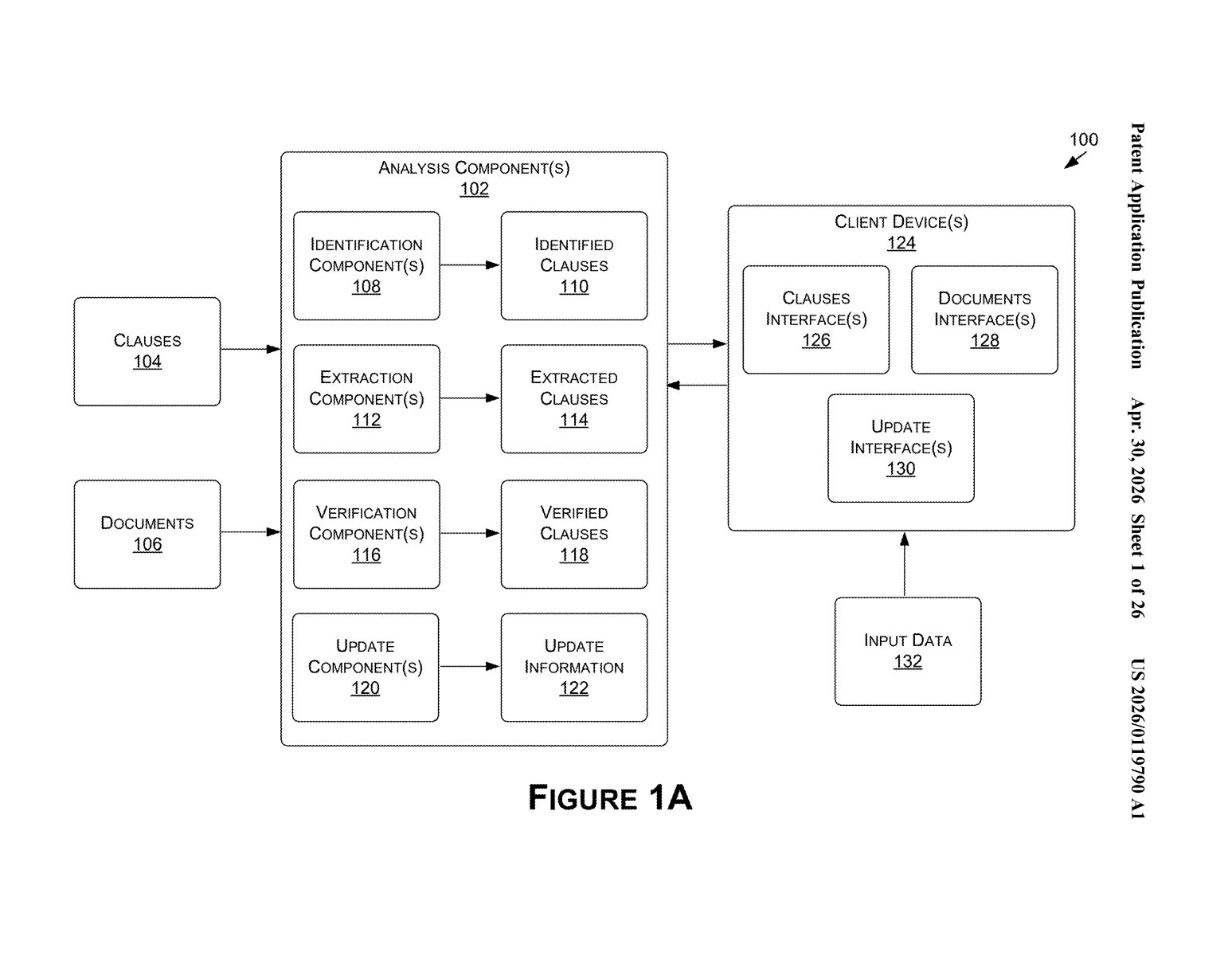
Nvidia's patent describes a system where an AI language model does that hunting for you. You feed it your existing templates and a set of updated clauses, and it figures out which old clauses are related to the new ones — then flags them in a user interface so you can review the connection.
Once you approve, the system automatically rewrites the old clause in your template to reflect the updated version. You stay in the loop (there's a confirmation step), but the AI handles the heavy lifting of matching and drafting.
How the language model detects and updates related clauses
The patent describes a method built around two inputs: template data (your existing contract templates with their clauses) and second clause data (new or revised clauses you want to incorporate).
A language model — think a large transformer-based model similar to the kind powering modern chatbots — analyzes both inputs and produces output indicating which clauses in your templates are semantically related to the new clauses. That's not just keyword matching; it's meaning-level comparison.
The system then surfaces those relationships in a user interface, letting a human reviewer see the match before anything changes. This human-in-the-loop step is explicitly part of the claim — the system receives an indication (a user approval or trigger) before proceeding.
Finally, the language model generates rewritten output: the original clause, updated to incorporate the new language. The whole pipeline is:
- Ingest templates + new clauses
- LM detects related clause pairs
- UI presents the relationship for review
- User approves the update
- LM rewrites the clause in the template
What this means for enterprise contract management tools
Contract lifecycle management is a massive, underserved enterprise software category. Most tools are glorified document stores. An AI layer that can semantically map clause relationships across a portfolio of templates — and then draft updates — would save legal and procurement teams serious hours on routine maintenance.
For Nvidia specifically, this is an interesting move. The company is clearly building out enterprise AI tooling beyond chips and training infrastructure. A patent like this signals they're thinking about vertical workflow applications — the kind of software that runs on top of their AI platforms and could be productized or licensed to large enterprises.
This is a genuinely useful patent for enterprise software, even if it's not the flashiest thing Nvidia has ever filed. Contract clause management is a real pain point, and an LM-powered system that handles the matching and drafting with a human approval step is a sensible, practical design. The interesting story here is Nvidia quietly filing AI application patents in legal-tech territory — that's worth tracking.
There are more where this came from
We read every patent application Big Tech publishes and send you the ones worth knowing. Plain English, free, every week.
Want this weekly breakdown for a company we don't cover? Patentlyze Pro →