
Google Patents AR Glasses That Stop Text From Vanishing Into the Background
If you've ever squinted at white AR text floating in front of a white wall and thought 'this is unreadable,' Google is apparently filing patents to fix exactly that.
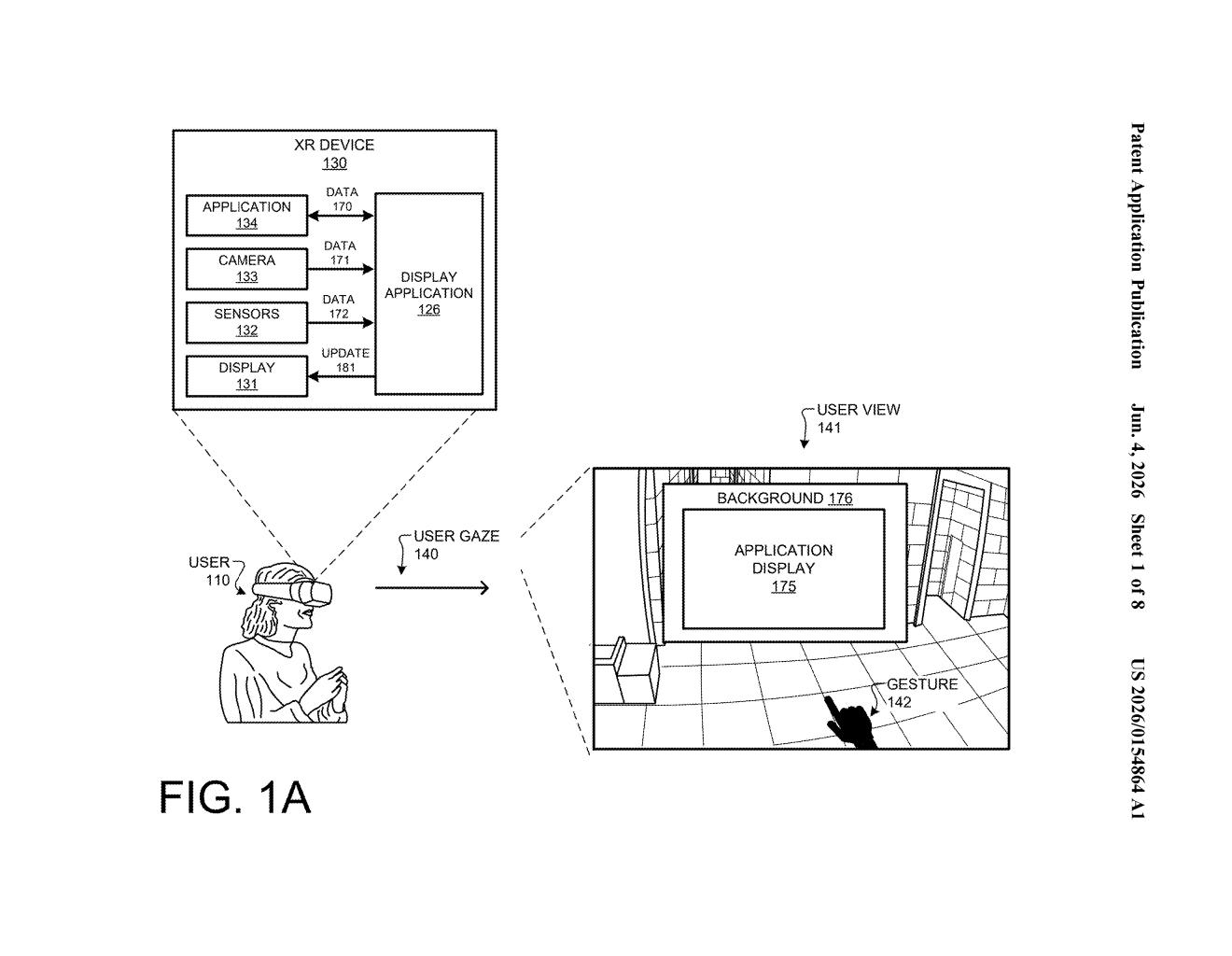
What Google's dynamic AR background system actually does
Imagine you're wearing AR glasses and a notification pops up — but it's floating in front of a bright window, making it nearly impossible to read. That's a real, everyday problem with see-through AR displays, and it doesn't have a clean solution today.
Google's patent describes a system where your headset looks at what's physically behind a virtual object — the wall, the window, the cluttered bookshelf — and then automatically generates a background to make that object legible and visually distinct. Think of it like the AR equivalent of your phone automatically switching to dark mode when the screen gets bright.
So instead of a floating white label that disappears into your beige carpet, you'd get a tasteful dark card behind it, or a blurred backdrop, or whatever the system decides will make it readable. The background adapts to your real environment in real time, not the other way around.
How the headset reads the scene behind each virtual object
The patent describes a three-step pipeline running on an extended reality (XR) device — think AR headset or smart glasses with a see-through display.
- Step 1 — Scene analysis: When the system gets a request to display a virtual object, it identifies the portion of the physical environment sitting behind the planned display location. It then reads one or more attributes of that scene — likely things like brightness, color, texture, or contrast level.
- Step 2 — Background selection: Based on those attributes, the system determines an appropriate background to pair with the virtual object. This could mean choosing a solid color, a frosted-glass blur, a shadow, or a dynamically generated panel that contrasts with the real-world scene.
- Step 3 — Composited display: The virtual object is rendered on the display with its computed background, not naked over the real world.
The claim language is broad — it covers any XR device where the virtual object's location sits between the user and the physical environment behind it. The patent doesn't specify a particular sensing modality (camera, depth sensor, etc.), leaving the implementation intentionally flexible.
What this means for Google's Android XR headset ambitions
AR readability is one of the most persistent unsolved UX problems in mixed reality — and it's not glamorous enough to get a keynote slide, but it quietly kills usability in real-world conditions. If Google is building this into a patent ahead of an Android XR device launch, it signals they're thinking seriously about the everyday ergonomics of wearing these things in varied lighting environments, not just polished demo rooms.
For you as a potential XR user, this is the kind of feature that would make the difference between a headset you wear all day and one that sits on a shelf. It's also competitively relevant: Meta, Apple, and Samsung are all chasing the same ambient computing vision, and legibility in unpredictable environments is table-stakes infrastructure for that future.
This is a quietly important patent. It's not a splashy AI feature — it's foundational UX work for wearable AR, the kind of thing that separates a polished product from a prototype. The fact that Google is filing this now, alongside its Android XR push, suggests they're sweating the details of everyday usability in a way that bodes well for whatever headset comes next.
There are more where this came from
We read every patent application Big Tech publishes and send you the ones worth knowing. Plain English, free, every week.
Want this weekly breakdown for a company we don't cover? Patentlyze Pro →