
Samsung Display Patents an OLED Wiring Layout That Keeps Every Pixel Electrically Equal
Uneven wiring capacitance is one of the subtle, hard-to-fix reasons OLED panels can show brightness gradients or color shifts — and Samsung Display has filed a patent for a structural fix baked right into the panel's layer stack.
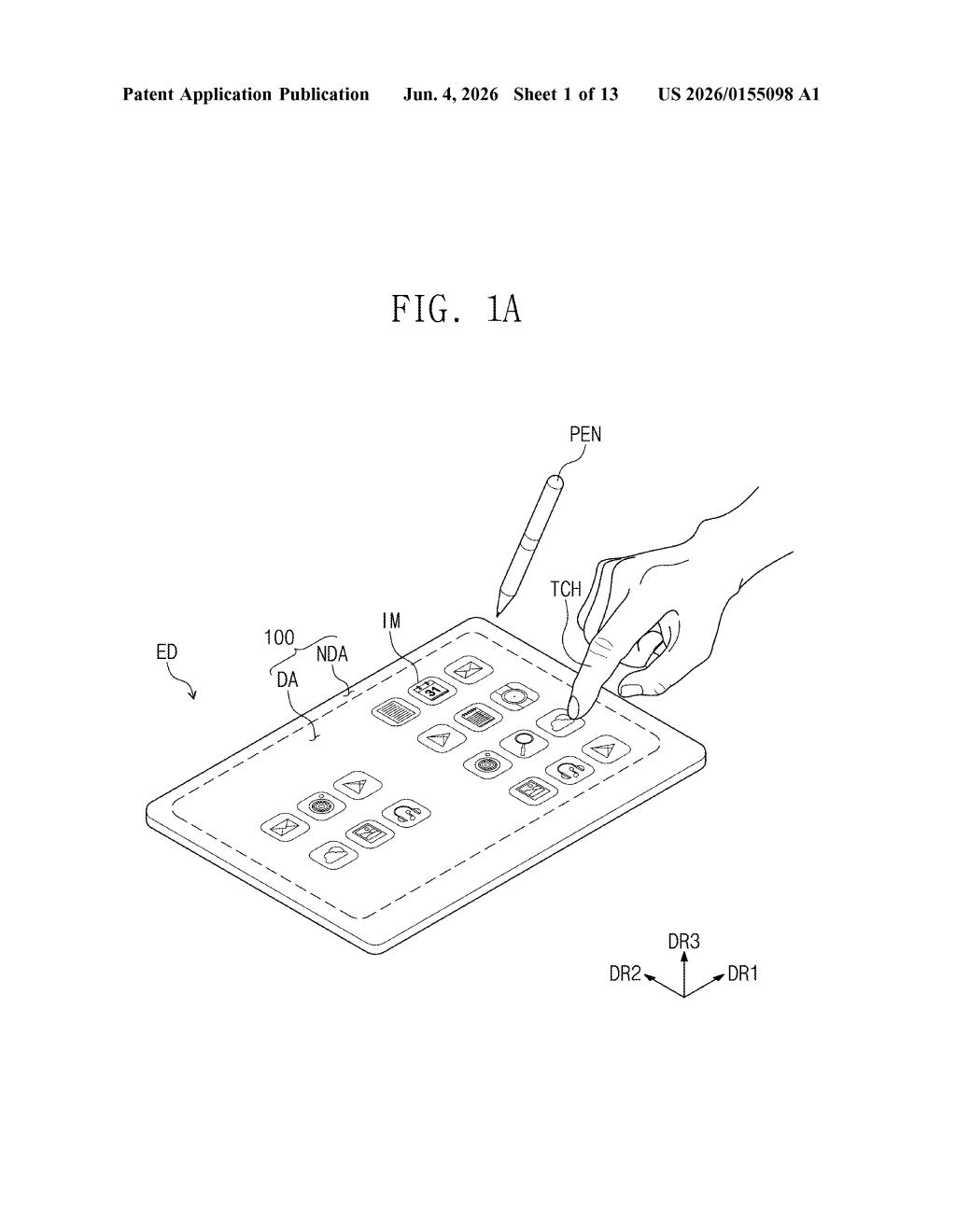
What Samsung's uniform-capacitance pixel wiring actually does
Imagine a long string of Christmas lights where the bulbs nearest the power plug glow slightly brighter than the ones at the far end. Something similar can happen inside OLED displays: the tiny electrical lines that feed each pixel travel different distances from the driving circuit, and that can create invisible imbalances that show up as uneven brightness or color across the screen.
Samsung Display's patent describes a panel architecture designed to neutralize that imbalance. The key idea is to sandwich all those pixel-feeding wires between two flat conductive layers — one above and one below — that each carry a steady, unchanging voltage. That sandwich arrangement keeps the electrical environment around every wire consistent, so each pixel sees the same capacitance regardless of where it sits on the panel.
The result, at least in theory, is a display where every pixel is driven with the same electrical precision from edge to edge. That kind of uniformity is especially valuable in large or foldable OLED panels, where the driving circuitry can't sit right next to every pixel it controls.
How the sandwiched conductive layers balance pixel line capacitance
The patent describes an OLED panel divided into three zones along one axis: a first area, a second area (where the driving circuit lives), and a third area in between. Light-emitting elements — individual OLED pixels — are spread across all three zones, but because the driver circuit can only sit in one spot, the connection lines that carry signals to pixels in distant zones are inevitably longer.
Longer wires pick up more parasitic capacitance (unwanted electrical charge storage that slows or distorts signals). The patent's solution is structural: all the connection lines are routed between two dedicated conductive layers. The first conductive layer sits below the lines and carries a fixed reference voltage; the second conductive layer sits above them and carries a second fixed voltage. Together they act like a controlled electromagnetic environment — a Faraday-sandwich of sorts — that keeps the capacitance each line experiences predictable and uniform.
Critically, the patent specifies that capacitances between the connection lines and the nearest pixel electrodes are uniform in the first direction — meaning as you travel across the panel, no pixel electrode is more or less capacitively coupled to its neighbor line than any other. The uniformity is a geometric property of the layer arrangement, not something corrected in software after the fact.
- First area: houses a second group of OLED pixels, farthest from the driver
- Second area: houses the driving circuit and a first group of pixels
- Third area: the bridge zone between them
- Connection lines: sandwiched between two fixed-voltage conductive layers for capacitance control
What this means for OLED brightness and color uniformity
Display uniformity is one of those specs that's invisible when it's right and infuriating when it's wrong. Panel makers already use compensation algorithms and calibration to paper over electrical non-uniformities, but those are software bandages on a hardware problem. A structural approach that equalizes capacitance at the physical layer could reduce how much post-processing work is needed — and potentially improve consistency at the edges of large, foldable, or rollable OLED panels where connection lines are longest.
For Samsung Display, which supplies OLED panels to its own Galaxy devices as well as Apple's iPhones and iPads, even incremental improvements in panel uniformity translate directly into yield and quality advantages at scale. This patent reads like foundational display engineering — the kind that quietly underpins better panels rather than being a headline feature.
This is unglamorous but genuinely important display engineering. Capacitance uniformity in pixel wiring is exactly the kind of problem that separates good panels from great ones, and solving it structurally rather than algorithmically is the right instinct. It won't make headlines at a product launch, but it's the sort of filing that shows up in the substrate of every premium OLED Samsung ships a few years from now.
There are more where this came from
We read every patent application Big Tech publishes and send you the ones worth knowing. Plain English, free, every week.
Want this weekly breakdown for a company we don't cover? Patentlyze Pro →