
IBM Patents a Way to Encrypt Live Databases Without Any Downtime
Encrypting a production database usually means taking it offline — sometimes for hours. IBM's new patent describes a way to do the whole job while users keep reading and writing, with no extra storage required.
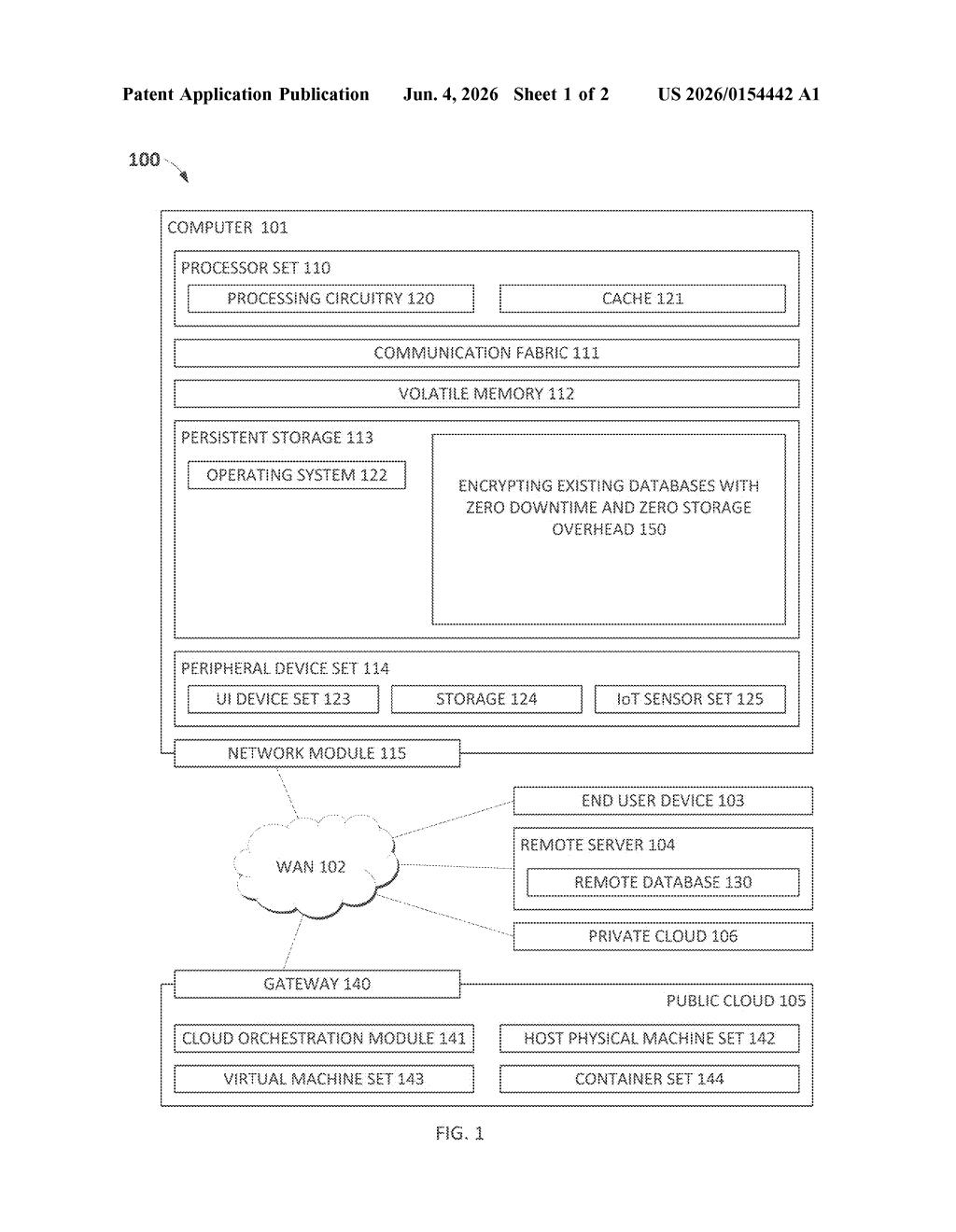
What IBM's zero-downtime encryption actually does
Imagine your company's database is like a library that never closes. Normally, if you wanted to re-key every book with a new lock, you'd have to shut the library down, move all the books, re-lock them, and reopen. That downtime is expensive — and for banks, hospitals, or retailers, it can be completely unacceptable.
IBM's patent describes a system that encrypts your database while it's still running. Instead of locking the entire database, the system grabs a small batch of data pages, encrypts them quickly, writes them back to disk, and releases its hold — all before most users even notice. It cycles through every table in the database this way, a few pages at a time, until everything is encrypted.
The clever part is the bookkeeping: each table and each individual page carries a tiny status flag so the system always knows what's been encrypted and what hasn't. If another process urgently needs a table, the encryption job politely steps aside and moves on to a different table — keeping normal database traffic flowing the whole time.
How IBM encrypts a database table page by page
The patent describes a method for incremental, non-blocking encryption of a relational database. Rather than encrypting all data at once (which would require exclusive access and cause downtime), the system works table by table, and within each table, processes only a configurable batch of data pages per lock cycle.
Here's the core loop:
- Build a work list of tables that need encryption, and record each table's encryption state in the database catalog (the internal directory of all tables and metadata).
- Each individual data page (a fixed-size chunk of rows stored on disk) also carries its own status flag — so the system can distinguish pages already encrypted from those still pending.
- The engine acquires a table lock (exclusive but brief), processes a small batch of pages, flushes them to disk, then releases the lock.
- If other transactions are waiting on that same table, the system yields — it drops the lock early and moves on to another table in the list, coming back later.
Because only a small batch is processed per lock cycle, lock-hold times stay short. Because the system re-uses existing page storage in place (overwriting encrypted data onto the same pages), no additional disk space is needed. The dual-status design — one flag in the catalog, one per page — is what allows safe, resumable progress across system restarts or crashes.
What this means for enterprises running 24/7 databases
For large enterprises — think financial institutions, healthcare systems, or cloud providers — encrypting a multi-terabyte production database is a serious operational event. Under traditional approaches, a maintenance window might mean hours of application downtime and temporary disk usage that can double storage costs. IBM's approach targets both problems simultaneously.
This also matters for compliance: regulations like HIPAA, PCI-DSS, and GDPR increasingly require data-at-rest encryption, and many organizations are still running legacy databases that were never encrypted at deployment. A zero-downtime path lowers the barrier to getting those systems into compliance without scheduling a weekend outage.
This is genuinely useful database engineering work — not flashy AI research, but exactly the kind of unglamorous infrastructure problem that costs enterprises real money and sleep. The dual-status bookkeeping scheme (catalog flag plus per-page flag) is an elegant solution to the crash-recovery problem that makes incremental encryption practical. IBM's database pedigree (Db2 goes back decades) means this has a plausible path to a real product.
There are more where this came from
We read every patent application Big Tech publishes and send you the ones worth knowing. Plain English, free, every week.
Want this weekly breakdown for a company we don't cover? Patentlyze Pro →