
Qualcomm Patents a Way for Wireless Network Nodes to Share Camera and Sensor Imagery for ML-Driven Positioning
Qualcomm wants wireless network nodes to pool their camera feeds, lidar scans, and RF sensor snapshots so that any node on the network can use that shared picture of the world to figure out where things are — without needing its own eyes.
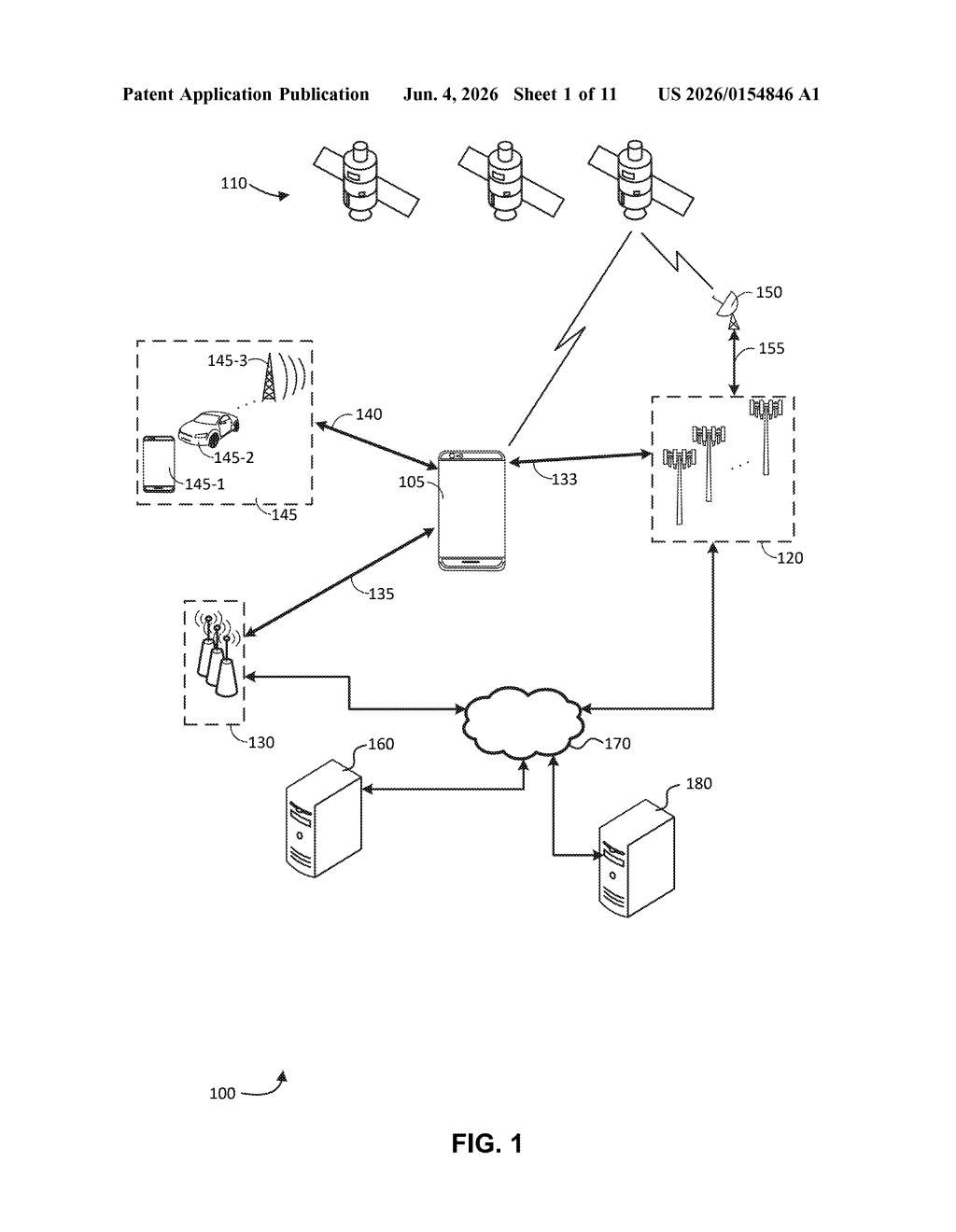
What Qualcomm's shared sensor imaging system actually does
Imagine you're in a large warehouse covered by a dozen wireless access points. Each one can only "see" the area directly around it — but together, they have a complete picture of the whole space. Right now, those access points largely keep that sensor data to themselves.
Qualcomm's patent describes a system where one node (think: a base station or access point with cameras and sensors) collects a rich image of the surrounding environment — using regular cameras, infrared or lidar optical sensors, or RF sensors — and shares that imaging data with other nodes on the network. Those other nodes then feed it into their own machine learning models to figure out where devices or objects are, or to detect what's happening in the space.
The end result: a node that has limited or zero direct sensor data can still make accurate positioning and sensing decisions, because it's borrowing the "eyes" of its neighbors. For dense wireless deployments — factories, stadiums, smart buildings — that kind of collaborative awareness could meaningfully improve how reliably a network tracks and positions things.
How the ML model consumes shared environment imaging data
The patent covers a two-node exchange: a first network node captures environment imaging information — a broad term covering visual imagery from cameras, non-visual data from optical sensors (like lidar or infrared), and RF sensor data — and transmits that data to a second network node.
The second node plugs that incoming imagery into its own machine learning model (a trained neural network or similar system) to produce outputs used for two specific tasks:
- Sensing operations — detecting objects, people, or events in the physical environment
- Positioning operations — estimating the precise location of devices or assets
The claim is deliberately broad about what counts as "imaging information." It includes conventional RGB camera frames, non-visual optical data (depth maps, thermal images), and RF-derived spatial data (think: channel sounding or radar-style scans). The key architectural idea is that the receiving node doesn't need its own sensor suite — it just needs the data and a model trained to interpret it.
This fits into the broader 5G/6G trend of "network-integrated sensing," where the radio infrastructure does double duty as a sensing layer, not just a communications layer.
What this means for 5G positioning and network sensing
Accurate indoor and dense-urban positioning is one of the genuinely hard problems in wireless networking — GPS doesn't work indoors, and existing Wi-Fi/5G positioning is imprecise. By letting nodes share rich, multi-modal sensor imagery and run ML inference on top of it, Qualcomm is describing an architecture that could make positioning far more accurate without requiring every node to carry expensive sensor hardware.
For industries like logistics, manufacturing, and smart infrastructure — where knowing exactly where a forklift, worker, or asset is at any moment has real safety and efficiency value — this kind of collaborative sensing network would be a meaningful step up. It also positions Qualcomm's modem and infrastructure chipsets as the natural home for this ML-sensing workload.
This is solidly interesting infrastructure work, not a flashy consumer feature. Qualcomm is quietly staking out IP in a space — network-integrated sensing and collaborative ML positioning — that will matter enormously as 5G private networks and 6G standards mature. The breadth of the sensor types covered (camera, optical, RF) gives the patent wide reach across deployment scenarios.
There are more where this came from
We read every patent application Big Tech publishes and send you the ones worth knowing. Plain English, free, every week.
Want this weekly breakdown for a company we don't cover? Patentlyze Pro →