
AR Glasses Patent Rethinks How Light Reaches Your Eye
Getting light from a tiny projector into your eye — through a thin piece of glass — is one of the hardest unsolved problems in AR glasses design. Google's latest patent tackles a specific version of that problem: what happens when the projector sits farther away from the glass than ideal.
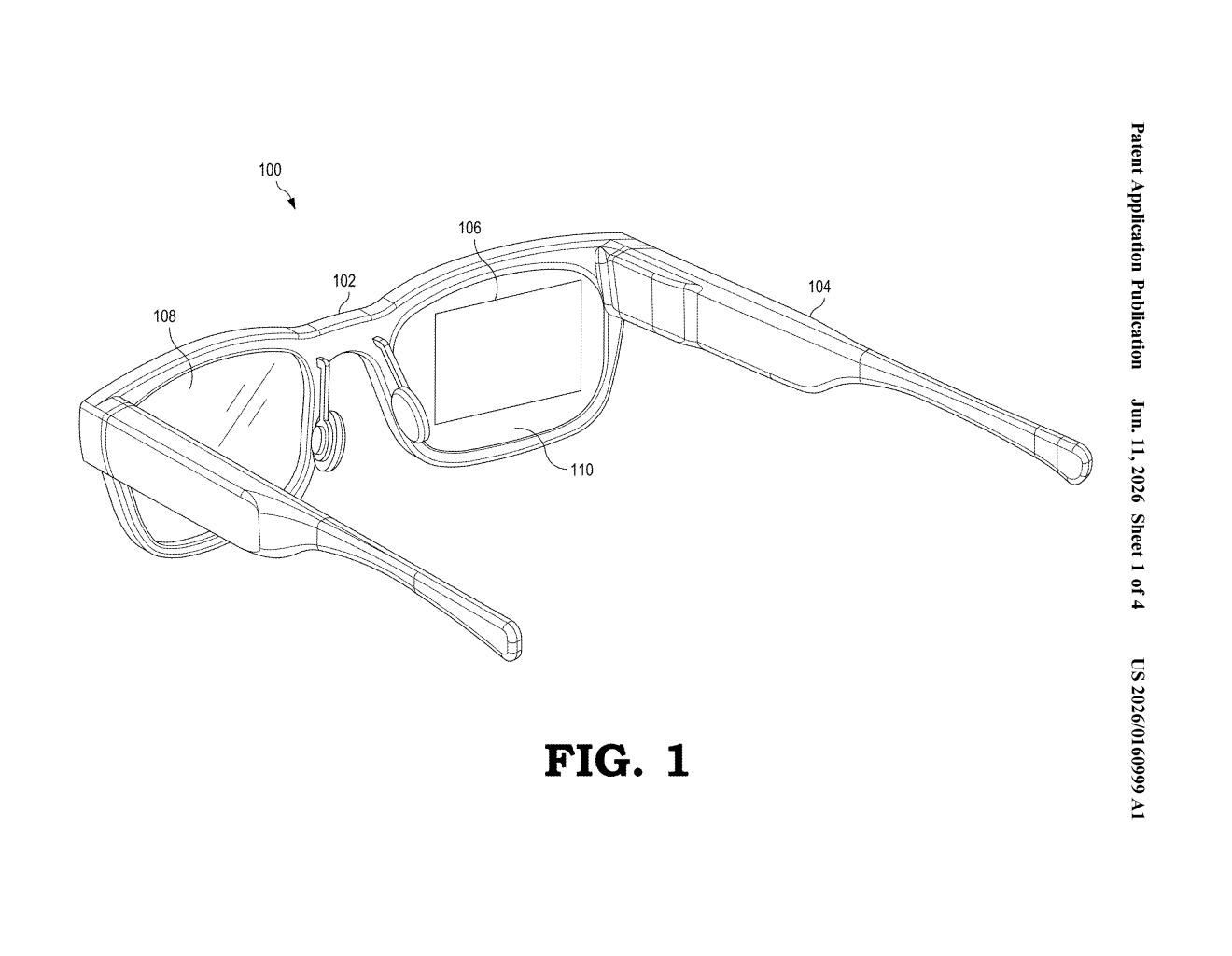
What Google's curved light-entry lens actually does
Imagine holding a flashlight an inch from a magnifying glass versus a foot away — the beam spreads out, and less of it passes cleanly through. AR glasses have the same problem. A tiny built-in projector (called a light engine) fires an image into a special piece of glass, which guides that light to your eye. But if the projector sits farther from the glass than the design expects, the image degrades.
Google's patent describes a specially shaped entry lens — flat on one side, curved on the other — that catches light coming in at a wider spread and corrects it before it enters the glass. Think of it like a funnel that tidies up messy incoming light before sending it on its way.
The practical upside is that the headset's projector doesn't have to be positioned with extreme precision relative to the lens. That gives hardware designers more flexibility in how they package everything — which matters a lot when you're trying to build glasses thin enough to actually wear in public.
How the semi-circular incoupler bends incoming light
The patent describes a lightguide — the thin, transparent slab in AR glasses that shuttles projected images from a light source to your eye. The key innovation is a redesigned incoupler: the part of the lightguide where light enters.
Normally, incouplers are designed around a very specific distance between the projector and the glass (called the working distance). Google's incoupler is built to handle a greater working distance — meaning the projector can sit farther from the glass without the image falling apart.
The incoupler has a semi-circular (half-dome) shape:
- The curved (non-planar) surface faces the projector and receives the incoming light
- The flat (planar) surface faces the interior of the lightguide and releases the corrected light inward
- The diameter of this lens is larger than the projector's exit pupil (the cone of light the projector puts out), so it captures the full spread even at distance
Once light exits the flat face, it travels through the lightguide body by internal reflection and reaches an outcoupler — a second optical element that redirects the light out of the glass and toward the user's eye. The curved entry surface effectively pre-bends the light so it travels correctly through the rest of the system.
What this means for the future of AR glasses comfort
AR glasses live or die on how thin and comfortable they can be — and one hidden enemy of thinness is optical precision. When every component has to be placed within fractions of a millimeter of every other component, the mechanical engineering becomes nightmarish and expensive. A design that tolerates more distance between the projector and the lightguide gives engineers room to breathe, potentially enabling slimmer frames or more modular assembly.
Google has been working on AR wearables for years, and patents like this suggest ongoing, detailed engineering work on the core optics — not just software or AI features. It won't show up as a flashy demo, but it's exactly the kind of plumbing that determines whether a product is actually wearable or just a prototype.
This is quiet, essential optics work — not the kind of patent that generates headlines, but exactly the kind that separates a real consumer product from a lab prototype. If Google is filing detailed patents on incoupler geometry and working-distance tolerance, it's a signal that someone is doing serious hardware engineering, not just concept sketches. Worth noting.
There are more where this came from
We read every patent application Big Tech publishes and send you the ones worth knowing. Plain English, free, every week.
Want this weekly breakdown for a company we don't cover? Patentlyze Pro →