Latest AI safety patents, Page 2
Watermarks, guardrails, moderation, and model protection: the filings where AI makers work out how to keep AI honest, and how to prove what's fake.
- in the Nov 19 release
- 3
- in November so far
- 3
- filings tracked
- 60
- last 90 days
- 19
Recent filings
Newest first · 60 total-
Google · Published Sep 24
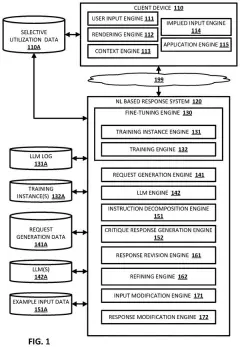
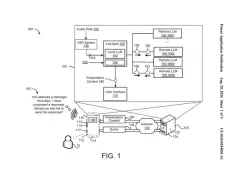
Google Patents a System That Makes AI Models Grade Their Own Answers
What if the AI you're talking to had a second AI looking over its shoulder, circling every mistake before you ever see the reply? That's the core idea in Google's latest patent filing.
-
Google · Published Sep 24
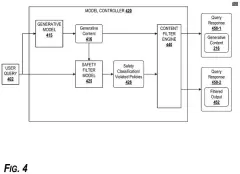
Google Patents a Lightweight Filter That Catches Harmful AI Responses Faster
Running a massive AI model to check the outputs of another massive AI model is slow and expensive. Google's latest patent describes a much leaner safety filter that can flag harmful content before it ever reaches you, without making you wait.
-
IBM · Published Sep 17
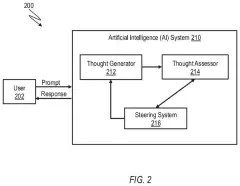
IBM Patents an AI That Grades Its Own Decisions and Learns From Them
Most AI systems repeat the same mistakes because they never actually learn from what happened after they gave an answer. IBM's new patent describes a loop that makes an AI check its own track record before acting, and update itself when things go wrong.
-
Google · Published Sep 17
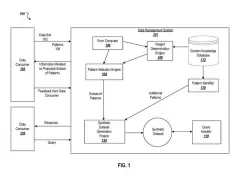
Google Patents a System for Building Privacy-Safe Fake Datasets From Real Data
Google has filed a patent for a system that creates realistic fake datasets, statistically accurate enough to be useful for analysis, without ever exposing the real personal information underneath.
-
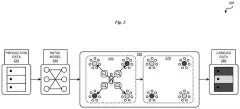
IBM · Published Sep 10
IBM Patents a System That Keeps Its Own AI Guardrails Sharp Using Live Data
Keeping an AI's content filters accurate over time is one of the quieter headaches in enterprise software. IBM has filed a patent for a system that watches real-world data flowing through a deployed AI, spots gaps in its own safety training, and updates itself without a team of engineers stepping in every time.
-
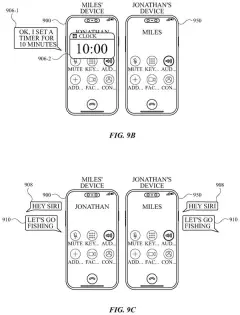
Apple · Published Aug 27
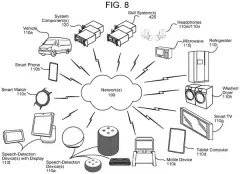
Apple Patents Siri That Shifts to Different Privacy Rules During Phone Calls
Apple wants Siri to know when you're on a phone call and automatically dial back what it shares or does with your data so the person on the other end of the line isn't accidentally looped in.
-
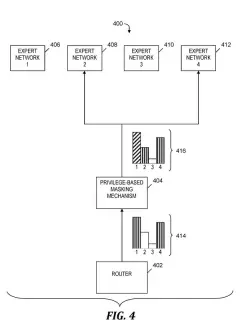
IBM · Published Aug 27
IBM Patents a Way to Give AI Models Built-In Security Clearances
IBM has filed a patent for an AI architecture that enforces security rules from the inside out, replacing unauthorized knowledge modules on the fly rather than filtering answers after the fact.
-
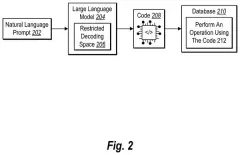
Adobe · Published Aug 20
Adobe Patents a Way to Stop AI From Writing Broken Database Code
When you ask an AI to write database code, it can confidently invent column names that don't exist. Adobe's new patent describes a guardrail system that physically prevents the AI from generating those kinds of mistakes.
-
Microsoft · Published Aug 20
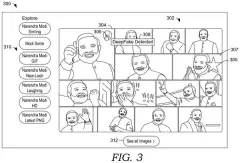
Microsoft Patents a Deepfake Detector That Checks Whether Physics Makes Sense
AI-generated images are getting hard to spot with the human eye, but they still have a tell: physics. Microsoft's new patent describes a detection system that asks whether the light, gravity, and materials in an image actually behave the way the real world requires.
-
Google · Published Aug 20
Google Patents a Two-Stage AI That Strips Your Personal Data Before Asking the Cloud
Google is patenting a system where the AI on your phone acts as a privacy filter, deciding whether a question is worth sending to a more powerful cloud AI and scrubbing your personal details before it does.
-
Google · Published Aug 20
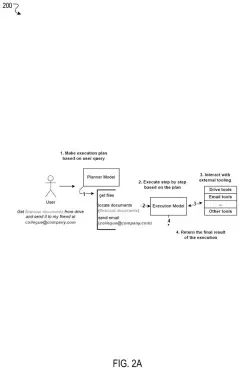
Google Patents a Security Gate for AI Systems That Call Outside Tools
AI assistants that can browse the web, run code, and call third-party apps are only as trustworthy as the guardrails around what data they hand off. Google's new patent describes a system that checks data-privacy rules before every single action an AI agent takes.
-
Amazon · Published Aug 20
Amazon Patents a System That Stops AI Chatbots From Spreading Harmful Content
Every AI chatbot has a bias problem baked into the people who talk to it. Amazon's new patent describes a way to intercept those problem inputs before the AI ever has a chance to run with them.