Latest AI safety patents, Page 4
Watermarks, guardrails, moderation, and model protection: the filings where AI makers work out how to keep AI honest, and how to prove what's fake.
- in the Nov 19 release
- 3
- in November so far
- 3
- filings tracked
- 60
- last 90 days
- 19
Recent filings
Newest first · 60 total-
IBM · Published Jul 9
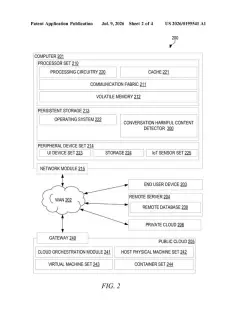
IBM Patents a System That Baits Its Own AI Chatbots Into Saying Harmful Things
IBM's new patent describes a system that deliberately tries to get an AI chatbot to say something harmful, and then uses every failure as training data to make the chatbot safer. It's a bit like hiring a professional hacker to find holes in your security before a real attacker does.
-
IBM · Published Jul 9
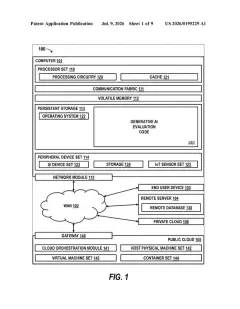
IBM Patents a System for Grading AI-Written Articles Against Human-Edited Ones
How do you know if an AI wrote something good enough? IBM is patenting a method that answers that question by measuring AI-generated articles against a human-edited benchmark, using geometry to quantify the gap.
-
IBM · Published Jul 9
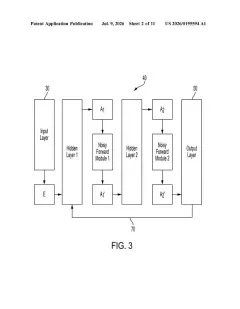
IBM Patents a Way to Protect AI Models by Feeding Them Controlled Noise
IBM wants to make AI models forget things they shouldn't remember, and the method involves deliberately corrupting the math happening inside the network at every step.
-
Google · Published Jul 2
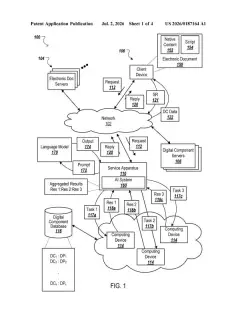
Google Patent Automatically Generates Ad Copy From Website Content
Google has patented a system that automatically reads a website, summarizes it, and uses that summary as a guardrail for writing ad copy with an AI language model. In plain terms: give Google a URL, and its AI writes ads that stay faithful to that page.
-
Google · Published Jul 2
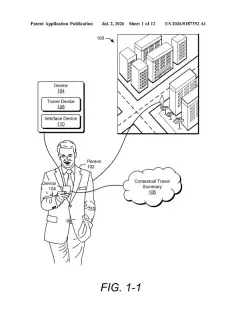
Google Patent Turns Live Location Data Into Plain-English Travel Summaries
Instead of staring at a moving dot on a map, you'd get a sentence: 'Sarah is on the highway, about 20 minutes from downtown, with moderate traffic ahead.' That's the core idea behind this Google patent.
-
IBM · Published Jul 2
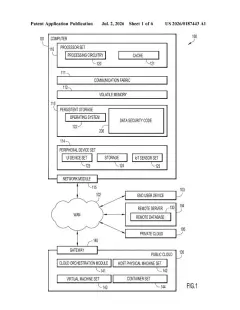
IBM Patents Software That Uses Cooperating AI Models to Spot Sensitive Data
Instead of trusting a single AI model to spot sensitive information, IBM's new patent describes a panel of AI models that check each other's work and vote on the final answer.
-
Google · Published Jul 2
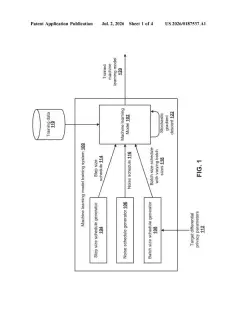
Google's New Patent Makes Private AI Training Far Less Expensive to Run
Training an AI model while keeping individual people's data genuinely private is expensive, and Google thinks it's found a way to make it significantly cheaper. This patent describes a training approach that caps the total computation at a level that scales linearly with the size of the dataset, rather than ballooning out of control.
-
Google · Published Jul 2
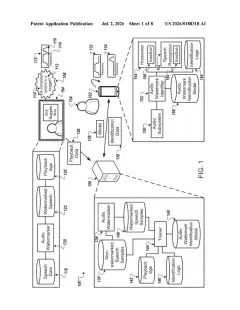
Google's New Patent Stops Its Smart Speakers From Talking to Themselves
If you've ever watched a Google Nest speaker respond to something it just said out loud, you've found the bug this patent is trying to fix. Google is patenting a way to watermark its own audio playback so its microphones know to ignore it.
-
Adobe · Published Jun 25
Adobe Patents a System That Invents Fake Users to Train Its AI Assistants
Training an AI assistant requires thousands of example conversations, but real user data is hard to collect and raises privacy concerns. Adobe's answer: make the users up.
-
Google · Published Jun 18
Google Patents an AI Training Method That Protects User Data Without Sacrificing Accuracy
Training a recommendation AI on real user data is a privacy minefield. Google's new patent describes a way to do it with mathematical privacy guarantees — and a million-times reduction in the amount of data the model has to process per step.
-
Amazon · Published Jun 18
Amazon Patents a Targeted System for Keeping AI Image Generators Clean
Most AI image safety filters work like a sledgehammer — block enough and you avoid bad outputs, but you also wreck perfectly innocent ones. Amazon's new patent tries a much more surgical approach.
-
Qualcomm · Published Jun 18
Qualcomm Patents Technology That Catches Its Own AI Errors to Speed Up Responses
Qualcomm has filed a patent for a technique that lets a single AI model draft its own answer in advance, check how wrong that draft was, and use both the draft and the error signal to produce a better final response — all in one pass.