Latest AI training & infrastructure patents, Page 20
The unglamorous machinery underneath: training methods, inference speedups, model compression, and the scheduling tricks that make AI affordable to run.
- in the Nov 19 release
- 8
- in November so far
- 22
- filings tracked
- 324
- last 90 days
- 123
Recent filings
Newest first · 324 total-
Samsung · Published Jul 2
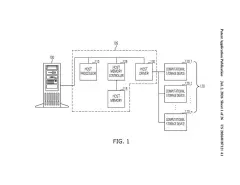
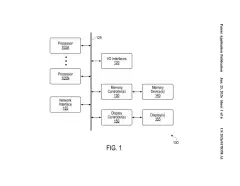
Samsung's New Patent Puts AI Inference Inside the Storage Drive Itself
What if your storage drive didn't just hold your data, but answered questions about it? Samsung's new patent describes a system where AI inference happens inside the drive itself, cutting out the expensive round-trip to a central processor.
-
Google · Published Jul 2
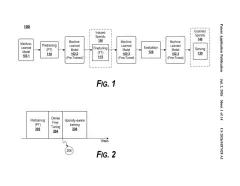
Google's New Patent Trains AI by Cutting Out the Numbers That Don't Matter
Most of the numbers inside a large AI model barely influence its answers. Google has filed a patent for a training technique that finds those useless numbers, zeros them out, and then trains the model again without them.
-
Google · Published Jun 25
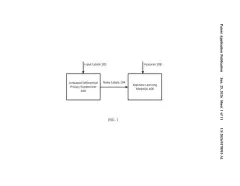
Google Patent Covers Training AI Models While Keeping Private Data Truly Private
Training an AI on sensitive data, like medical records or financial transactions, usually means the raw answers used to teach it are exposed somewhere. Google's new patent describes a way to scramble those answers before training even begins, so the model learns without anyone seeing the real data.
-
Meta · Published Jun 25
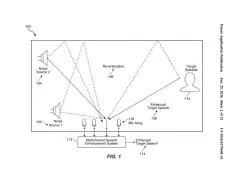
Meta Patent Uses Dual AI Models to Isolate Clean Audio Signals
Most audio cleanup tools treat noise removal as a single-step job. Meta's new patent splits the work across two AI models that were trained together to hand off the task in sequence, and that division of labor appears to produce cleaner results.
-
Nvidia · Published Jun 25
Nvidia Patents Software That Fills In Missing Data Points Using Gap Size as a Clue
Most AI models panic when data goes missing. Nvidia is patenting an approach that turns the size of the gap itself into a useful signal for making smarter guesses about what belongs there.
-
Samsung · Published Jun 25
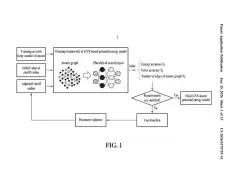
Samsung Patents an AI That Adjusts Its Own Settings to Model Molecular Behavior
Training an AI to predict how atoms behave is expensive and finicky. Samsung's new patent describes a system that figures out, on its own, how wide a lens the AI needs to see each atom's neighborhood, and then adjusts that lens mid-training.
-
Samsung · Published Jun 25
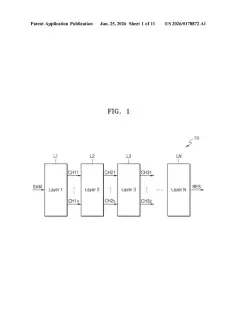
Samsung Patents a Layer-by-Layer Method for Compressing AI Models
Running a powerful AI model on a phone means making it smaller without making it dumb. Samsung's new patent tackles exactly that tradeoff, layer by layer.
-
Samsung · Published Jun 25
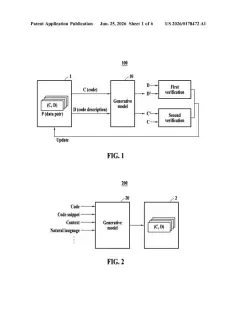
Samsung Patents a Double-Check System for AI Code Training Data
Garbage in, garbage out. Samsung's new patent tries to fix AI coding tools at the source by automatically weeding out training examples where the code and its description don't actually match.
-
AMD · Published Jun 25
AMD Patents Software That Teaches Computers to Run Programs in Smarter Order
Every time your computer runs a program, a compiler has to decide the exact order in which thousands of tiny instructions get executed. AMD thinks a neural network can do that job better than the hand-written rules engineers use today.
-
AMD · Published Jun 25
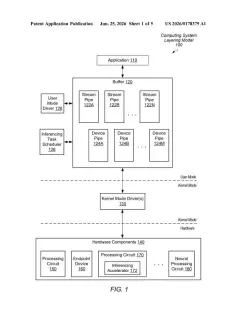
AMD Patents a System That Picks the Right AI Chip Based on Battery Mode
Not every AI task needs the fastest chip in the room. AMD's new patent describes a system that figures out which ones do, and which ones can run on a lower-power chip instead.
-
Samsung · Published Jun 25
Samsung Patents a Training Method for AI That Restores Corrupted Images
Samsung has filed a patent for a new way to train AI models to repair corrupted or degraded images, using a technique that works in the frequency domain rather than processing raw pixels directly.
-
Google · Published Jun 25
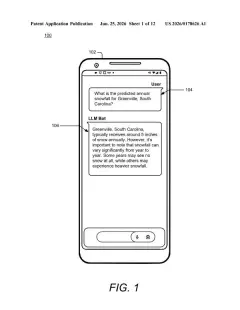
Google Patent Reveals Virtual Batch Processing to Boost On-Device AI Efficiency
When an AI model works through a complex answer, it generates dozens of intermediate steps that depend on each other in complicated ways. Google's new patent describes a way to map out those dependencies upfront and bundle the steps into tidy groups so the model can process them more efficiently, especially on a phone or tablet.