Latest AI vision patents, Page 26
Teaching machines to see: object recognition, gesture and gaze tracking, and the perception stack behind cameras, cars, and headsets. Every vision filing, decoded.
- in the Nov 19 release
- 13
- in November so far
- 27
- filings tracked
- 352
- last 90 days
- 170
Recent filings
Newest first · 352 total-
Samsung · Published Jun 11
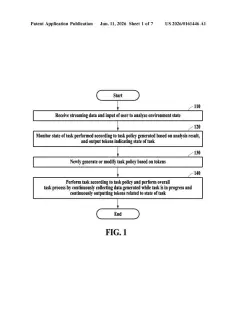
Samsung Patents an AI That Rewrites Its Own Task Plan Mid-Execution
Most AI assistants make a plan and stick to it — even when things go sideways. Samsung's new patent describes a system that watches its own work in real time and rewrites the plan the moment it detects something isn't going right.
-
Samsung · Published Jun 11
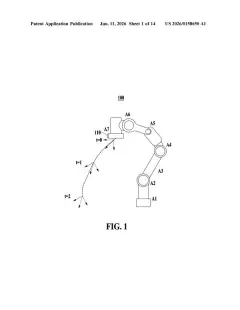
Samsung Patents an AI That Figures Out How to Unstick a Frozen Robot
Robots get stuck. A robot arm might freeze mid-task with no obvious way forward — and without human help, it just stays stuck. Samsung's new patent describes an AI that detects that freeze and figures out the best way out on its own.
-
Nvidia · Published Jun 11
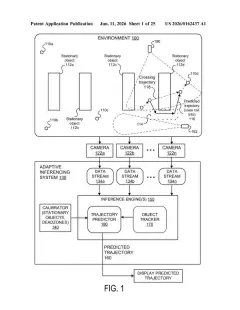
Nvidia Patents AI That Tracks Objects After They Vanish Behind Obstacles
A camera can only see what's in front of it — but a person or vehicle doesn't stop existing just because it walks behind a wall. Nvidia is patenting an AI system that predicts where objects go even when they're completely hidden from view.
-
Nvidia · Published Jun 4
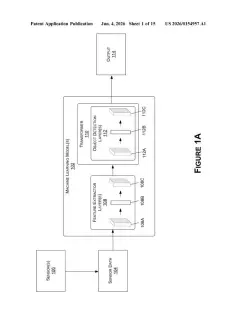
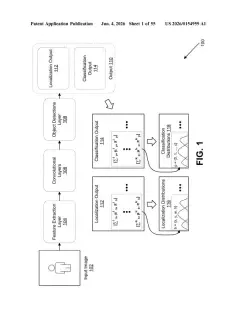
Nvidia Patents an Object Detection AI That Skips Fine Detail Without Losing Accuracy
Most object detection models process everything they see at every resolution — Nvidia's new patent argues you can skip the fine-grained layers entirely and still get accurate results, just faster.
-
Nvidia · Published Jun 4
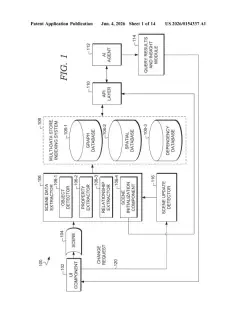
Nvidia's New Patent Builds an AI That Won't Stop Looking Until It Sees the Full Picture
Most vision AI systems look at a scene once and move on. Nvidia's new patent describes an agent that keeps interrogating its own understanding — looping through queries until it's sure it hasn't missed anything.
-
Nvidia · Published Jun 4
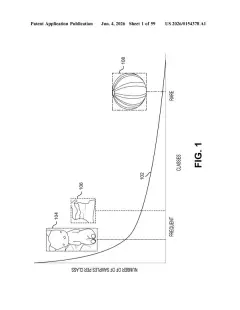
Nvidia Patents a Way to Teach AI to Spot the Things It Almost Never Sees
AI vision models are only as good as their training data — and when certain objects appear rarely in that data, the model learns to overlook them. Nvidia's patent targets that blind spot directly.
-
Nvidia · Published Jun 4
Nvidia Patents an AI That Spots Objects by How Much They Stand Out from the Crowd
Instead of asking 'what is this?', Nvidia's patent asks 'how different is this from everything else?' — a subtle but potentially useful shift in how neural networks approach object detection.
-
Google · Published Jun 4
Google Patents an AI That Runs Full-Strength on a Phone Chip
Google is patenting a neural network blueprint that does more with less — squeezing strong image-recognition performance out of architectures thin enough to run on a smartphone chip.
-
Google · Published Jun 4
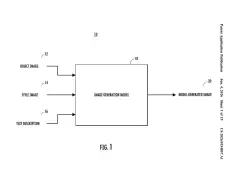
Google Patents an AI That Fits Real Objects Into Any Art Style Without Losing Their Details
Imagine taking a photo of your coffee mug and asking an AI to place it inside a watercolor painting — without the mug losing its shape, logo, or handle. That's the specific problem Google's latest patent is solving.
-
Nvidia · Published May 28
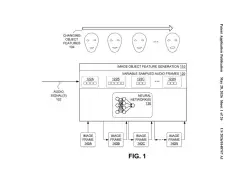
Nvidia's New Patent Teaches Machines to See Objects by Listening to Them
Nvidia is patenting a way to use neural networks to extract image-like object features directly from audio — essentially letting a system 'see' objects by listening to them. It's an unusual cross-modal trick that could matter for robotics and autonomous perception.
-
Nvidia · Published May 28
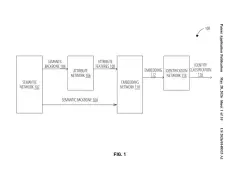
Nvidia Patents an AI That Spots the Same Person Across Different Cameras
Nvidia has filed a patent for a system that can recognize the same person across different camera feeds — even when the angle, lighting, or distance changes — by building a rich AI 'fingerprint' of their appearance.
-
Nvidia · Published Jun 4
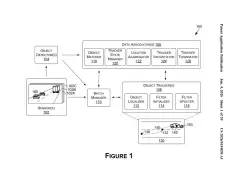
Nvidia Patents a GPU-Parallel System for Tracking Multiple Objects Across Video Frames
Keeping track of dozens of moving objects in a live video stream is one of the hardest problems in computer vision — and Nvidia thinks running it all in parallel on a GPU is the answer.