
A weekly read of what the world’s biggest technology companies just told the U.S. patent office.
Every Thursday, the U.S. Patent and Trademark Office publishes a fresh stack of applications from the biggest names in tech. Most are routine: defensive claims, incremental variations, legal groundwork. But a patent application is still a company putting in writing, at real expense, what it believes is worth protecting next, and the claims go public years before the products do.
This week brought another heavy drop. We wrote up 233 filings, with Samsung out front at 44, then Sony with 39, Google with 27, and Qualcomm with 22. The full run lives under this week’s Big Tech patents; these fifteen stood out.
1. Meta Patent Would Use Facial Recognition Cameras to Log Your Every Move
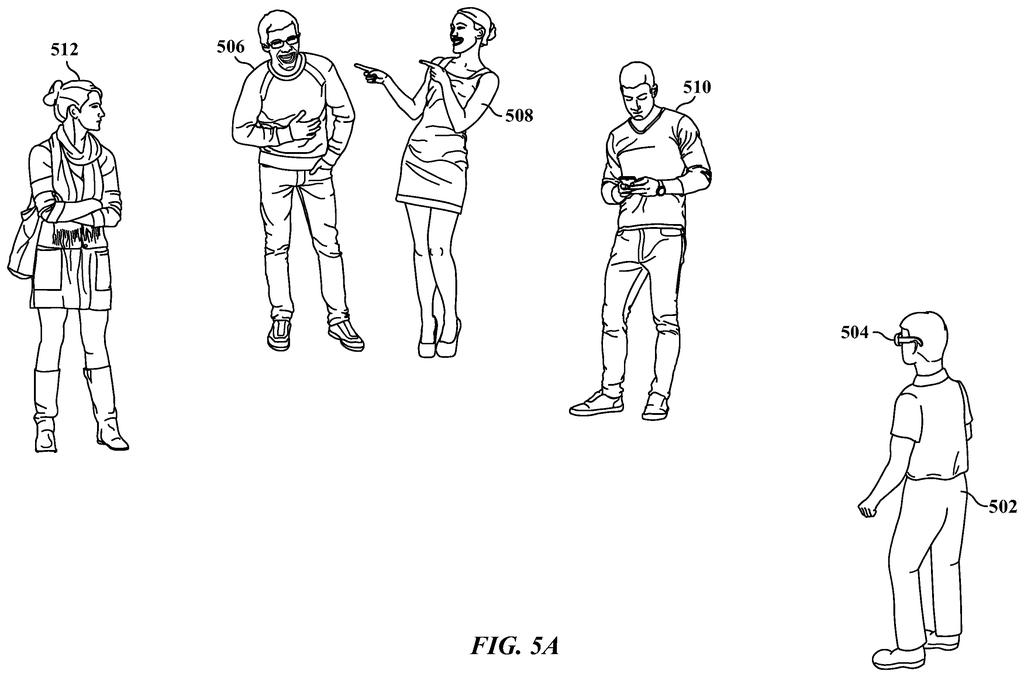
Security cameras record everything and surface nothing. Something happens, and a human scrubs hours of video to find it. Meta has filed for a camera system that identifies who is in the frame and clips what they did, managed end to end by an AI assistant.
Facial recognition puts a name to each person in the shot. A second layer classifies what they are doing: picking something up, leaving a room, gathering. The system then cuts labeled clips, “Lisa, picked up object, 2:14 PM,” and serves them to your phone or headset on demand. No timeline, no scrubbing, just a ready-made record of who did what.
The filing comes from Meta Platforms Technologies, the same entity behind the Ray-Ban glasses and Quest headsets, and that is where the story sharpens. On a doorbell, this is convenience. On a wearable camera pointed at strangers who never agreed to be recognized, it is something else, and regulators are already circling that distinction.
2. Microsoft Patents a Way to Clone Anyone’s Voice Into a Foreign Language
Dubbed films replace the actor’s voice with a stranger’s, because until recently there was no other way. Microsoft has patented a system that takes a short recording of anyone’s voice and speaks a different language in it, keeping the pitch, rhythm, and character intact.
The model treats audio the way a text AI treats words, breaking sound into small tokens. Hand it three things, a voice sample, a sentence in the speaker’s own language as an anchor, and the foreign text you want spoken, and it generates the speech. The system is zero-shot: no enrollment, no hours of training audio, a single short clip from a voice it has never heard.
That could rewrite the economics of dubbing and localization. It also makes misuse dramatically cheaper, and the filing has nothing to say about that half of the ledger. Microsoft is betting that good enough from one sample beats perfect with setup. For both halves, it is probably right.
3. Apple Patents Unfakeable Audio Alerts That Could Lock Down Your Mic and Camera
The orange dot that says your microphone is live lives in software, and software can be lied to. Apple’s filing describes a dedicated security chip that plays a tone whenever the mic or camera switches on, wired so that no app can silence or spoof it.
The chip sits outside the normal app environment and takes commands only from a trusted system process. Its alert goes straight to the speaker, bypassing the audio stack apps can touch, and a secure microphone listens back to confirm the tone actually played. A smoke alarm wired into the building, not a plug-in you can yank from the wall.
The honest version of this is a multi-generation silicon project. The likely first version enforces it in software through the Secure Enclave, sooner but weaker. Either way, the direction is clear: privacy indicators are moving from the operating system into the metal.
4. Google Patents a System That Calls Businesses Back So You Don’t Have To
A missed call from the dentist means voicemail, a lookup, hold music, and a phone tree, all to move one appointment. Google has filed for an assistant that makes the return call and handles the whole conversation.
When a voicemail lands, the system checks whether the assistant knows enough about that business to act on your behalf. If so, a button appears offering to call back for you. The assistant works out the task first, rescheduling, confirming, canceling, then dials with a goal already in mind, navigating menus and talking to whoever answers. This is the Duplex lineage Google has been building since 2018, aimed at the moment you are already deciding whether to call back.
The open question is trust in an AI that speaks as you without supervision. But the shape of it is appealing: the ring stops being an obligation and becomes a task your phone finishes on its own.
5. Samsung Patents a Phone That Slides Open to Reveal a Bigger Screen
Big screen or small pocket has been the phone trade-off for a decade. Samsung’s filing describes a phone that slides open to expose a hidden stretch of display, rolled up inside the body until you need it.
The screen has a fixed portion that is always visible and an extended portion that unrolls as the two housings slide apart. The part Samsung actually spent claims on is humbler: a protective trim strip over the screen’s edge, hidden by a side panel when closed, revealed cleanly when open. Flexible displays die at their edges, and this is the company engineering the death out.
Every sliding mechanism adds thickness and a future failure point. Whether this reaches shelves depends less on the concept than on holding tolerances across millions of units and years of pockets.
6. AMD Patents a System That Watches Your Screen and Writes Its Own Code to Run Apps
Automation dead-ends the moment software refuses to cooperate: no API, no hooks, no way in. AMD’s filing builds an automation circuit into the processor that reads the screen and writes its own code to act, no invitation required.
The loop runs in three stages. Observe: extract the current state of any application just by looking at it. Plan: break the user’s goal into smaller objectives with a machine learning layer. Act: generate executable code for each step and run it, clicking buttons, filling forms, navigating menus. The phrase doing the heavy lifting is “independent of APIs.” Most automation waits for developers to open a door; this one doesn’t knock.
AI agent demos tend to collapse on contact with closed enterprise software, which makes this exactly the right problem to name. Whether it survives contact with the real variety of interfaces out there is the question the filing leaves open.
7. AMD Patent Would Stop AI Chatbots From Producing Harmful Outputs Before They Escape
The same company, the same week, filed the other half: a second AI inside the chip that watches the first one think.
A small watchdog classifier runs on dedicated accelerators and shares memory with the main model, which lets it read activation values, the intermediate calculations a neural network makes while forming a response, in real time. Text filters read words, and a clever jailbreak can fool them. This reads the model’s working notes, and if the pattern looks like a manipulated or dangerous output taking shape, it fires a hardware exception and stops the response before it is ever assembled.
The costs are overhead on every inference, false alarms, and a watchdog that must be retrained forever as attacks evolve. Read alongside the entry above, though, the pairing is striking: AMD filed the agent and its supervisor in the same drop.
8. Qualcomm Patents a Way for Two Devices to Share AI Processing in Real Time
When a task is too heavy for your phone’s chip, today’s choices are the cloud or nothing. Qualcomm’s filing describes two devices splitting one AI task in real time: your phone and a nearby car, laptop, or edge server, thinking together.
Each device runs its own encoder and produces a feature map, a compressed summary of what it saw. The sending device attaches metadata explaining how its output should be merged, stacked side by side or blended through cross-attention, the technique transformer models use to decide what deserves focus. Because the instructions ride with the data, devices that have never met can still cooperate.
The practical result is AI that degrades gracefully when your phone is alone and improves on its own when better hardware is in range. Ambient computing, written as chip architecture.
9. Apple Patents a Lock Screen Clock That Changes Shape Around Your Content
The lock screen clock keeps one spot and one shape, and everything else shoves it around. Apple has filed for a clock that reshapes its own proportions to fit whatever the screen is doing.
When content rearranges, a notification arrives, a widget expands, the clock changes its aspect ratio in the same motion, taller and narrower or shorter and wider, staying visible the whole time. Water taking the shape of its container, except the water is 9:41.
The interesting part is the claim’s breadth: it covers any system that links a clock’s reshaping to a content rearrangement on the same screen, on any device. If granted, that is a design fence around adaptive lock screens generally, and competitors building morphing time displays would need to read it twice.
10. Samsung’s New Patent Enables Silent Remote Calls That Share Field Worker Locations
Public-safety radio has long had silent monitoring calls: a dispatcher can open a one-way line to a field officer’s device and hear the scene without the officer touching anything. What the call never carried was the officer’s location. Samsung’s filing wires location sharing into the silent call itself.
The trick is piggybacking. The connection message carries a flag requiring the device to acknowledge, and the acknowledgment carries the coordinates, all inside the mission-critical push-to-talk signaling that already exists. A permission check against the user’s profile sits in the middle, so agencies can switch the behavior on per role rather than argue about it per incident.
A dispatcher managing an emergency currently juggles a listening call in one system and a map in another. Collapsing them into one automatic exchange removes a failure point at exactly the moment attention is scarcest.
11. Sony Patent Reveals Consoles Automatically Generating Their Own Game Store Previews
Getting a game onto a storefront takes more than the game: someone has to produce screenshots, clips, and previews that meet the platform’s exact rules, usually after launch, when everyone is spent. Sony’s filing describes a system that boots the submitted game inside a virtual console and captures the store assets automatically.
The pipeline takes the install package, unpacks it, runs it in an emulated PlayStation, plays through, and records frames and clips that satisfy whatever content criteria Sony sets, straight into the store’s repository. The emulation layer already exists inside Sony for compatibility testing and streaming; this bolts a camera crew onto it.
For a small studio, that is a store-ready listing in exchange for a file upload. The most plausible first version generates draft assets for developers to approve, and even that removes most of the grunt work. Set against Sony’s other filings this week, it reads like a company automating its own storefront one job at a time.
12. Samsung Patents a Dual-Screen Device Where the Gap Between Two Displays Is the Feature
Everything on your phone’s display lives on a single flat plane of light. Samsung’s filing stacks two screens with a mechanically adjustable gap between them, and makes the gap the control.
The front panel is transparent, passing the rear screen’s image through while showing its own. A small actuator slides the panels closer or farther apart when an app or gesture triggers it, and because two images at different depths read as layers to the human eye, the picture gains real dimension without a headset. Transparent film slides in a projector: pressed together, one image; pulled apart, layers.
The materials problem is hard and the actuator adds thickness, so the ship path is steep. This is Samsung fencing off a display architecture years before any product could exist, which is what display patents are for.
13. IBM Patents a System for Scoring AI Bias Toward Protected Groups
A language model trained on internet text inherits the internet’s prejudices, and auditing for that today means humans reading millions of sentences. IBM has patented a pipeline that finds, scores, and rebalances bias in training data group by group.
The system keeps a structured taxonomy of protected groups, race, gender, religion, age, disability, each with keywords that flag when the group is being discussed. Every flagged passage runs through a regard classifier that judges whether the text treats the group positively, negatively, or neutrally, anchored to the group’s portrayal rather than the sentence’s general tone. Then the balancing step adjusts the training set toward parity, so no group is disproportionately wrapped in negative language before a model ever trains on it.
It is pure software, it slots into data-preparation stages enterprises already run, and it is aimed at the banks and insurers now facing AI fairness rules on two continents. The load-bearing wall is the classifier’s accuracy, which the filing does not detail. But as IBM filings go, this one is unusually close to a product.
14. Sony Patents a Controller That Recalibrates Its Own Analog Sticks Automatically
Stick drift, the slow creep that walks your character sideways while the controller sits untouched, has produced years of complaints and more than one lawsuit. Sony’s filing describes firmware that recalibrates the stick’s center point as the hardware wears.
The controller watches what signal the stick sends at rest. When repeated readings cluster away from the factory center, it takes the most common value as the new baseline and writes it back, filtering out stray bumps by refusing to trust any single sample. No tool, no service visit, no button combination from a support page.
The whole invention is firmware running on sensors every DualSense already contains, which means it could conceivably reach millions of controllers currently sitting in living rooms. Short ship paths are rare in this column; this is one.
15. IBM Patents a Way to Fill Your Virtual Study Room With AI-Generated Classmates
Group study beats solo study for plenty of people, and scheduling a group is where the plan dies. IBM has filed for VR study sessions populated with AI-generated classmates, grown from your own learning history.
The system reads your profile of past sessions, has a machine learning model write a short caption describing companions who would plausibly study alongside you, and hands that caption to a diffusion model, the image-generating kind, to render the room with them in it. The library effect, manufactured on demand: other people present, keeping you at the desk.
What the patent covers is the picture, not the personality. A rendered classmate who never asks a question is set dressing, and the behavior layer would have to come from somewhere else. Wistful, strange, and probably pointed at a licensing deal with someone else’s learning platform.
What ties them together
This week’s list splits cleanly into machines that act for you and machines that check the acting. Google’s assistant makes your calls. AMD’s circuit works your apps. Sony’s console cuts its own trailers, and Sony’s controller repairs its own hardware. Then the other column: Apple hardening the mic warning into silicon, AMD posting a guard inside the chip, IBM auditing the training data before the model touches it. The industry is filing the workforce and the compliance department in the same envelope.
Meta’s face-logging cameras and Samsung’s silent dispatch calls sit at the uncomfortable end of the same shift, delegation pointed at watching people rather than helping them, and the difference is mostly a matter of who holds the permission slip. That question, who gets to know what the machine did on whose behalf, is the argument the products of 2028 will be having. These filings are where the positions get staked out.
Patentlyze reads every new patent application that Apple, Google, Microsoft, Meta, Nvidia, Samsung, OpenAI, Qualcomm, Sony, Intel, AMD, IBM, Adobe, Salesforce, Tesla, Amazon, and Disney file at the USPTO, and writes a plain-English breakdown of the ones that say something about where products are heading. New filings drop every Thursday. The full archive lives in our patent library.
Get lists like this in your inbox
We read every patent application Big Tech publishes and send you the ones worth knowing. Plain English, free, every week.