
Samsung Patents a Phone That Slides Open to Reveal a Bigger Screen
Samsung is working on a phone where the screen physically slides out to become larger, and the device's protective trim pieces are carefully engineered to hide that extra screen real estate until you need it.
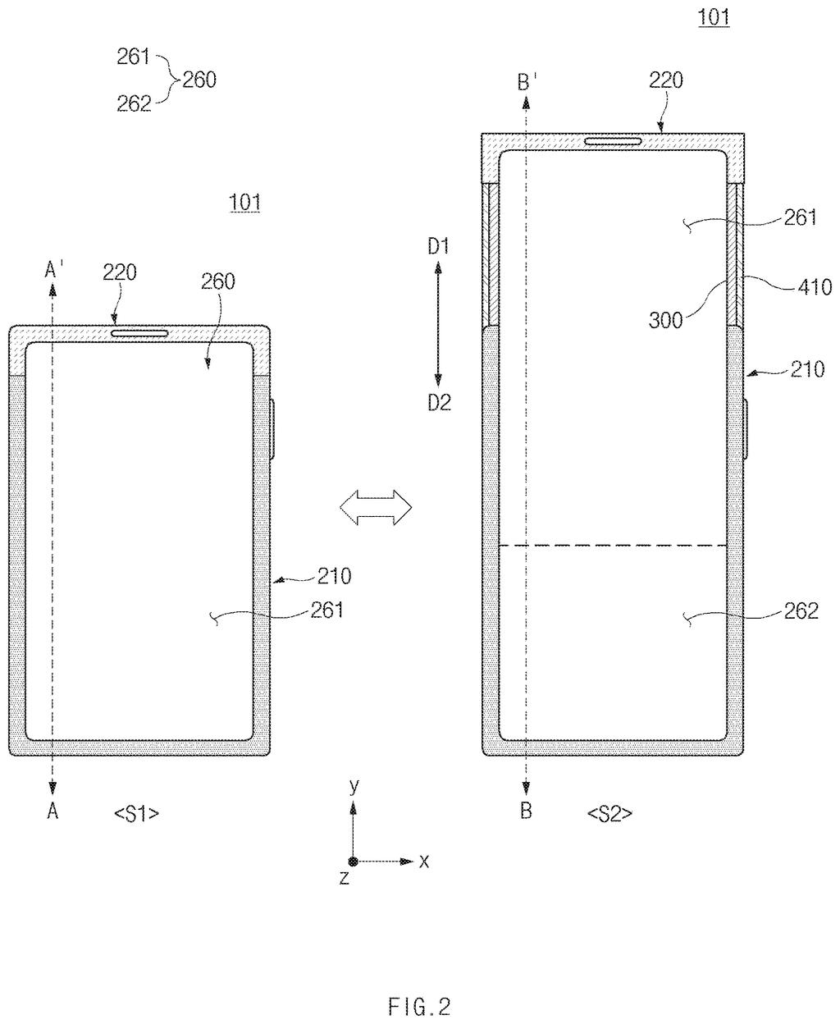
What Samsung's sliding screen phone actually does
Ever wished your phone had a bigger screen but still fit in your pocket? Samsung's latest patent tackles exactly that problem by describing a phone that slides apart, like an old-school flip phone but sideways, to reveal more display area when you need it.
The phone has two main body sections. In everyday use, you hold a compact device with a normal-sized screen. When you need more space, say for watching a video or reading a document, you slide the body open and the screen grows. A section of the display that was folded and hidden inside the body rolls out into view.
The clever part is a protective strip that covers the edge of the screen. When the phone is closed, a side panel hides that strip. When you slide the phone open, the panel moves with the body and the strip becomes visible, keeping the screen edge tidy and protected at every size.
… a size of an area of the display visible from a front side of the housing varies as the housing moves between the retracted position and the extended position, the display including an extended portion exposed in the extended position and covered in the retracted position …
Translation: The screen gets bigger or smaller as you slide the phone open or closed.
How the display cover hides and reappears on slide
The patent covers the mechanical design of a slidable electronic device with two interlocking housing sections. The first housing and second housing slide relative to each other between a compact "retracted" position and a wider "extended" position.
The display inside is split into two zones:
- Fixed portion: always visible at the front of the phone, no matter what position the housing is in.
- Extended portion: tucked away inside the body when closed, then exposed and pulled flat when the housing slides open.
The key engineering detail is a display cover, a trim piece attached to the first housing that sits over one edge of the screen. In the closed position, a side case panel overlaps and hides part of that trim strip. When the phone slides open, that side panel moves along with the housing, uncovering the trim strip so the full, expanded screen edge looks finished and protected.
This matters because a rollable or slidable display is mechanically fragile at its edges. The trim-cover system is Samsung's proposed solution for keeping that vulnerable edge guarded in compact mode while still presenting a clean, edge-to-edge look when the phone is fully extended.
… in the retracted position, at least a portion of the display cover is covered by the first case, and in the extended position, the at least a portion of the display cover covered by the first case is exposed.
Translation: A protective cover slides out from behind the phone case when you expand the screen.
What this means for the next wave of flexible phones
Slidable and rollable phones have been a hardware goal for several years, but most concepts shown publicly struggle with one obvious weak point: what happens to the screen edge when it is exposed? A bare, flexible display curling out from inside a housing is a durability and aesthetics problem. This patent is Samsung's attempt to solve that with a layered trim-and-case system that manages exposure automatically as the phone moves.
For buyers, the practical promise is a phone that behaves like a normal compact device most of the time but genuinely expands when you want more screen, without an awkward gap or raw plastic edge. Samsung has previously shown rollable display prototypes at trade shows, so this filing sits in a real product category the company is actively pursuing. The display-cover mechanism described here is one of the interesting tech patents covering how manufacturers are solving the hidden engineering costs of flexible-screen hardware.
Every sliding or rolling mechanism adds thickness, mechanical complexity, and potential failure points that a slab phone simply doesn't have; that is the trade this design signs up for. The trim-cover system is an elegant answer to one specific problem, exposed screen edges, but it adds its own seam line and moving part to a device that already has plenty. Whether that cost is acceptable depends on how well Samsung holds manufacturing tolerances over millions of units and years of daily use. The upside, a meaningfully larger screen in a pocketable body, is real; durability decides whether the design reaches most people's hands.
There are more where this came from
We read every patent application Big Tech publishes and send you the ones worth knowing. Plain English, free, every week.
The drawings
12 drawing sheets from US 2026/0238710 A1 · click any drawing to enlarge


Want this weekly breakdown for a company we don't cover? Patentlyze Pro →
Be the first to weigh in