Latest cell phone patents, Page 2
Filings where the phone itself is the target: folding bodies, antennas hidden in the frame, cameras, charging, and screens built for pockets. Most also appear under their component type; this page gathers everything phone-bound in one place.
- in the Nov 19 release
- 11
- in November so far
- 38
- filings tracked
- 496
- last 90 days
- 186
Recent filings
Newest first · 496 total-
Microsoft · Published Nov 12
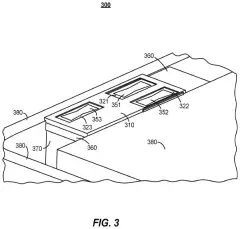
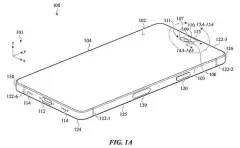
Microsoft Patents a Phone Screen That Hides Its Antenna in the Glass
Microsoft's filing describes carving a shallow pocket into the back of a phone's screen glass and sliding an antenna array inside, while the top of the screen stays perfectly flat.
-
Qualcomm · Published Nov 12
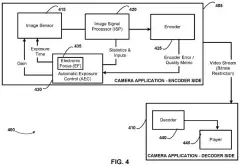
Qualcomm Files Patent for Sharper Phone Video When Your Subject Won't Hold Still
Fix a shaky, grainy frame by borrowing from the one before it, and you can end up with ghosts and smears instead. Qualcomm's filing tries to decide, pixel by pixel, how much borrowing is safe.
-
Google · Published Nov 12
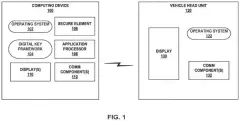
A New Google Patent Cuts the Battery Drain From Your Digital Car Key
When your phone is your car key, the car keeps pinging it to ask if you're still nearby, and each ping can wake the whole phone. Google's patent application has a small security chip answer or ignore those pings so the main processor can keep sleeping.
-
Google · Published Nov 12
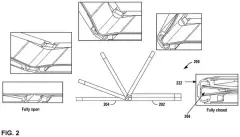
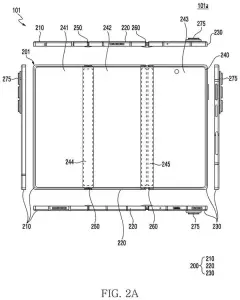
Google Files Patent for a Foldable Screen Hinge Built Around Magnets
The hinge is the part of a foldable phone that wears out first, and Google has filed a patent that puts magnets inside it. The pull of those magnets changes as the screen folds, so the hinge feels different at each angle.
-
Samsung · Published Nov 12
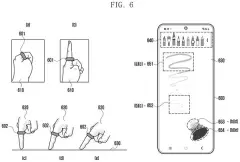
A New Samsung Patent Turns Smart Rings Into a Stylus for Phone Drawing
Samsung describes a way to draw on a phone with a bare finger while two smart rings stand in for a stylus. One ring tracks how far you bend a finger, and the other tracks how you tilt the finger doing the drawing.
-
Apple · Published Nov 12
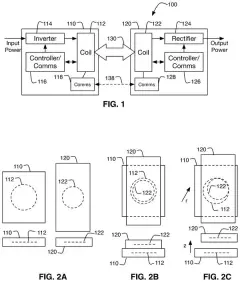
Apple Files Patent for Wireless Charging That Spots Stray Coins and Keys
Your wireless charger has to tell the difference between your phone's own metal and a coin that slipped underneath. This Apple patent says it can do that with some careful subtraction.
-
Sony · Published Nov 12
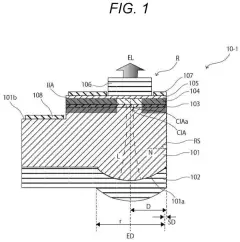
Sony Patents a Tiny Laser Whose Light Waves All Line Up the Same Way
Tiny lasers in phones and cars can send out light that wiggles in a different direction from one chip to the next. Sony's patent application fixes that with a mirror-like edge placed beside the glowing spot.
-
Google · Published Nov 12
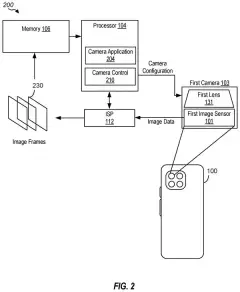
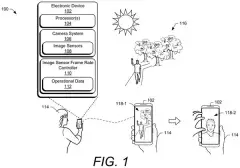
Google Patents a Phone Camera That Slows Itself Down Before Overheating
Google's filing describes a phone camera that eases off its own video speed before heat forces something worse, like a shutdown. It even tries to guess how hot the phone will be in the next 5 to 10 seconds.
-
Apple · Published Nov 12
Apple Files Patent for a Phone Screen Whose Camera Holes Respond to Taps and Swipes
Apple describes a phone screen where the holes for the camera and face-unlock sensors are not dead zones: you could tap or swipe right over them. A small strip of screen between the holes could also light up when a notification arrives.
-
Qualcomm · Published Nov 5
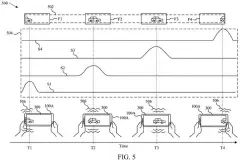
Qualcomm Files Patent for Phones That Vibrate in Sync With What's on Screen
Most video has no vibration built in, so a car crash on your phone screen feels like nothing. A new Qualcomm patent application has the device spot the crash a split second early and buzz your hands to match.
-
Samsung · Published Nov 5
Samsung Patents a Rubber Edge Guard for Phones That Fold Three Times
A phone that folds twice has to leave a gap in its frame wherever the screen bends, and dust loves a gap. Samsung's patent application describes a rubber edge guard, stiffened with firmer inserts, to plug it.
-
Google · Published Nov 5
Google Patents a Phone Camera That Adjusts Blur and Grain to Fit Your Connection
Google's patent application teaches a camera to shoot a slightly worse picture on purpose, accepting a little blur or grain so the squeezed video that reaches the other end looks cleaner.