
Microsoft
Microsoft · Cell phone · Filed May 1, 2026 · USPTO published Nov 12, 2026 · This week's release
Microsoft Patents a Phone Screen That Hides Its Antenna in the Glass
Microsoft's filing describes carving a shallow pocket into the back of a phone's screen glass and sliding an antenna array inside, while the top of the screen stays perfectly flat.
- Publication number
- US 2026/0360990 A1(US20260360990A1)
- Applicant
- Microsoft Technology Licensing, LLC
- Filed · Published
- May 1, 2026 · Nov 12, 2026
- Inventors
- Charbel KHAWAND, Apoorva SHARMA, Andrew James HILLENIUS
- Status when we published
- Waiting for an examiner
- Document
- 20 claims
- US classification
- 343/702
- Parent application
- Division of 18/198,655 (filed May 17, 2023)(18198655)
What Microsoft's thinned-glass antenna idea does
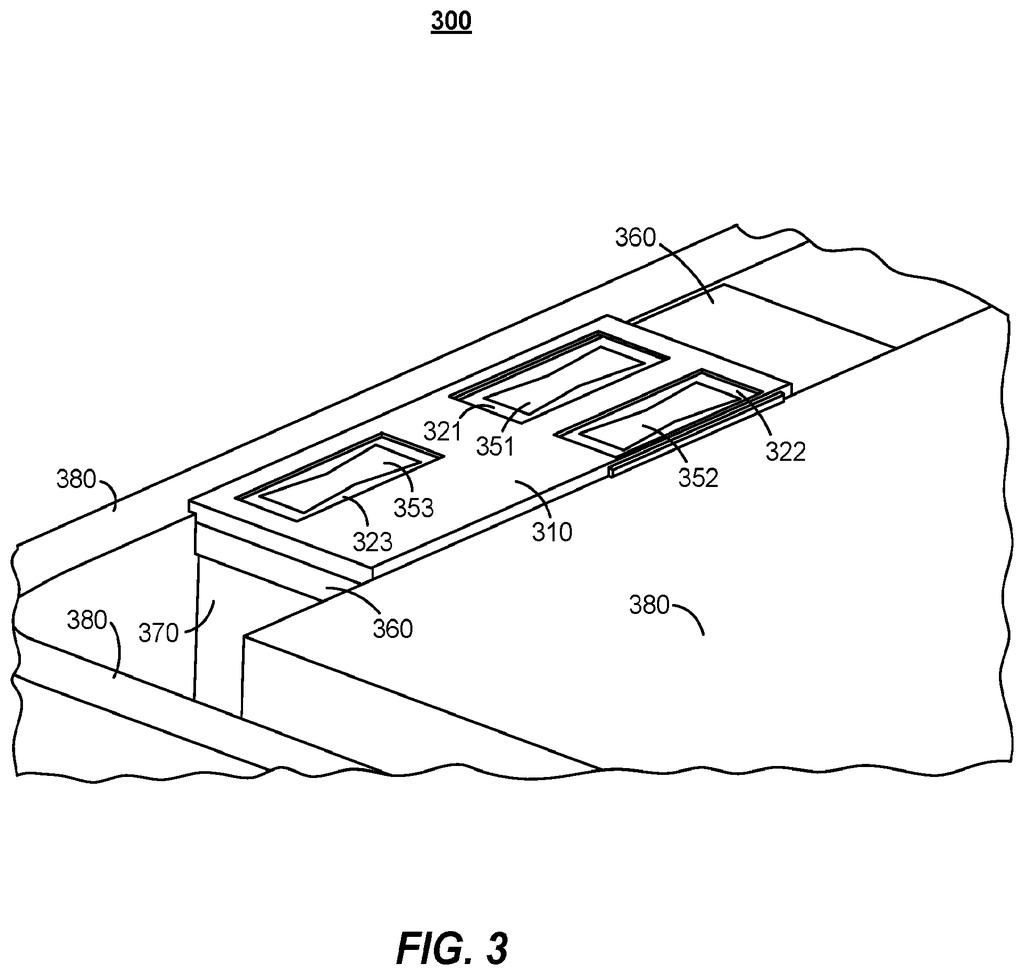
Phones today make room for antennas by shrinking them, sharing them between features, or skipping fancy ones like mmWave and ultra-wideband altogether. Microsoft's patent describes a way around that trade-off: carve a shallow step into the underside of the screen glass and tuck the antennas into it.
The glass stays flat and smooth on top, so you never see or feel a difference. Underneath, the glass is thinned to make a pocket for the antenna layer. The filing gives one example of 0.4 millimeters of glass over the antenna and 1.2 millimeters everywhere else. A cosmetic finish, like a black mask, can hide the spot from view.
The payoff is room for a larger antenna array, the type that can steer a radio beam without moving, while the screen keeps its strength.
… forming a thinned region formed in the bottom surface of the glass structure; and positioning an antenna layer at the bottom surface of the display panel such that the antenna layer is at least partially embedded in the thinned region.
Translation: Workers shave down part of the phone glass so an antenna can fit inside it.
How the antenna sits in a step cut into glass
The claims cover a manufacturing method. Start with a display panel whose glass has a flat outer surface. Form a thinned region in the bottom surface, the side you never see. Then place an antenna layer against the underside so it sits at least partly inside that thinned region.
The filing's example makes the numbers concrete: glass 0.4 mm thick where the antenna sits and 1.2 mm thick elsewhere. One claim sets the thinned area at less than 0.5 mm. The antennas can form an ultra-wideband phased array (a group of small antennas that steers a radio beam electronically, with nothing physically moving).
Several add-ons help the antennas perform:
- Backfill: an epoxy or liquid adhesive fills in around the antenna and holds it steady.
- Air gap: a foam ring or spacer (a "keepout") stops epoxy from flowing over the part that radiates, leaving a gap of about 0.1 mm. Epoxy soaks up some signal and varies from batch to batch.
- Low-loss material: instead of air, the gap can hold vacuum, ceramic, plastic or foam with a loss tangent (a measure of how much signal gets absorbed) under about 0.004.
The filing also describes a removable cutout piece that holds the antenna during assembly, and rounded edges of about half a millimeter to keep the glass from cracking.
The thinned region has a thickness that is less than half of the thickness of the first region. The first antenna is embedded in the thinned region.
Translation: The carved-out pocket is less than half as thick as the rest of the glass.
What this means for phones with radar-style antennas
If you have ever wondered why phones skip features or carry modest antennas, the filing points to the reason: space inside the device is tight. It says phone makers typically shrink antennas, share them across technologies, or leave out mmWave and ultra-wideband entirely. Putting the array in the screen glass itself offers another place to put one, and in some examples the filing says such an array could work as a 3-D spatial radar.
For you, that could mean better short-range wireless features without a thicker phone or a weaker screen, since the thinned glass is meant to keep its strength. The filing describes smartphones and tablets and names no Microsoft product, so treat this as a manufacturing idea for now.
Microsoft's third cell phone patent we've tracked since May follows one on tuning device vibrations and one on 3D point cloud compression.
Source: US 2026/0360990 A1 at the USPTO (PDF). Full patent text and figures are in the official publication.
Get our take in your Top Stories
Liked this breakdown? Add Patentlyze as a preferred source on Google, and our plain-English take shows up more often in your Top Stories the next time Microsoft patent news breaks.
Add Patentlyze on Google
One click.
There are more where this came from
We read every patent application Big Tech publishes and send you the ones worth knowing. Plain English, free, every week.
The drawings · 6 sheets
6 drawing sheets from US 2026/0360990 A1 · click any drawing to enlarge


More from Microsoft
All 646 Microsoft patents →
More in Cell phone
All 485 Cell phone patents →
Samsung
Samsung Patents a Glass-and-Plastic Cover for Foldable Phone Screens
Samsung
Samsung Patents a Phone Screen That Warms Up the Longer You Use It at Night
Google
Google Patents a Phone Camera That Adjusts Blur and Grain to Fit Your Connection
Samsung
No comments yet