Latest enterprise AI patents, Page 20
AI for the back office: data pipelines, workflow automation, code tools, and systems that keep business software running itself.
- in the Nov 19 release
- 24
- in November so far
- 58
- filings tracked
- 437
- last 90 days
- 222
Recent filings
Newest first · 437 total-
Nvidia · Published Aug 13
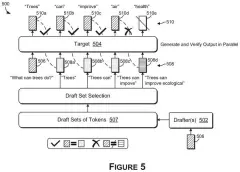
Nvidia Patents Technology That Cuts AI Response Time by Choosing Smarter Test Samples
Every time an AI model generates a response, it's doing a huge amount of guesswork, one word at a time. Nvidia's new patent aims to make that guesswork faster by teaching the system to pick better starting points before the main model even gets involved.
-
Sony · Published Aug 13
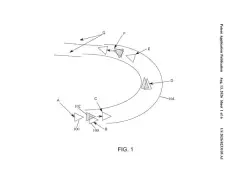
Sony Patent Reveals How Deliberate AI Deception Makes Game Opponents Beatable
A perfect AI opponent is no fun to play against. Sony's new patent proposes a surprisingly elegant fix: lie to the AI about the world it's operating in, and watch it make human-like mistakes.
-
AMD · Published Aug 13
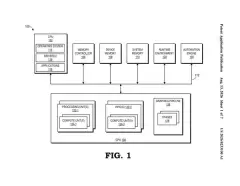
AMD Patents a System That Watches Your Screen and Writes Its Own Code to Run Apps
AMD is patenting a chip-level system that can watch what's happening on your computer, figure out what it needs to do next, and write the code to do it, all without touching a single API.
-
Adobe · Published Aug 13
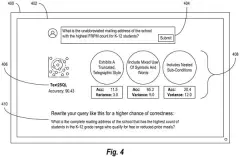
Adobe Patents Technology to Catch Where AI Misreads Plain-English Commands
Adobe has patented a diagnostic system that can automatically spot the categories of plain-English questions an AI consistently gets wrong, then take steps to fix those blind spots before they reach users.
-
Samsung · Published Aug 13
Samsung Patents a Way to Let You Ask Questions About a Video While It's Playing
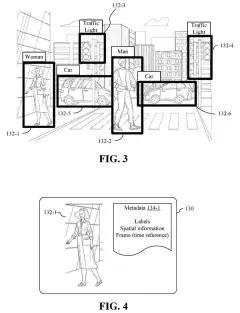
You're watching a cooking show and wonder what that ingredient is, or you're mid-movie and want to know who that actor is. Samsung's new patent describes a system that can answer those questions in real time, without pausing the video.
-
Microsoft · Published Aug 13
Microsoft Patent Unveils Dual AI Model System for Smarter Content Suggestions
Microsoft has filed a patent for a system that uses two different AI models in sequence: a small, fast one to figure out what you might want to do with an image, and a much larger one to actually do it.
-
Microsoft · Published Aug 13
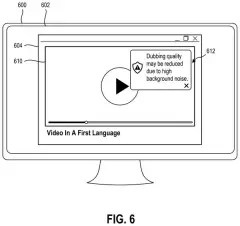
Microsoft Patents a System That Catches Bad Auto-Dubbing Before You Hear It
Auto-dubbing has gotten impressively fast, but the output can still be rough enough to pull you right out of whatever you're watching. Microsoft is patenting a system that scores the quality of each dubbed audio clip in real time and tells the video player to flag the bad ones before they ever reach your ears.
-
Nvidia · Published Aug 13
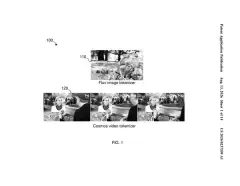
Nvidia Patents a Two-Stage Video Compression System That Avoids Quality Degradation
Nvidia has patented a video compression architecture that gets 8 times the compression rate of conventional approaches by letting each video frame learn from the raw, uncompressed version of the frame before it, rather than a degraded copy.
-
Samsung · Published Aug 13
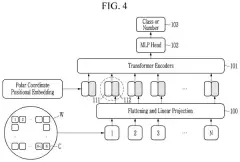
Samsung Patents a Wafer Inspection System That Tells AI Where Every Chip Sits
When you photograph a circular wafer packed with hundreds of identical chips, the AI inspecting it has no idea which chip is which, unless you tell it. Samsung's new patent solves that orientation problem using a coordinate system borrowed from geometry class.
-
Qualcomm · Published Aug 13
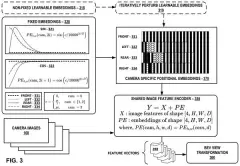
Qualcomm Patents a Way to Teach One AI Encoder to See Through Every Camera at Once
Getting a computer to stitch together views from six cameras at once is hard enough. Qualcomm's new patent proposes a way to do it with a single shared AI model that still knows exactly which camera it's looking through.
-
Qualcomm · Published Aug 6
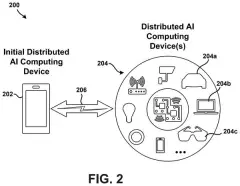
Qualcomm Patents a Way to Split AI Models Across Multiple Processors
Running a large AI model on a single chip can be slow or impossible if the model is too big. Qualcomm's new patent describes a system that automatically chops an AI model into pieces and hands each piece to a different processor.
-
Sony · Published Aug 6
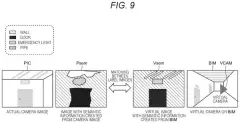
New Patent Helps Robots Navigate Buildings With Precision
GPS is useless indoors, and that's a real problem for robots navigating warehouses, hospitals, or office buildings. Sony's new patent describes a way to help a moving machine figure out where it is by comparing what its sensors see right now to a pre-labeled map of the space.