
Adobe Patents Technology to Catch Where AI Misreads Plain-English Commands
Adobe has patented a diagnostic system that can automatically spot the categories of plain-English questions an AI consistently gets wrong, then take steps to fix those blind spots before they reach users.
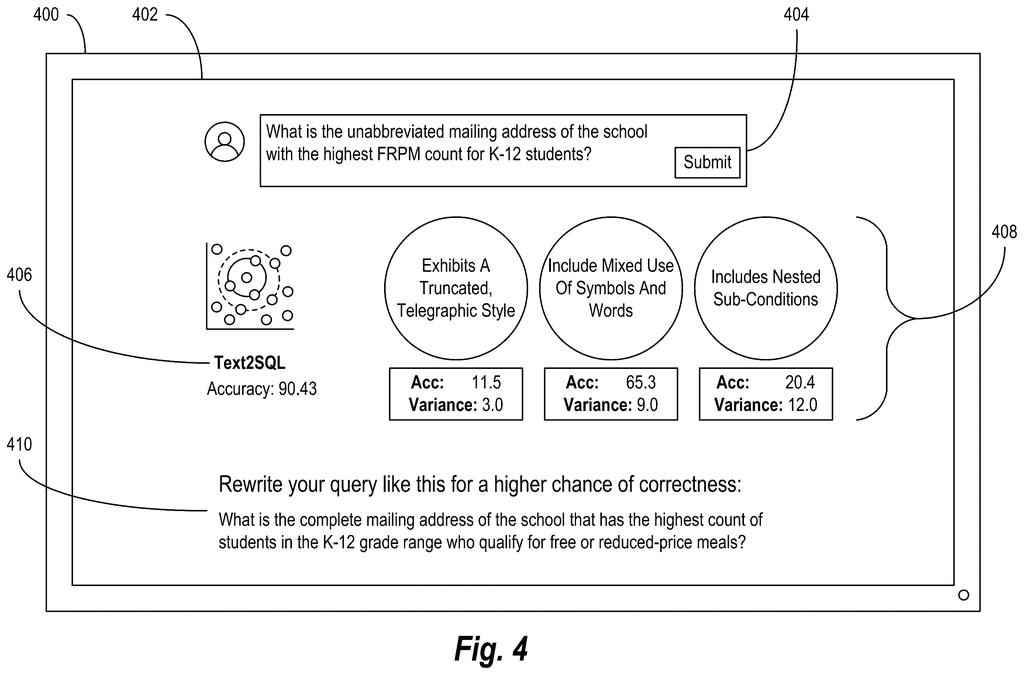
What Adobe's query-parsing gap detector actually does
Every time you type a plain-English question into a business tool and it runs the wrong report, something called a semantic parsing model made a mistake. These AI systems translate your words into the precise code a database can actually execute, and when they fail, the results can be silently wrong.
Adobe's patent describes a way to automatically hunt down those failure points. The system groups similar questions together, checks how often the AI gets each group right, and flags the groups where it keeps stumbling. Think of it as a teacher grading a student's tests by subject: you might find the student aces algebra but consistently bombs word problems.
Once the weak spots are identified, the system can take corrective steps, such as adding more training examples in those problem areas. The goal is a more reliable AI assistant, one that handles the full range of things you might actually ask.
… determining, utilizing a data clustering model, clusters of semantic parsing examples according to similarities between respective predicates of the plurality of predicates; …
Translation: The system groups similar language patterns together using data clustering.
How the clustering and scoring pipeline finds weak clusters
The patent covers a four-step pipeline designed to audit and improve semantic parsing models, which are AI systems that convert natural language (a typed or spoken question) into a structured query a database or software system can run.
- Predicate extraction: A language model reads through a library of example questions and pulls out the core action words (called predicates) from each one, things like "count," "filter by date," or "compare."
- Clustering: A data clustering algorithm groups the example questions by how similar their predicates are, so questions about filtering end up in one bucket, questions about aggregating numbers in another, and so on.
- Accuracy scoring: The AI model being tested generates its best structured output for each question. The system then compares those outputs to the known-correct answers and calculates a correctness score for each cluster, not just an overall average.
- Gap identification and mitigation: Clusters with low correctness scores are flagged as robustness gaps (meaning the model is fragile in that area), and the system can automatically trigger fixes, such as generating new training data for those weak clusters.
The key insight is moving from a single overall accuracy number to a per-topic breakdown. An AI can look strong on average while completely failing a specific class of questions.
… identify robustness gaps in the target semantic parsing model based on the respective correctness values and implement mitigating actions to address the identified gaps.
Translation: It pinpoints where the artificial intelligence struggles with plain English and fixes those weak spots.
What this means for AI tools that take spoken or typed commands
For anyone using a business intelligence tool, a customer-service bot, or any software that lets you ask questions in plain English, the quality of the underlying parsing model determines whether you get the right answer or a plausible-looking wrong one. A system that only checks its overall score can hide serious failures in narrow but important query types, like questions involving dates, negations, or multi-step comparisons.
Adobe's tools, including its analytics and data products, rely heavily on natural language interfaces, so a patent in this space fits a clear internal need. AI language assistants are one of the more active areas covered in plain-English patent summaries, and Adobe's filing reflects a broader industry push to move past raw accuracy benchmarks toward more targeted quality controls that catch the failures users actually experience.
Claim 1 is broad. It covers any method that extracts predicates from natural language queries, clusters them, runs a parsing model, and scores the clusters, with no restriction on model type, industry, or application; granted as written it would reach well past Adobe's own implementation. Any competitor building a similar automated auditing tool for semantic parsers would need to design around the cluster-and-score structure. Prosecution strength will hinge on whether examiners find prior art in the academic literature on compositional generalization testing, where grouping test cases by linguistic structure is well-established.
There are more where this came from
We read every patent application Big Tech publishes and send you the ones worth knowing. Plain English, free, every week.
The drawings
10 drawing sheets from US 2026/0236461 A1 · click any drawing to enlarge


Want this weekly breakdown for a company we don't cover? Patentlyze Pro →
Be the first to weigh in