Latest hardware patents, Page 193
Chips, displays, cameras, phones, batteries and robots. These filings show what devices Big Tech is building, often long before they ship. The hardware patent applications we have broken down from the companies we track, from semiconductors to foldable screens, newest first.
- in the Nov 12 release
- 48
- in November so far
- 102
- filings tracked
- 2,316
- sub-topics
- 13
Recent filings
Newest first · 2,316 total-
Intel · Published May 14
Intel Patents a Way to Keep Robots from Drifting Off Course
Even the best robot sensors drift — Intel's new patent describes a way to fuse two sensors together, weighting one's error signal against the other, so a robot always knows where it actually is.
-
Intel · Published May 14
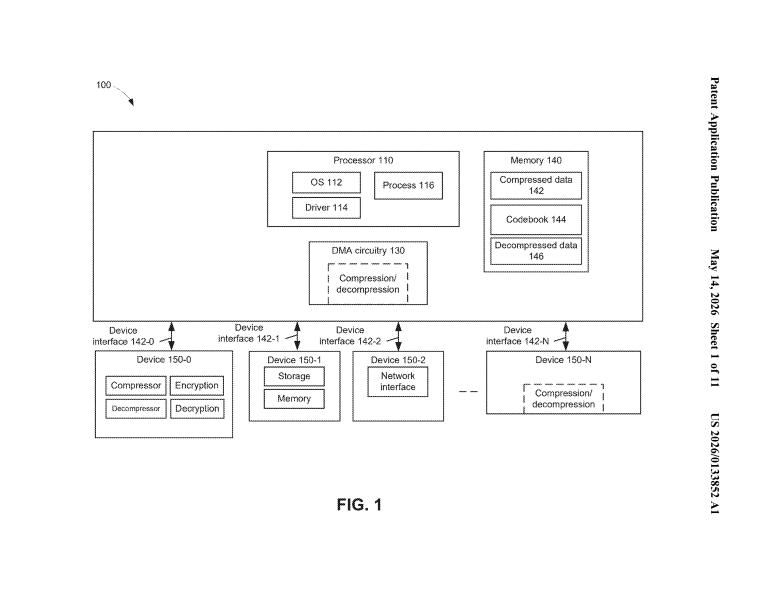
Intel Patents a Way to Stop AI Chips from Waiting on Their Own Memory
Every time an AI model runs, it has to move enormous tables of numbers — called weights — from storage into the chip that does the math. Intel's new patent wants to compress those numbers and quietly decompress them in transit, so the chip doing the work never has to wait.
-
Intel · Published May 14
Intel Patents a Faster Way to Track Which CPU Cores Still Have Room
Scheduling work across dozens of CPU cores sounds simple — until you have to do it thousands of times per second without bottlenecks. Intel's new patent describes a smarter bookkeeping system that tracks resource usage at every level of a processor hierarchy simultaneously.
-
Intel · Published May 14
Intel Patents an AI That Teaches Robots to Imagine What's Around the Corner
Robots are usually blind to whatever their camera isn't directly pointed at — Intel's new patent uses the same AI image-filling tech behind generative photo editors to stitch together a robot's full surroundings in real time, no GPS required.
-
Intel · Published May 14
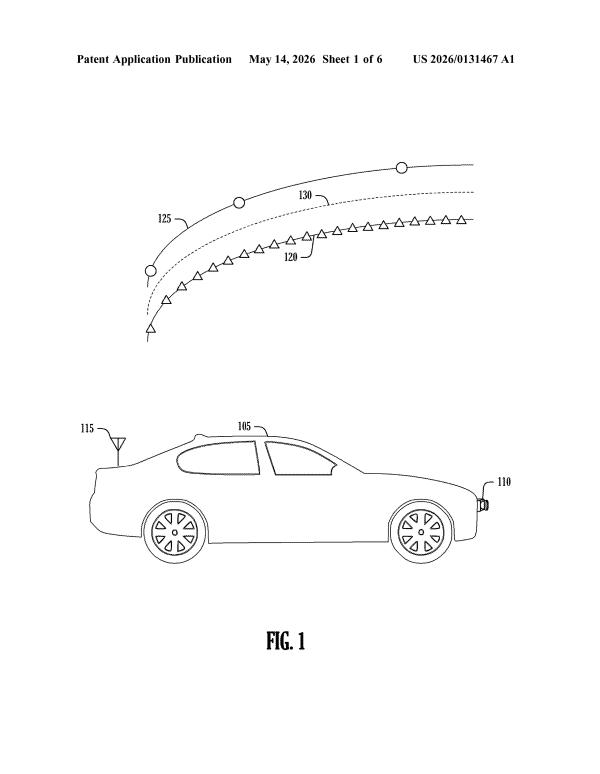
Intel Patents a Way to Make Your Car's CPU Work Harder When It Matters
Your car's processor doesn't need to work the same way when you're parked as when you're navigating a highway at 70 mph. Intel's new patent proposes a system that dynamically reshuffles CPU resources — cores, cache, memory bandwidth — based on what driving mode the vehicle is in and how critical each task actually is.
-
Intel · Published May 14
Intel Patents a GPU That Converts Textures Once and Remembers Them
Intel has filed a patent for a GPU-side system that converts textures into the right format on the fly — and then holds onto them so it doesn't have to do the same work twice. It's a caching play buried in graphics pipeline infrastructure.
-
Intel · Published May 14
Intel's New Patent Wants to Let You Whisper to Colleagues During Video Calls
Ever wanted to lean over and whisper something to a colleague during a video call without muting and texting? Intel is filing patents to make that feel natural — using spatial audio to simulate a private conversation happening right next to you.
-
Sony · Published May 14
Sony Patents a Microphone That Automatically Amplifies Whoever Is Speaking
Sony Interactive Entertainment is patenting a microphone system that automatically amplifies whoever is speaking in a group — so nobody has to awkwardly pass around a mic or shove it in their face to be heard.
-
Samsung · Published May 14
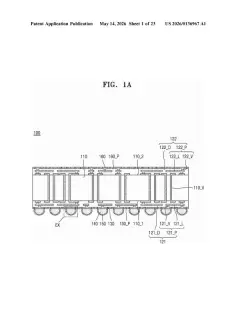
Samsung Patents a Higher-Melting-Point Solder Guard for Chip Packages
Solder bumps are one of the most failure-prone parts of a chip package — they melt, crack, and oxidize under heat. Samsung's new patent puts a metal shield around each bump that deliberately melts at a higher temperature than the bump itself.
-
Samsung · Published May 14
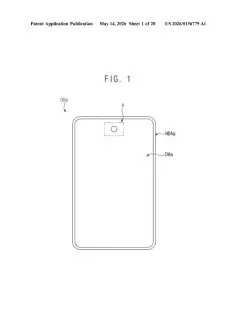
Samsung Display Patents a Layered Groove System for OLED Camera Cutouts
Every punch-hole or under-display camera creates a weak point where moisture can sneak into an OLED panel. Samsung Display's latest patent describes a precise groove-and-seal architecture designed to stop that from happening.
-
Samsung · Published May 14
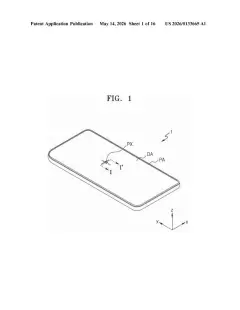
Samsung Display Patents a Variable-Width Touch Sensor Electrode Layout
Most touchscreens use a perfectly uniform grid of electrodes — but Samsung's new patent deliberately makes those electrodes different sizes. The question is why, and whether it actually makes your screen smarter.
-
Samsung · Published May 14
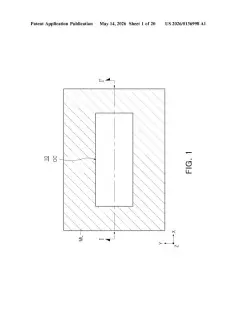
Samsung Patents a Multi-Adhesive Layer Design for Stacked Semiconductor Packages
Stacking memory chips sounds simple until you realize that keeping them mechanically stable, thermally compliant, and electrically connected at microscopic scales is genuinely hard. Samsung is patenting a specific multi-layer adhesive approach to solve exactly that.