
Adobe Patents a Way to Skip Redundant Work During AI Image Generation
Adobe has filed a patent describing an AI image generator that, instead of processing every slice of a picture equally at every step, figures out which pieces matter right now and skips the ones that don't. The result could be significantly faster image generation without a noticeable drop in output quality.
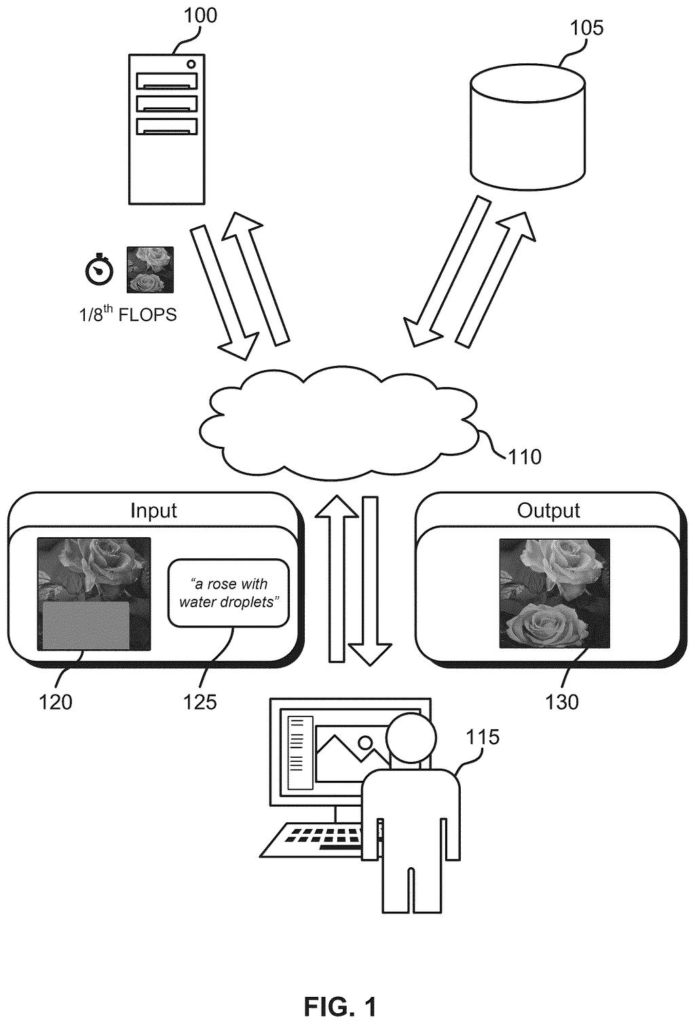
How Adobe's AI decides which image pieces to ignore
You're using an AI image tool and you type in a prompt. Behind the scenes, the system has to work through thousands of tiny calculations just to paint each piece of the picture. That takes time and computing power, and right now most tools treat every piece of the image as equally important at every moment.
Adobe's patent describes a system that changes that. Instead of doing the same heavy calculations on every part of the image at every step, the system watches which stage of creation it's in and decides how many pieces it actually needs to focus on. Early in the process, when the overall shape of an image is being roughed out, fewer pieces might need full attention. Later, when fine details are being added, the system opens back up.
The practical effect is that the AI does less redundant work overall, which can make generation faster or let the same hardware produce higher-quality images in the same amount of time.
… performing, using an image generation model, an attention operation on a subset of the plurality of image tokens at an image generation stage to obtain an attention output, wherein the subset of the plurality of image tokens is determined based on the image generation stage; …
Translation: The system focuses only on the most relevant parts of the image depending on the current step.
How the model picks which tokens to drop at each stage
AI image generators like Adobe's Firefly work by breaking a picture into small chunks called tokens, each one representing a small region of the image. A special operation called attention (borrowed from the same architecture behind large language models) figures out how each chunk relates to every other chunk. The problem is that running full attention on all tokens at every step of a multi-step generation process is expensive.
Adobe's patent introduces what it calls a dynamic selectivity value: a number that changes depending on which stage of the image generation process the model is currently in. That value controls what fraction of the image tokens actually get processed by the attention operation at any given moment. Some tokens are skipped; the model infers their contribution from the ones it does process.
The key insight is that not all stages of image creation need the same level of detail. Early diffusion steps (where the model is deciding the broad layout) may benefit from processing fewer tokens, while later refinement steps may need more. The system adapts automatically rather than using a fixed compression rate throughout.
This approach is sometimes called token compression: instead of passing all tokens into the expensive attention calculation every time, only a meaningful subset is selected. The compressed attention output is then used to generate the final synthetic image.
A method, apparatus, non-transitory computer readable medium, and system for generating images using adaptive compression ratios include obtaining an input prompt, and generating a plurality of image tokens based on the input prompt.
Translation: The software turns text instructions into digital pieces that represent different parts of a picture.
What faster AI image generation means for everyday users
For everyday users of tools like Adobe Firefly, faster generation and lower compute costs can translate directly into shorter wait times and, potentially, lower subscription costs or more generous usage limits. If you've ever clicked "generate" and watched a progress bar crawl, this is the kind of engineering that chips away at that frustration.
For Adobe as a company, Adobe keeps filing on AI image-generation efficiency, and this patent fits a larger pattern of making generative AI practical to run at scale in a cloud product. Efficiency gains like this also matter for running AI on less powerful hardware, which could eventually make higher-quality generation possible on devices rather than exclusively in the cloud.
Adobe's 36th filing in the AI image and video patents we've tracked since May follows one on video object tracking and one on auto photo edit modes.
Skipping parts of a calculation mid-process only works if you skip the right parts, and this design bets that different regions of a picture can be safely ignored at different moments during creation. When that bet is wrong, the image degrades with no obvious signal to the person looking at the result.
The more interesting cost is what happens when the system misjudges where it is in its own process. A picture that needs full attention early might get shortchanged, producing a worse result than a simpler, less clever approach would have delivered.
The adaptive design solves a real and growing expense in AI image tools, and varying how much gets skipped over time is a reasonable response. The unresolved question is whether the system has any reliable way to know when its shortcuts are hurting rather than helping, because the document explains the mechanism without explaining how errors get caught.
There are more where this came from
We read every patent application Big Tech publishes and send you the ones worth knowing. Plain English, free, every week.
The drawings
14 drawing sheets from US 2026/0301240 A1 · click any drawing to enlarge


Want this weekly breakdown for a company we don't cover? Patentlyze Pro →
Be the first to weigh in