
Adobe Files Patent for Cheaper Training of AI Image Generators
Teaching an AI to make realistic pictures usually means a long, expensive contest between two models. Adobe's patent application tries to shorten that contest by giving one of them a head start and a leash.
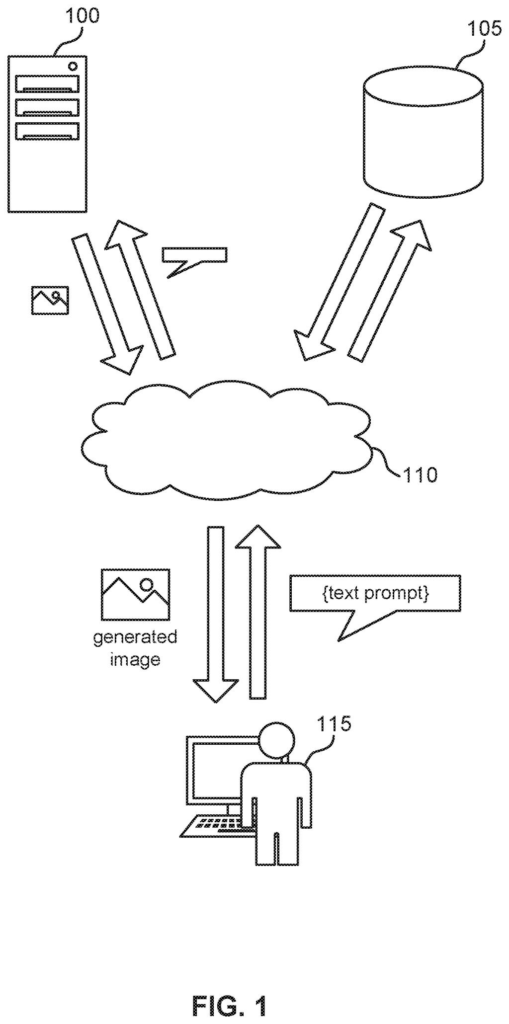
What Adobe's AI image-judge patent actually does
A forger paints fake artworks all day while an inspector tries to catch each one. Every time the inspector gets sharper, the forger has to get better. Many AI image generators learn the same way, and it is why their pictures can end up looking like real photographs.
Running that contest from scratch eats a lot of time and computing power. Adobe's patent application gives the inspector some skills ahead of time, locks those skills in place, and trains only the final is it real? decision. A built-in penalty stops that decision from fixating on just a few details.
The filing says the result is faster, steadier training, and an inspector that can be reused with different image generators instead of being rebuilt each time.
generating a candidate image using a generator network of a generative adversarial network (GAN); classifying the candidate image as real or generated using a discriminator network of the GAN; and training the GAN to generate realistic images based on the classifying of the candidate image …
Translation: An AI creates a test image, a second network judges it, and both parts learn to make better visuals.
How the frozen judge learns without overfitting
The claims cover a way to train a GAN (generative adversarial network), a pair of AI models where a generator makes images and a discriminator judges whether each one is real or generated. The key step is regularizing a gradient with respect to the image features. A gradient is the signal that tells a model how to adjust itself, and regularizing it means penalizing that signal for getting extreme.
In the filing's main version, the discriminator is built from pretrained encoders (existing models that turn an image into features, meaning a list of numbers describing it), each with a small classifier attached. One encoder can be a CNN (a standard image-recognition network) and another a vision transformer, such as one adapted from CLIP. The encoders stay frozen. Only the classifiers are updated.
The filing also describes these details:
- The penalty, called R1 regularization, is applied to the features instead of the raw pixels. That avoids computing gradients through large models.
- Its strength scales with the average size (L2 norm) of the features across a batch, so it adjusts itself.
- The loss combines a relativistic loss (does a real image look more real than a fake one?) with a non-saturating loss.
- Several classifier scores are combined into one final verdict, such as an average.
Because the encoders stay frozen, the same discriminator can train a GAN with a different design. The filing names ProjectedGAN and StyleGAN2 as examples.
Systems and methods for training a Generative Adversarial Network (GAN) using feature regularization are described herein.
Translation: The document outlines a new technique for teaching AI image models more efficiently.
Why cheaper image-model training matters to Adobe
If you use an AI image tool, the payoff would show up as cost and speed. The filing says feature regularization allows fast training and a large reduction in training resources. That makes it easier for researchers and creators to teach a model on their own set of images, such as faces.
For Adobe, a maker of creative software, a reusable judge that works across generator designs could mean less retuning each time the underlying model changes. This application is a divisional of one filed in 2023, so the idea has been in the pipeline for a while. Like any application, it describes an approach and does not promise a product.
Adobe's 26th filing we've tracked for controllable AI images since May adds to earlier applications like one copying objects into photos and one building 3D worlds from text.
Training an image generator from scratch costs a lot of time and computing power, and that bill lands on every team that wants a model for its own images. Earlier shortcuts cut the time and left flaws in the results, such as warped details.
The fix is sized to match that problem. It changes one training step instead of rebuilding the whole system, and it comes with a self-adjusting setting so nobody has to hand-tune it for each new generator.
For you as a reader, the effect is indirect. You would never see this step, only how cheaply and quickly an image tool can learn a new style or subject. Whether it works as well as the filing says is untested in the text we have, since it gives no benchmark numbers.
Get our take in your Top Stories
Liked this breakdown? Add Patentlyze as a preferred source on Google, and our plain-English take shows up more often in your Top Stories the next time Adobe patent news breaks.
There are more where this came from
We read every patent application Big Tech publishes and send you the ones worth knowing. Plain English, free, every week.
The drawings
10 drawing sheets from US 2026/0311468 A1 · click any drawing to enlarge


Want this weekly breakdown for a company we don't cover? Patentlyze Pro →
Be the first to weigh in