
IBM Patents an AI System That Scores Data Quality Across Mixed Sources
Bad data costs companies billions every year, and most teams still catch quality problems by hand. IBM is patenting a way to let an AI do that audit automatically, across data pulled from completely different types of sources.
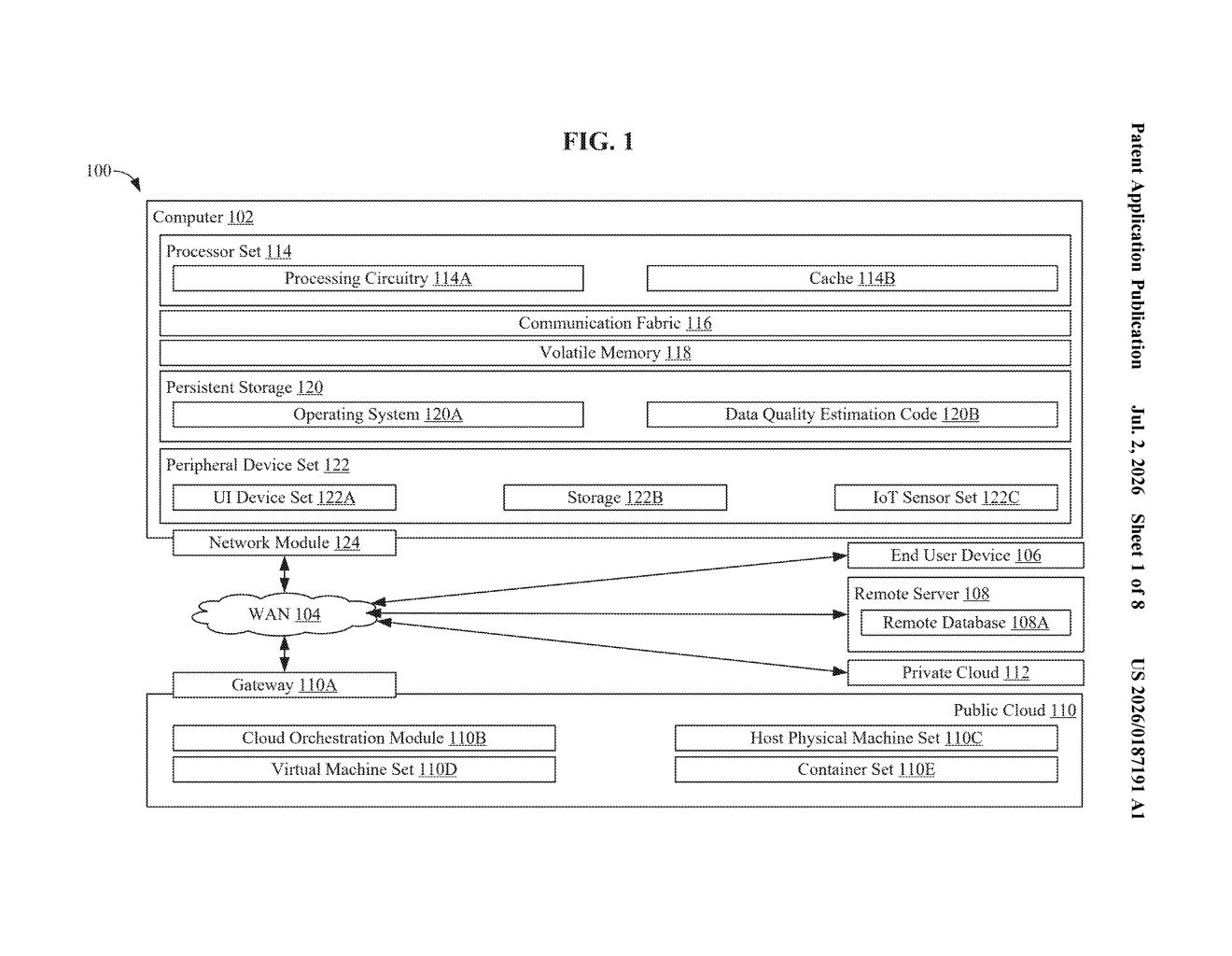
What IBM's automated data quality score actually does
Imagine you run a company and your data team has to combine customer records from your website, a third-party CRM, and a spreadsheet someone emailed in. Each source formats things differently, some entries are missing, and nobody can agree on which version is correct. Figuring out how trustworthy all that combined data is usually takes hours of manual checking.
IBM's patent describes an AI system that takes that messy pile of data from different sources and automatically produces a single quality score telling you how reliable the whole dataset is. You feed it data; it tells you how much you should trust it.
The system uses a type of AI that pays extra attention to the parts of the data most likely to signal problems, then runs a statistical calculation to turn those signals into a number. The goal is to make data quality checks faster, more consistent, and less dependent on someone manually poking through spreadsheets.
How the attention model and probability math produce a score
The patent describes a pipeline with several distinct stages working together.
First, the system accepts what it calls heterogeneous datasets (meaning data that comes in different formats or structures from different places, like a SQL database mixed with JSON records from an API). These are bundled into a single input.
Then, an attention-based ML model (the same architectural idea behind large language models like GPT, where the system learns to focus on the most relevant parts of the input) is applied to that combined data. This produces probability scores for each chunk of data, essentially a rough measure of how anomalous or inconsistent individual items look.
Next, those scores are converted into encoding matrices (compact numerical representations of each dataset's quality profile). A probabilistic operation (a mathematical technique that accounts for uncertainty rather than giving a single rigid answer) is then applied to those matrices.
Finally, the system outputs a single quality score for the entire input. The patent does not specify exactly what scale or format that score takes, leaving implementation details open.
What this means for businesses drowning in messy data
For any company that relies on data to make decisions, knowing whether that data is trustworthy is a foundational problem. Right now, data quality audits are expensive, slow, and inconsistent across teams. An automated score that works across mixed data types could slot into data pipelines and flag problems before bad data reaches an analyst or a model that acts on it.
For IBM specifically, this fits squarely into its enterprise AI and data management business. Tools like IBM's Watson and its data fabric products are already sold to large organizations that deal with exactly this kind of multi-source data mess. A patented quality-scoring method would give IBM a defensible technical differentiator in a market where data governance is a growing priority.
This is a practical, unsexy patent aimed squarely at enterprise data teams. The underlying ideas (attention models, probabilistic encoding) are well-established in the research literature, which makes the grant likelihood uncertain. What matters commercially is whether IBM can integrate this into a product data engineers actually reach for, because the problem it solves is real and persistent.
Get our take in your Top Stories
Liked this breakdown? Add Patentlyze as a preferred source on Google, and our plain-English take shows up more often in your Top Stories the next time IBM patent news breaks.
There are more where this came from
We read every patent application Big Tech publishes and send you the ones worth knowing. Plain English, free, every week.
Want this weekly breakdown for a company we don't cover? Patentlyze Pro →