
Amazon Patents a Coding Assistant That Remembers How You Like to Write Code
Most AI coding assistants start fresh every time you open your editor. Amazon is patenting a system that watches how you code, remembers your habits, and keeps updating its suggestions the longer you work with it.
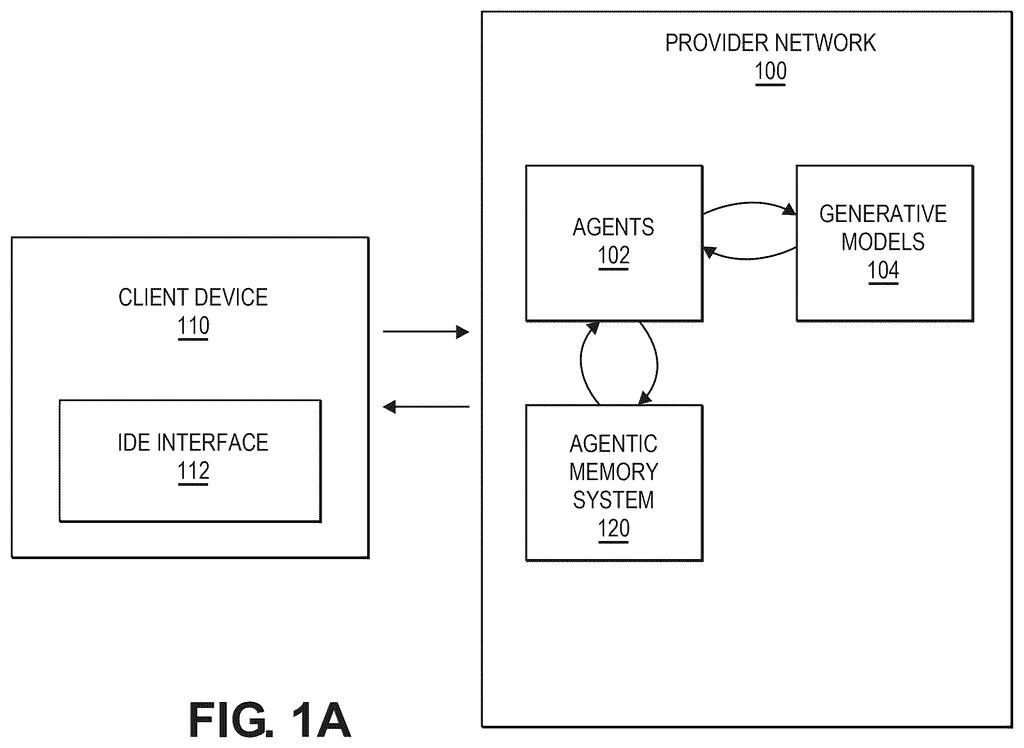
What Amazon's persistent coding memory actually does
You're writing code at work, and your AI assistant keeps suggesting things you'd never actually use. It doesn't know that your team always names variables a certain way, or that you hate a particular shortcut it keeps pushing. Every session, it forgets everything it learned.
Amazon's patent describes a coding assistant with two kinds of memory. One holds what you've done recently, like a short-term notepad. The other builds up long-term patterns from months of your sessions, and even from how your whole team tends to work. The system moves things from the short-term pile to the long-term one when a habit seems to stick, and clears out old patterns that no longer match how you code.
When you need a suggestion, the assistant doesn't just scan what's in front of you. It weighs your recent context against your deeper history and serves up whatever scores highest on a relevance formula that adjusts over time. The more you use it, in theory, the better it gets at predicting what you specifically want.
The short-term memory stores representations of recent interactions and contextual information associated with a user for efficient retrieval, while the long-term memory stores patterns and preferences learned across multiple sessions …
Translation: It tracks your recent coding actions and saves your long term habits across multiple work sessions.
How short-term habits become long-term coding patterns
The system is built around what the patent calls a multi-layer memory architecture: two distinct storage areas that handle different time scales of information.
- Short-term memory captures recent interactions inside your code editor, things like which functions you just wrote, what errors you triggered, and what suggestions you accepted or ignored. These are stored as compact representations (think compressed summaries) designed for fast retrieval.
- Long-term memory accumulates patterns across many sessions. It can span a single user's history, an entire team, or an organization. Patterns that appear repeatedly get promoted from short-term into long-term storage.
- Memory management handles the transition between the two layers. If a short-term habit looks durable, the system graduates it to long-term. If a long-term pattern has become stale, the system deletes it. Conflicts between competing patterns are resolved by a set of priority rules.
When the editor detects a triggering event (you pause, type a comment, or open a new file), the system runs a weighted relevance function that scores memories from both layers against the current moment. The weights in that formula are continuously tuned based on whether you accept or reject what gets served up, including subtle implicit signals like how quickly you delete a suggestion.
ingest a user interaction with an integrated development environment (IDE) and cause a representation of the user interaction to be stored in the first portion of the memory to be included in the first set of short-term information …
Translation: The system watches what you do in your coding software and saves those actions into a temporary memory.
What this means for AI tools like Amazon Q Developer
For developers, the pitch is straightforward: a tool that actually adapts to your style over time, rather than giving generic suggestions based on what millions of anonymous coders do. That matters most in professional settings where teams share conventions and an assistant trained on everyone's habits could reinforce house style automatically.
Amazon keeps filing on AI developer tooling, and this one fits squarely in the orbit of its existing Amazon Q Developer product. Whether the memory system described here ends up in that product or a future version is not something the patent tells us, but the direction is clear enough. If the approach works as described, it could also raise questions about what happens to your coding habits when they're stored and shared at the organization level.
Amazon's second filing we've tracked since October in our AI assistants that remember you watchlist follows their earlier memory recall application, pushing further into how AI holds onto what you say.
The more a coding assistant learns about you, the more data it has to store, sort, and constantly re-rank. That overhead is real, and every new layer of personalization adds a new place for the system to get things wrong.
The conflict resolution problem is where this design is most exposed. If your recent behavior contradicts your usual habits, the system has to choose which version of you to trust, and the patent leaves that decision logic largely undefined. That gap is not a detail; it is where user frustration lives.
The organization-wide memory layer pools habits across an entire company, which could surface useful shared patterns but could just as easily bury individual preferences under majority behavior. The patent offers little indication of how much control a developer gets over that balance, and that missing control is the real cost of the trade.
There are more where this came from
We read every patent application Big Tech publishes and send you the ones worth knowing. Plain English, free, every week.
The drawings
15 drawing sheets from US 2026/0299893 A1 · click any drawing to enlarge


Want this weekly breakdown for a company we don't cover? Patentlyze Pro →
Be the first to weigh in