
Apple Patents a Way for Its AI Chips to Juggle Multiple Tasks Without Losing Their Place
Apple's AI chips may soon be able to pause one AI job, handle another, and then pick right back up, all without wasting a ton of memory in the process. It's a small but telling look at how Apple wants its hardware to handle the growing pile of AI tasks your devices are expected to run at once.
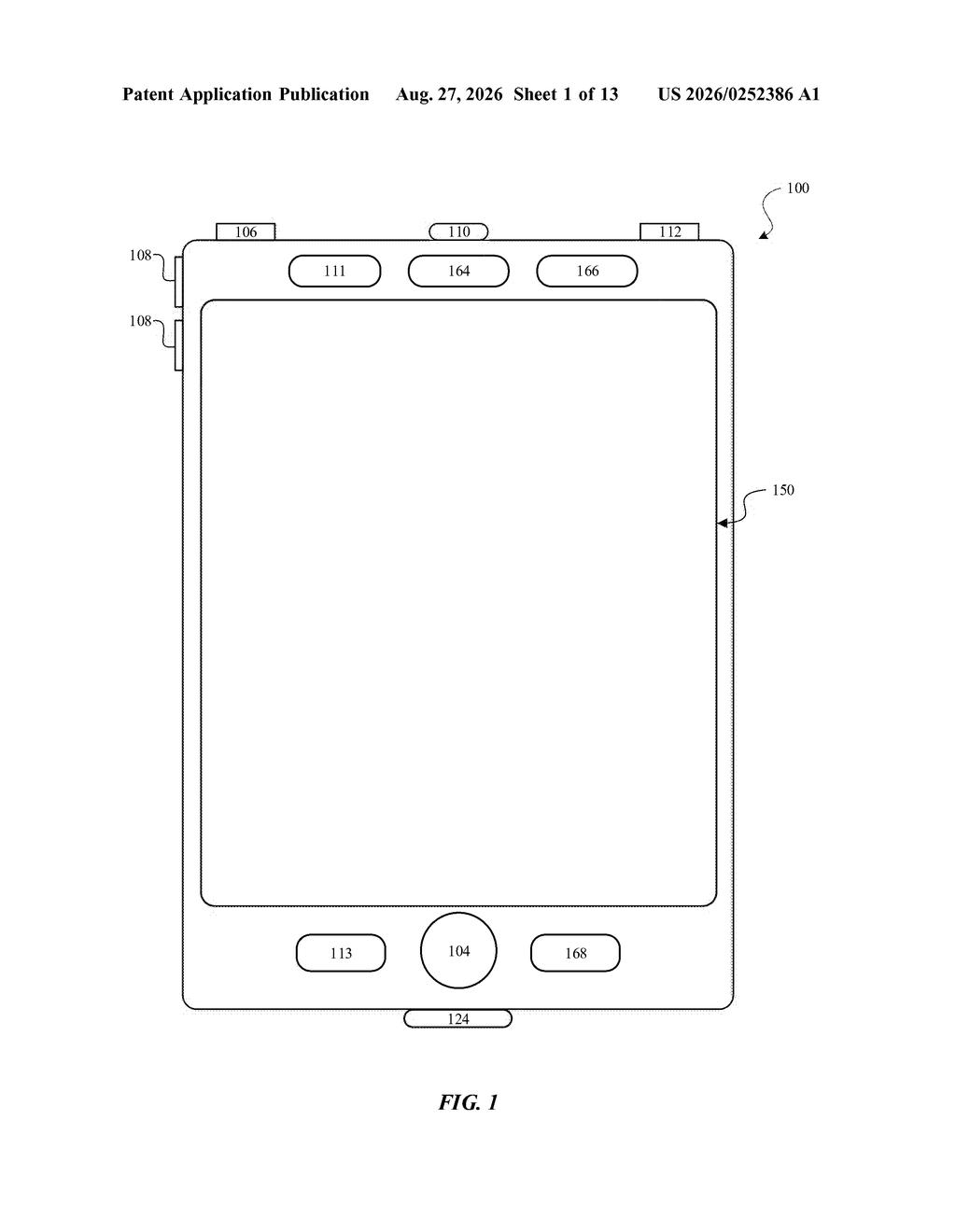
How Apple's AI chip would switch jobs mid-stream
Ever tried to cook dinner while waiting on hold with customer service? You're splitting your attention between two jobs, and the trick is not losing track of where you were. That's essentially the problem this Apple patent is trying to solve for the AI chips inside your iPhone or Mac.
When your device runs AI features, say, live transcription while also suggesting text completions, those are separate jobs competing for the same chip. Apple's patent describes a system where a scheduler (think of it as a traffic cop) chops those jobs into small timed chunks called slices, then decides which chunk runs next. One job can pause at a clean stopping point while another takes its turn, then the first job resumes exactly where it left off.
The clever part is memory efficiency. The patent describes keeping those slices small enough to fit in a smaller, faster section of storage, so the chip doesn't have to shuffle giant amounts of data back and forth every time it switches tasks. That means faster handoffs and less wasted energy on your device.
… the one or more neural engine circuits of the neural processing circuit are configured to: execute a task of a plurality of tasks of a second workload; and switch, at an end of the task of the second workload, to execute the one or more tasks of the slice of the first number of slices.
Translation: The chip is designed to finish one AI task before immediately jumping to a specific part of a different task.
How the scheduler slices and swaps neural engine tasks
The patent centers on something called context switching for a neural processing circuit (Apple's term for the dedicated AI chip hardware, like the Neural Engine in its A-series and M-series chips). Context switching is a standard idea in computing, it's how your computer fakes doing many things at once by rapidly trading off between tasks, but doing it efficiently on specialized AI hardware is trickier than on a general-purpose processor.
Here's the core mechanism:
- A scheduler receives a batch of AI tasks belonging to one workload (for example, a speech recognition job) and breaks it into a first number of slices, each capped at a maximum time duration.
- Those slices are sized deliberately to fit within a smaller, faster portion of storage on the chip, rather than requiring the full memory footprint a naive split would need.
- The neural engine first finishes executing a task from a second workload (a competing AI job), then at the natural end of that task, it switches over to run the slice from the first workload.
The key constraint is that switches happen only at task boundaries, clean endpoints, rather than mid-computation. That avoids corrupting in-progress calculations. The "first number of slices" being smaller than the "second number" is the patent's way of saying the scheduler found an arrangement that fits in less memory while still respecting the time-cap rules.
Embodiments relate to supporting context switching between tasks of multiple workloads by a system including a storage device, a processor, and a neural processing circuit with one or more neural engine circuits.
Translation: This technology helps the AI processor manage multiple jobs at once by quickly swapping between them.
What this means for on-device AI on iPhones and Macs
On-device AI is no longer a single tidy job. Your phone is increasingly expected to run several AI features at once, translation, photo analysis, voice processing, text prediction, and the chips doing that work need to share their time fairly without one task hogging resources or another timing out. This patent is Apple's attempt to bring the kind of disciplined scheduling that general-purpose operating systems have had for decades to the Neural Engine specifically, where the rules are different and the stakes for wasted memory are higher.
For everyday users, the payoff would be AI features that feel more responsive and don't obviously slow each other down. The efficiency angle also matters for battery life: less memory shuffling means less power spent on data movement rather than actual computation. Apple's chip design patents have been tracking this multitasking challenge for a while, and it sits alongside the newest Big Tech patents in AI chip architecture as the industry works out how to run many simultaneous AI tasks on power-constrained devices.
This is the third Apple patent we've tracked in the AI chip wars since August, adding to the three-chip wake-up idea and shrinking AI data on chip.
Switching tasks only at natural stopping points keeps work from getting corrupted mid-stream, but it hands control to whichever task happens to be running. If that task runs long, everything else waits. Apple's answer is to pre-slice work into small, predictable chunks, which works well when the workload is orderly and poorly when it isn't.
The memory angle carries a hidden cost too. Fitting those slices into a smaller, faster storage region saves money, but only if the slice sizes are tuned correctly. Cut them too small and reassembling work gets expensive; cut them too large and the savings vanish.
Both trades read as reasonable bets for the narrow, predictable world of on-device AI inference. The design is coherent and the problem is genuine, but how well it holds up depends entirely on tuning details Apple has not shown here.
Get our take in your Top Stories
Liked this breakdown? Add Patentlyze as a preferred source on Google, and our plain-English take shows up more often in your Top Stories the next time Apple patent news breaks.
There are more where this came from
We read every patent application Big Tech publishes and send you the ones worth knowing. Plain English, free, every week.
The drawings
13 drawing sheets from US 2026/0252386 A1 · click any drawing to enlarge


Want this weekly breakdown for a company we don't cover? Patentlyze Pro →
Be the first to weigh in