Apple
Apple · Chip · Filed Dec 4, 2025 · USPTO published Aug 27, 2026 · Aug 27 release
Apple Patents a Three-Chip Wake-Up System to Cut Photo Lag on Its Headset
Every fraction of a second counts when you try to take a photo. Apple is filing patents to stop its headset from making you wait while its brain wakes up.
- Publication number
- US 2026/0255054 A1(US20260255054A1)
- Applicant
- Apple Inc.
- Filed · Published
- Dec 4, 2025 · Aug 27, 2026
- Inventors
- Shannon L Gardiner, Chiraag Juvekar, Karan Sanghi
- Status when we published
- Waiting for an examiner
- Document
- 20 claims
- US classification
- 348/222.1
- Parent application
- Claims priority from a provisional application 63763536 (filed Feb 26, 2025)
Why Apple's headset takes a moment to snap a photo
When a device is asleep and you press a button to take a photo, it has to wake up its main processor before it can do almost anything else. That delay is exactly the kind of gap this patent wants to close.
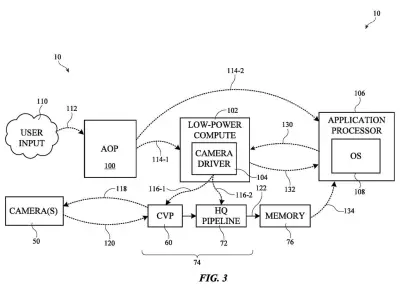
Apple's idea is to add a third, always-on chip whose only job is to notice when you press that button and then shout "wake up" at the camera controller and the main processor at the same time. Right now those two would likely wake up one after the other. By firing them in parallel, the camera is ready to shoot much sooner after you press the button.
The patent also carves image-processing work into two separate power zones, so the parts of the chip that do heavy lifting only power on when they are actually needed. The result, in theory, is a headset that takes your photo faster without burning extra battery keeping everything running all the time.
… a third processing circuit configured to detect a user input and to concurrently wake up the first and second processing circuits from a sleep state in response to detecting the user input.
Translation: A dedicated low-power chip acts as a gatekeeper that wakes up the main processors the instant you interact with the headset.
How three chips fire at once to skip the warm-up wait
The patent describes a head-mounted device built around three distinct processing circuits, each with a specific role.
- First processing circuit: runs the full operating system, the heaviest and slowest component to wake from sleep.
- Second processing circuit: a dedicated image controller that tells the camera sensors when to capture a frame.
- Third processing circuit: an always-on, low-power sentinel that monitors for a user input (like a button press or gesture) and, the moment it detects one, sends simultaneous wake signals to both the first and second circuits.
That parallel wake-up is the core invention. In a conventional design, the operating system typically has to finish booting before it can instruct the camera controller to start. Here, the camera pipeline starts warming up at exactly the same moment the OS does, shaving off that sequential delay.
Image data from the sensors flows into image signal processing (ISP) circuitry, which is itself split into two power domains. A front-end block handling computer vision processing (CVP) (tasks like object detection or scene analysis) runs in one power domain, while the back-end pipeline that finishes rendering the final image runs in a separate domain. Keeping them separate means the device can power only what a given task actually requires.
… subsystems operating in a first power domain and a back-end image signal processing pipeline operating in a second power domain different than the first power domain.
Translation: The camera system uses two separate power zones to process images more efficiently and save battery life.
What faster capture means for headset photography
Photo latency on a headset matters more than on a phone because you are looking through the device, not just holding it up. A half-second lag between intention and capture is disorienting in a way it simply is not on a smartphone. Cutting that wait makes the camera feel like an extension of your eye rather than a separate gadget you have to wait for.
The split power-domain design also signals that Apple is thinking carefully about battery life on wearable hardware, where every milliwatt counts across a full day of use. Apple's AR camera and chip filings are among the newest Big Tech patents showing how much engineering is going into making headset cameras feel as instant as a phone camera already does.
This is the 38th Apple filing we've tracked since May on our AR glasses watchlist, after one on simulated real-world venues and one on deciding when taps count.
Source: US 2026/0255054 A1 at the USPTO (PDF). Full patent text and figures are in the official publication.
Get our take in your Top Stories
Liked this breakdown? Add Patentlyze as a preferred source on Google, and our plain-English take shows up more often in your Top Stories the next time Apple patent news breaks.
Add Patentlyze on Google
One click.
There are more where this came from
We read the new patents from Big Tech, carmakers and more and send you the ones worth knowing. Plain English, free, every week.
The drawings · 4 sheets
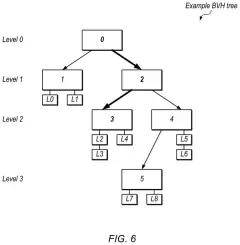
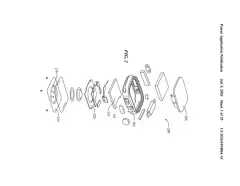
4 drawing sheets from US 2026/0255054 A1 · click any drawing to enlarge


More from Apple
All 748 Apple patents →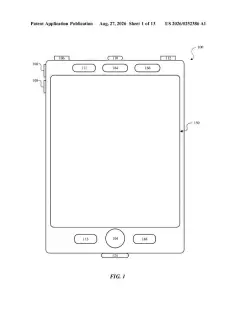
More in Chip
All 651 Chip patents →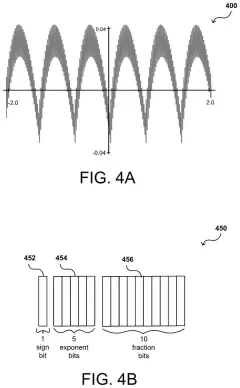
Nvidia
Nvidia Patents a Number-Rounding Shortcut for AI Math That Eats Chip Power
Samsung
Samsung Files Patent for Mobile Memory That Compresses Data While Saving Battery Life
Qualcomm
Qualcomm Patents a Shortcut That Lets Chips Talk Without Clogging Shared Bandwidth
Samsung