
Samsung Patent Targets Smarter Memory Pre-Loading for Faster System Performance
Modern chips waste enormous amounts of memory bandwidth by caching data they'll never use again. Samsung's new patent describes a system that watches how an app actually behaves and pre-loads only the data it's about to need.
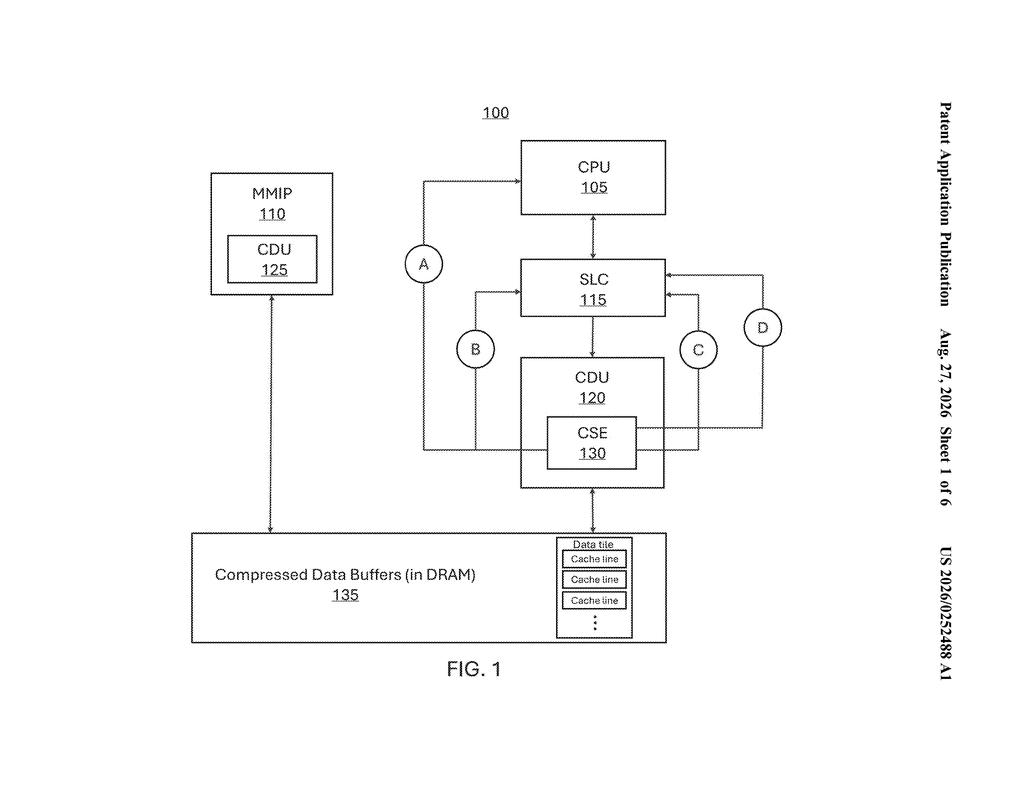
How Samsung's chip decides what data to keep close
You're playing a game or editing a video and your device is shuffling data back and forth between its memory and its fastest storage area. Most of the time, it grabs way more data than it needs and holds onto it, which clogs up that fast storage with things that won't be touched again.
Samsung's patent describes a chip design that pays attention to what the software is actually doing. Instead of blindly caching every chunk of data it fetches, the system can decide: "this piece is a one-and-done read, skip caching it." At the same time, it can look ahead and place a different chunk of data into fast storage before the app even asks for it.
The result is that the fastest layer of memory stays filled with data that's actually about to be used, not leftovers from a moment ago. For compressed memory systems, where every byte of fast storage is more precious, that discipline can make a real difference in how quickly your device responds.
… determining, based on application behavior, not to cache the CL in a system level cache (SLC); determining, based on the application behavior, to stash a second data tile in the SLC …
Translation: The system decides which data to ignore and which to pre-load into high-speed memory based on how the software is running.
Inside the tile-fetch and selective stash logic
The patent targets what engineers call a system level cache (SLC), a fast, on-chip buffer that sits between the processor and main memory. In compressed memory systems (where the chip stores data in a squished form to fit more into the same physical space), the SLC is especially valuable real estate.
When the processor requests a cache line (CL) (a small, fixed-size block of data, typically 64 bytes), the memory controller doesn't just fetch that one block. It retrieves a larger bundle called a data tile, which contains the requested line plus several neighbors. That's efficient for sequential reads, but it creates a problem: what do you do with all those neighbors?
Samsung's design splits the decision into two parts:
- Don't cache the fetched tile if application behavior signals it won't be reused (streaming data, for example).
- Stash a different tile proactively into the SLC based on predicted future access patterns, so the data is already warm when the processor asks for it.
The word "stash" here has a specific meaning: placing data into the SLC before it is explicitly requested, a speculative pre-load. The engine watches application behavior (access patterns, stride, recency) to make both calls, skipping the cache fill for cold data while pre-positioning hot data for the next request.
… retrieving a first data tile from a memory in response to the request, the first data tile including the CL and a plurality of additional CLs …
Translation: When the system looks for one piece of data, it grabs a larger bundle of related information to save time later.
What this means for chips that compress memory on the fly
Memory bandwidth is one of the most constrained resources in modern chips, from the processors inside phones to the AI accelerators in data centers. When a cache fills up with data that won't be reused, it evicts something that will be, forcing an expensive round-trip back to slow main memory. That friction shows up as lag, dropped frames, or slower AI inference. A system that can accurately separate one-time reads from data worth holding onto reduces those round-trips and keeps the processor fed.
For Samsung, which makes both the memory chips and the processors that use them (including the Exynos line and custom data-center silicon), this kind of co-design patent signals work happening at the boundary between hardware and software intelligence. Memory compression is already standard in mobile chips, so the pressure to use the fast cache layer wisely will only grow as AI workloads demand more from the same physical hardware. Developments like this one sit squarely in the stream of Big Tech patent news around the chip-memory bottleneck that every major semiconductor company is racing to close.
This is the 42nd Samsung filing we've tracked in AI chip wars since June, building on one that decrypts inside memory and one doing math in storage.
The problem this patent attacks is real and measurable. Cache pollution, filling fast on-chip memory with data that gets read exactly once, is a well-documented performance drain, and it gets worse as memory compression increases the gap between what the cache can hold and what main memory contains. The cost is not abstract: it shows up as slower app launches, higher power draw, and degraded AI throughput.
The approach here is sensible but not surprising. Prefetching and selective caching have been active research areas for decades, and the patent's core idea (use application behavior signals to make separate decisions about what to evict versus what to pre-load) is a logical extension of techniques already in commercial chips. What's notable is applying this discipline specifically to the tile-fetch artifacts of compressed memory, where the mismatch between what you fetch and what you actually want is structurally larger.
Whether this becomes a shipping feature or remains an internal design study depends entirely on execution. The concept matches the size of the problem, but patents at this level of abstraction often describe a direction rather than a finished product.
Get our take in your Top Stories
Liked this breakdown? Add Patentlyze as a preferred source on Google, and our plain-English take shows up more often in your Top Stories the next time Samsung patent news breaks.
There are more where this came from
We read every patent application Big Tech publishes and send you the ones worth knowing. Plain English, free, every week.
The drawings
6 drawing sheets from US 2026/0252488 A1 · click any drawing to enlarge


Want this weekly breakdown for a company we don't cover? Patentlyze Pro →
Be the first to weigh in