
Apple Patents a Way to Control Your Phone Using Tilt and Hand Position
What if turning your wrist was enough to switch your phone into a different mode, changing what every button and tap does without touching the screen? That's the core idea behind Apple's latest patent filing.
What Apple's tilt-to-unlock gesture mode actually does
Ever tried to use your phone one-handed while carrying groceries? You tap something and the wrong thing happens because your grip shifted the screen into an awkward angle. Apple's new patent is aimed squarely at that kind of frustration.
The idea is that your phone watches how it's being held, specifically its physical orientation, and uses that information to decide which "mode" it's in. Once it switches modes, the same tap or gesture can trigger a different action than it would normally. If the device isn't tilted the right way, the mode never activates, so you don't accidentally trigger things.
Think of it like putting your car's gear shift into park before a button press counts. Your hand position and device orientation act as a kind of silent qualifier, so the phone always does what you actually meant.
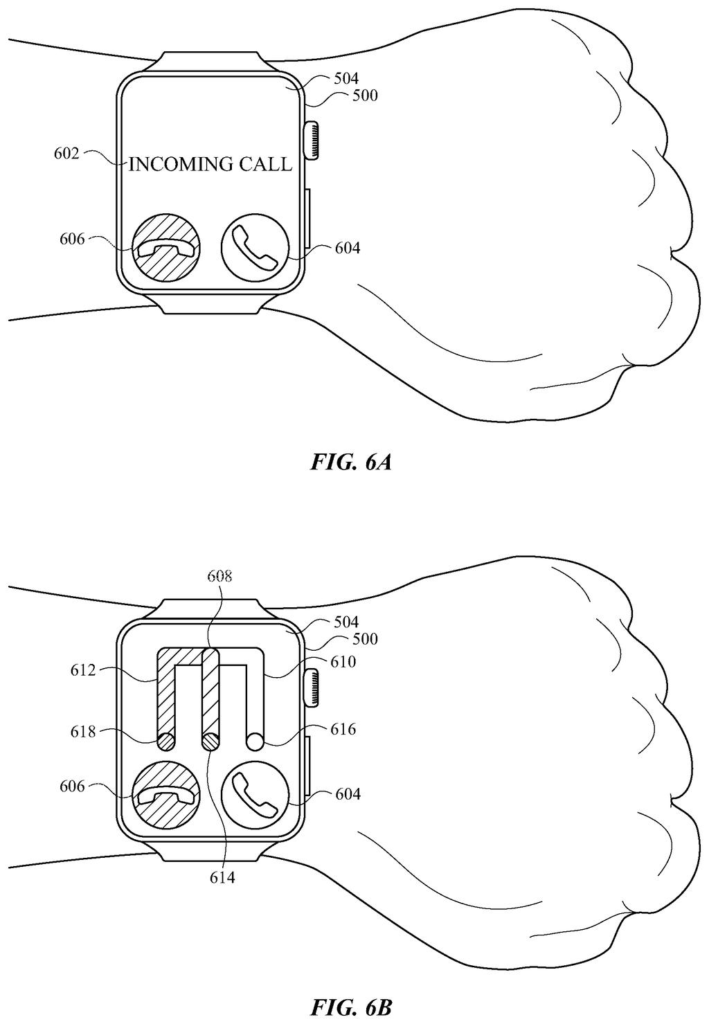
… interacting with an electronic device without touching a display screen or other physical input mechanisms …
Translation: Using your device without touching the screen or buttons.
How the device checks orientation before acting on your input
The patent describes an electronic device (most likely a phone or tablet) that uses its built-in sensors to monitor how it's being held or oriented in space. When a specific orientation is detected, the device checks a set of "mode change criteria", essentially a checklist of conditions that must be true before it shifts into a new behavioral state.
Once the device enters this first mode, the user interface visually updates to confirm the switch. Then, when the user provides input (a tap, a button press, a gesture), the device checks a second set of criteria called "first operation criteria." A key part of that check is a mode criterion, it only carries out the special action if the device is actually in the first mode. If it isn't, the action is skipped entirely.
This creates a two-step gate:
- Step 1: Device orientation triggers a mode change
- Step 2: User input triggers an action, but only if the mode is active
- Step 3: If either condition fails, nothing happens
The sensors involved could include accelerometers or gyroscopes (chips that measure physical movement and tilt). The visual change to the interface serves as confirmation, so users know the phone "heard" the orientation change before they tap.
transitioning the electronic device to a first mode; and modifying a user interface to indicate the electronic device is in the first mode …
Translation: Switching modes and updating the screen to show the change.
What this means for one-handed and touchless phone control
For everyday users, this could make one-handed phone use considerably less error-prone. Right now, most phones treat every tap the same regardless of how you're holding the device. A system like this would let the phone interpret context from your grip, reducing accidental taps or giving quick access to functions (like a camera shortcut or a specific app behavior) just by tilting your wrist.
There's also an accessibility angle. For people who have difficulty tapping small targets or pressing physical buttons, tying actions to orientation rather than precision touch could open up a more forgiving way to interact. Apple's run of touchless-interaction filings suggests this is part of a longer effort to let people control devices without relying entirely on the screen.
Apple's 36th filing we've tracked since May in eye and hand controls adds to work like finger controls on front glass and pointing at exact objects.
The practical win here is avoiding the moment where your phone does something you didn't ask for. By requiring your hand and the device to be in a specific position before any gesture even registers, the system builds in a checkpoint that separates "I'm trying to do something" from "I just moved."
Most people will notice this feature the first time they don't have to touch their screen and it actually works on the first try. That's a low bar, but gesture controls have failed it so consistently that clearing it would feel like a meaningful upgrade.
The real question is how forgiving the position detection is in practice. A system that demands you hold your wrist at exactly the right angle will get abandoned fast, while one that reads your intent loosely will start doing things you didn't want. Getting that balance right is what determines whether this becomes something people rely on or something they turn off.
There are more where this came from
We read every patent application Big Tech publishes and send you the ones worth knowing. Plain English, free, every week.
The drawings
92 drawing sheets from US 2026/0299710 A1 · click any drawing to enlarge


Want this weekly breakdown for a company we don't cover? Patentlyze Pro →
Be the first to weigh in