
Apple Files Patent for Smart Glasses That Warn Bystanders When the Camera Is On
If a camera sits inside a pair of glasses, how would anyone near you know it's rolling? Apple's answer is a frame that changes color, glows, or slides a cover over the lens.
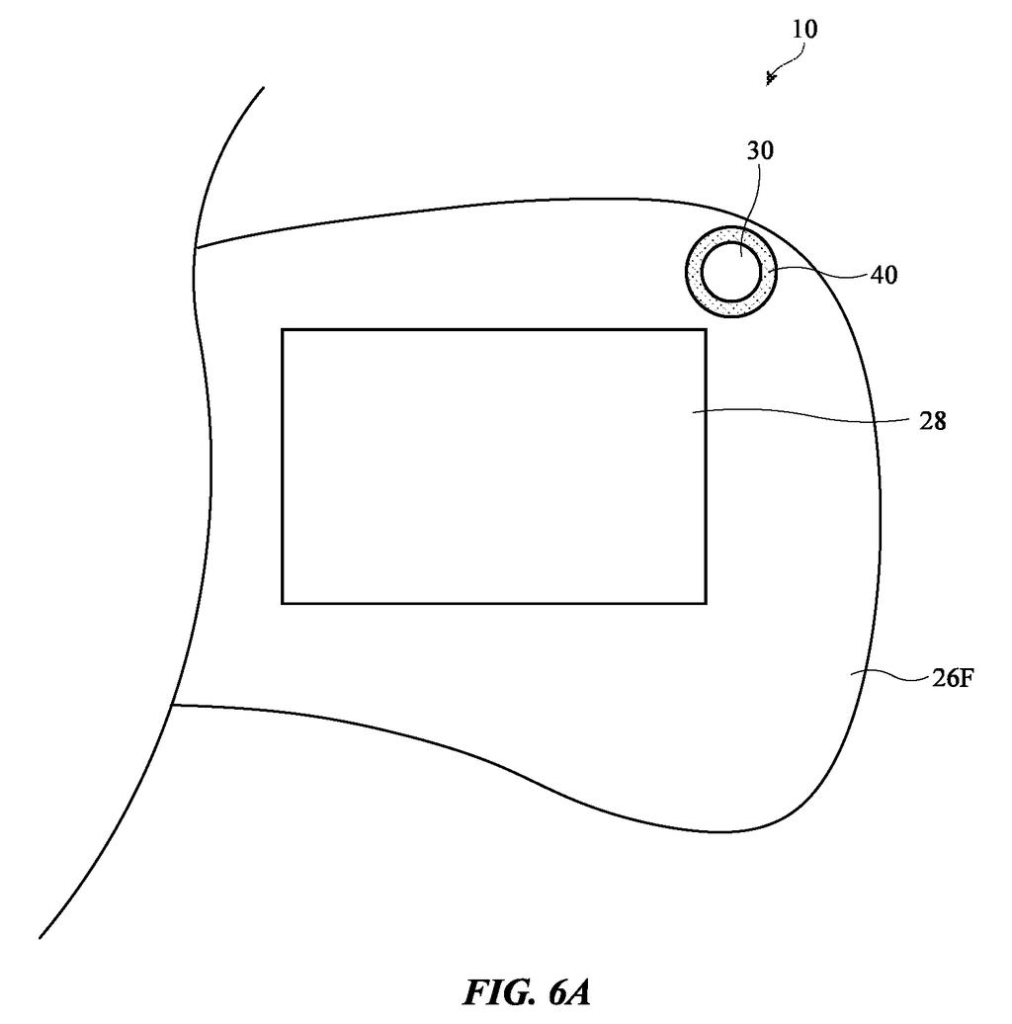
What Apple's camera-on glasses frame does
Ever sat across from someone wearing camera glasses and wondered whether you were being filmed? With a phone, you can see it pointed at you. With glasses, the camera is just part of the frame, and there's no way to tell.
Apple's patent application tackles that with a built-in signal on the glasses. When the camera switches on, the frame itself changes. It might turn green, show a striped pattern, flash, or glow around the lens. Another version skips the electronics and uses a little sliding shutter that physically covers the camera when it's off, so a closed cover means nothing is being recorded.
The goal is simple: anyone nearby should be able to glance at the glasses and know. The filing also says the same kind of signal could cover a microphone.
The indicator may be an optical indicator on an outer surface of the frame and/or may be a physical indicator on the outer surface of the frame. In this way, individuals at the exterior of the head-mounted device may be alerted as to whether the camera is active.
Translation: Outside observers can see a visual or physical sign on the glasses telling them if recording is happening.
How the frame shows the camera is running
The core idea is a pair of glasses with a camera that can be switched on and off, plus an indicator that shows when the camera is on. The frame looks different when the camera is off versus on, so a person across from you can read the status at a glance.
The filing describes several ways to build the indicator:
- E-ink layer: the same paper-like material used in e-readers, placed on the frame so it can change color or pattern, such as turning green, striping, or flashing.
- Glowing wire: an electroluminescence wire (a copper wire coated with a material that glows when current passes through it) running around a lens.
- Pinhole lighting: an LED behind a patch of microperforations (tiny holes, some only 1 to 20 microns wide), with light pipes guiding the glow out.
- Shutter: a cover over the camera, moved by a manual switch or by a small motor that follows the camera's on/off state.
In one version, the camera and lights sit on the glasses arm and shine through the frame using a light pipe or a diffuser (a layer that spreads light out evenly). That keeps the wiring in the arm, which can be removed and swapped.
A wire along the frame's edge links the control circuitry to the camera and the indicator, so the signal can switch on automatically with the camera.
Why bystander privacy matters for Apple glasses
If you wear camera glasses, a clear signal makes it easier to use them around other people. Friends, coworkers, and strangers can check whether you're recording instead of guessing or asking. A physical shutter is the clearest version, because a covered lens plainly can't see anything.
If you're the person standing nearby, it's a small bit of control over whether you end up on someone's video. Any company putting cameras in everyday-looking eyewear has to answer that worry, and this filing shows Apple working on a hardware answer. It's a patent application, so it doesn't say whether any product will ship with these features.
Apple's 118th filing we've tracked in our AR glasses watch since May builds on earlier applications like a gaze-controlled zoom display and smudge-aware 3D sensors.
Camera glasses only work socially if the people around you can tell when they're being recorded. A frame that visibly changes color lets you say "it's off" without a word, and lets everyone else check for themselves.
You'd notice it most in small moments like a coffee shop, a family dinner, or a gym. The physical shutter is the most convincing option, since a closed cover means the lens can't see anything and nobody has to trust a software promise.
The weak spot is that a tiny light is easy to miss in bright daylight, and the filing gives no detail on how bright or large the signal would be. The idea is simple and sensible, a routine safeguard that any camera glasses would be wise to carry.
Get our take in your Top Stories
Liked this breakdown? Add Patentlyze as a preferred source on Google, and our plain-English take shows up more often in your Top Stories the next time Apple patent news breaks.
There are more where this came from
We read every patent application Big Tech publishes and send you the ones worth knowing. Plain English, free, every week.
The drawings
14 drawing sheets from US 2026/0351097 A1 · click any drawing to enlarge


Show the other 6 sheets


Want this weekly breakdown for a company we don't cover? Patentlyze Pro →
Be the first to weigh in