
Apple Patents a Way to Tell Accidental Pinches from Real Ones in AR
If you've ever accidentally tapped something on a touchscreen while reaching for your coffee, you know how annoying phantom gestures are. Apple is filing patents to solve the same problem in mid-air, where your hands are the entire interface.
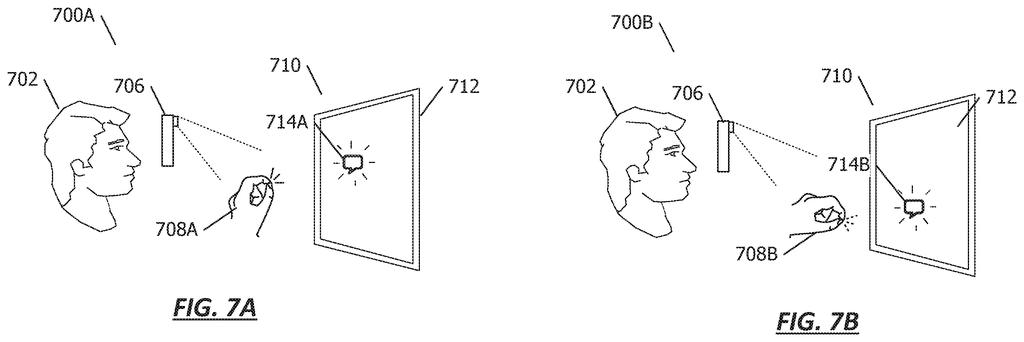
What Apple's pinch-intent detection actually does
Right now, hand-tracking on devices like Apple Vision Pro watches your fingers through cameras and tries to figure out what you meant to do. The problem is that your hands are constantly moving, overlapping, and doing things that look like intentional gestures even when they aren't. A finger coming close to a thumb while you scratch your chin could register as a tap, and the headset has no easy way to know you didn't mean that.
Apple's patent describes a system that adds two extra checks before treating a hand movement as a real command. First, it scores how intentional a gesture looks, based on the shape your hand is in. Second, it checks whether part of your hand is hidden from the camera, which is called occlusion. If your hand is partially blocked, the system becomes more conservative about deciding you've actually pinched.
The result is that your accidental movements get filtered out, and only the gestures you actually meant to make trigger an action. Apple keeps filing on hand-tracking and gesture input across a range of spatial computing contexts, and this one targets a very real frustration anyone who has worn a headset for more than ten minutes will have encountered.
… determining an occlusion classification for the hand in the second frame based on the hand pose; and in response to the occlusion classification indicating the hand is occluded, assigning the first signal to the second frame.
Translation: If the system decides your hand is hidden from view, it uses backup sensor data to figure out what you are doing.
How the system scores hand poses and occlusion in real time
The patent describes a method that processes a stream of camera frames to track your hand and then applies two layers of analysis before acting on what it sees.
The first layer is an intentionality classification: the system looks at the exact pose of your hand in each frame and estimates how likely it is that you meant to make that gesture. A clean, direct pinch where your index finger and thumb meet in a specific way scores high. A vague, incidental finger-near-thumb position scores low, and the system won't fire an input event.
The second layer is an occlusion classification: the system checks whether parts of the hand are hidden, either behind another finger, your other hand, or an object in view. If the camera can't fully see your hand, it can't be confident about what pose your fingers are actually in. The clever part of the claim is what happens when occlusion is detected: rather than guessing, the system "freezes" its assessment by carrying forward a signal from an earlier frame where it could clearly see your hand.
In practice, this means:
- The system waits for a clear, unambiguous view of your hand before committing to a gesture reading
- It weighs the visual confidence of your hand pose against how deliberate the movement looks
- It avoids false positives during moments when your hand is briefly out of view
This kind of multi-signal filtering is especially important in a wearable AR environment where there is no physical button providing confirmation of intent.
… determining an intentionality classification for a gesture based on the hand pose. An input action corresponding to the gesture is enabled based on the hand pose and the intentionality classification.
Translation: The software figures out if you meant to make a gesture or if you just moved your hand by accident.
What this means for using Vision Pro in everyday life
For anyone who uses a hand-tracked device like Vision Pro, accidental inputs are one of the most friction-heavy parts of the experience. Your hands are constantly in motion and occasionally look like they're gesturing when they aren't. A system that can distinguish a deliberate pinch from a casual hand movement makes the whole interface feel more reliable and less like you have to hold your hands perfectly still to avoid triggering things by mistake.
The occlusion piece matters too. When your hands overlap or drift out of a camera's sightline, the system now has a principled fallback instead of guessing. Fewer phantom taps, more confident gestures, and an interface that reacts when you decide, not when the camera gets confused. That's the concrete payoff for a daily Vision Pro user.
Apple's 25th filing in our eye and hand controls watchlist since May adds to a picture that already includes unlocking a Mac by gaze and a pressure-sensing crown.
False triggers are the silent killers of hand-controlled interfaces. Every time a device mistakes a casual hand position for a deliberate command, a user loses a small piece of trust, and enough of those moments add up to a device that gets abandoned.
What this patent describes is a system that checks both what your hand looks like and whether you actually meant to do something before it acts. That two-step check is what stands between a device that feels responsive and one that feels erratic.
The occlusion piece matters too: when your hand is partially hidden from the cameras, the system pulls from a cleaner earlier image rather than guessing badly. A user would never know that's happening, which is exactly the point. You just notice that it works.
There are more where this came from
We read every patent application Big Tech publishes and send you the ones worth knowing. Plain English, free, every week.
The drawings
12 drawing sheets from US 2026/0279103 A1 · click any drawing to enlarge


Want this weekly breakdown for a company we don't cover? Patentlyze Pro →