
Samsung Patents a Chip That Cuts Shortcuts to Deliver Stored Data Faster
Every time a server asks for data, that request travels through several processing layers before anything happens. Samsung's new patent cuts that line short for the most common type of request: a simple read.
What Samsung's read-command shortcut actually does
Imagine you walk into a bureaucratic office and have to pass through five different desks just to pick up a document someone left for you. Now imagine a side door that lets you skip straight to the document. That's essentially what Samsung is patenting here.
When a server's processor asks an external memory unit for data, that request normally gets processed layer by layer, each step adding a small delay. Samsung's design includes a circuit that recognizes a read request early, then sends it directly to the memory controller, skipping the layers it doesn't need.
Read requests are among the most frequent operations in any computing system, so shaving time off each one can add up quickly, especially in the kind of high-traffic server environments where Samsung sells its memory hardware.
How the snooping circuit bypasses the layer stack
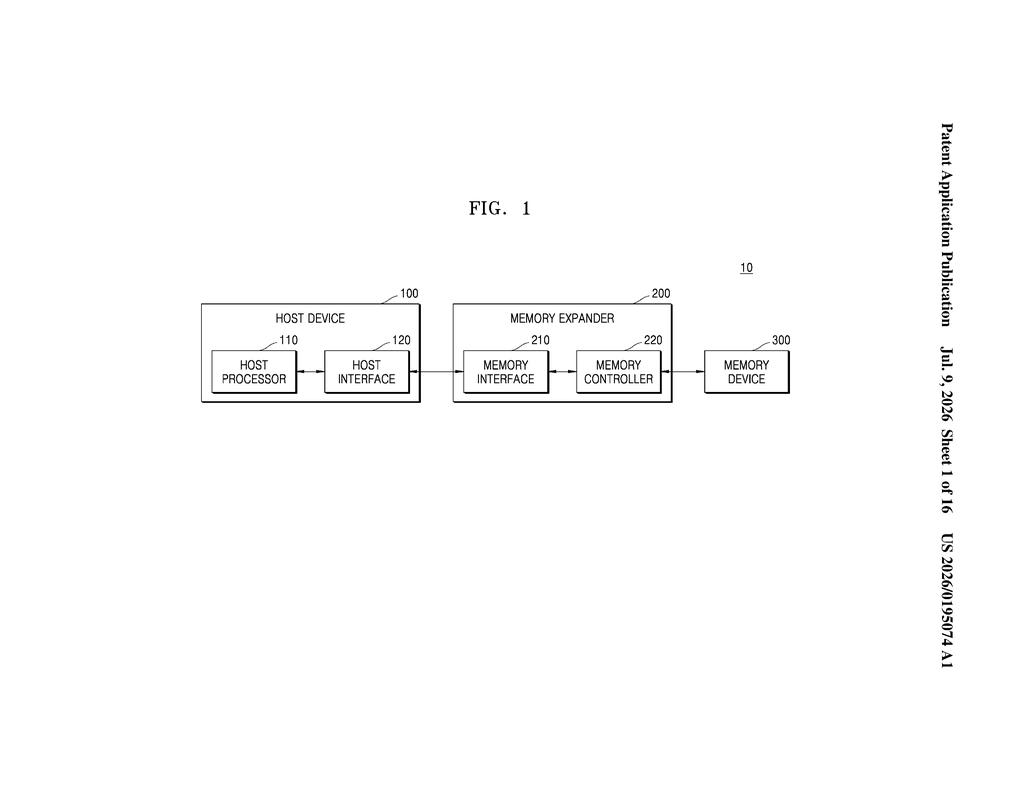
The patent describes a memory expander, an external memory module that a host processor (like a server CPU) talks to over a high-speed link. The expander contains two main pieces: a memory controller that manages the actual storage chips, and a memory interface that handles communication with the host.
Normally, an incoming packet (a data request wrapped in a communication envelope) moves through a stack of protocol layers inside the memory interface. Each layer does a specific job, such as error-checking or routing, before passing the packet along. This is standard practice in communication hardware, but it takes time.
The invention adds a snooping circuit inside the memory interface. "Snooping" here means the circuit watches incoming packets as they arrive and checks early whether the packet contains a read command (a request to fetch data, as opposed to a write command that stores new data).
- If the packet is a read command, the snooping circuit forwards it directly to the memory controller, bypassing at least some of the layers.
- The memory controller can then start fetching the requested data sooner.
- Write commands and more complex requests still travel through the full layer stack as normal.
The practical result is a faster path for the most common memory operation.
What this means for data center memory performance
In data centers and high-performance computing systems, memory bandwidth and latency (the delay between requesting data and receiving it) are constant bottlenecks. Memory expanders, which let servers attach extra pools of memory beyond what fits directly on the motherboard, are increasingly common in AI and cloud infrastructure. Any reduction in the per-request overhead on those expanders has a multiplied effect across millions of operations per second.
For the average consumer this patent is invisible, but for Samsung's enterprise customers buying rack-scale memory hardware, a demonstrably lower read latency is a real competitive argument. It also signals that Samsung is working on the protocol-level plumbing of its memory expander products, not just raw chip capacity.
This is a targeted, unglamorous engineering improvement: one circuit, one faster path, one class of command. It won't make headlines at a product launch, but in memory hardware the margins are tight and the transaction volumes are enormous, so small latency wins matter. Worth a brief note if you follow Samsung's data center roadmap.
Get our take in your Top Stories
Liked this breakdown? Add Patentlyze as a preferred source on Google, and our plain-English take shows up more often in your Top Stories the next time Samsung patent news breaks.
There are more where this came from
We read every patent application Big Tech publishes and send you the ones worth knowing. Plain English, free, every week.
Want this weekly breakdown for a company we don't cover? Patentlyze Pro →