
Google's New Patent Lets AI Decide Which Screen in the Room Should Answer You
Point your phone's camera at a TV or laptop, tap a button, and Google's proposed AI agent figures out which device in the room should answer your question — not necessarily the one in your hand.
What Google's multi-device AI companion actually does
Imagine you're watching something on your TV and you pull out your phone to ask a question about it. Right now, your phone would answer on your phone. Google's new patent describes a system where the AI looks around, takes stock of every device nearby — your phone, your laptop, your smart display — and decides which one is actually the best place to show the response.
Here's how it starts: you point your phone's camera at another device (say, a laptop or a TV). The system recognizes what it's seeing, pops up a button to tap, and then scans your environment to catalog every connected device and what each one can do. A big screen might be better for a visual answer. A speaker might be better for audio. The AI then routes its response accordingly.
The whole idea is that your AI assistant shouldn't be trapped on the device you happened to pick up — it should be ambient, flowing naturally to whatever screen or speaker makes the most sense for the moment.
How the system picks which screen gets the AI response
The patent describes a pipeline that starts with your phone's camera. When you point it at another device — a laptop showing a document, a TV playing a show — the system detects that a second device is in frame and surfaces a selectable UI element (think: a tap-to-ask button in the camera viewfinder).
Once you tap, the system kicks into a broader environment mapping phase. It pulls in data about every computing device in your vicinity, cataloging their output capabilities — screen resolution, audio hardware, connectivity, processing power. This gets compiled into a structured representation of what the room's device ecosystem can actually do.
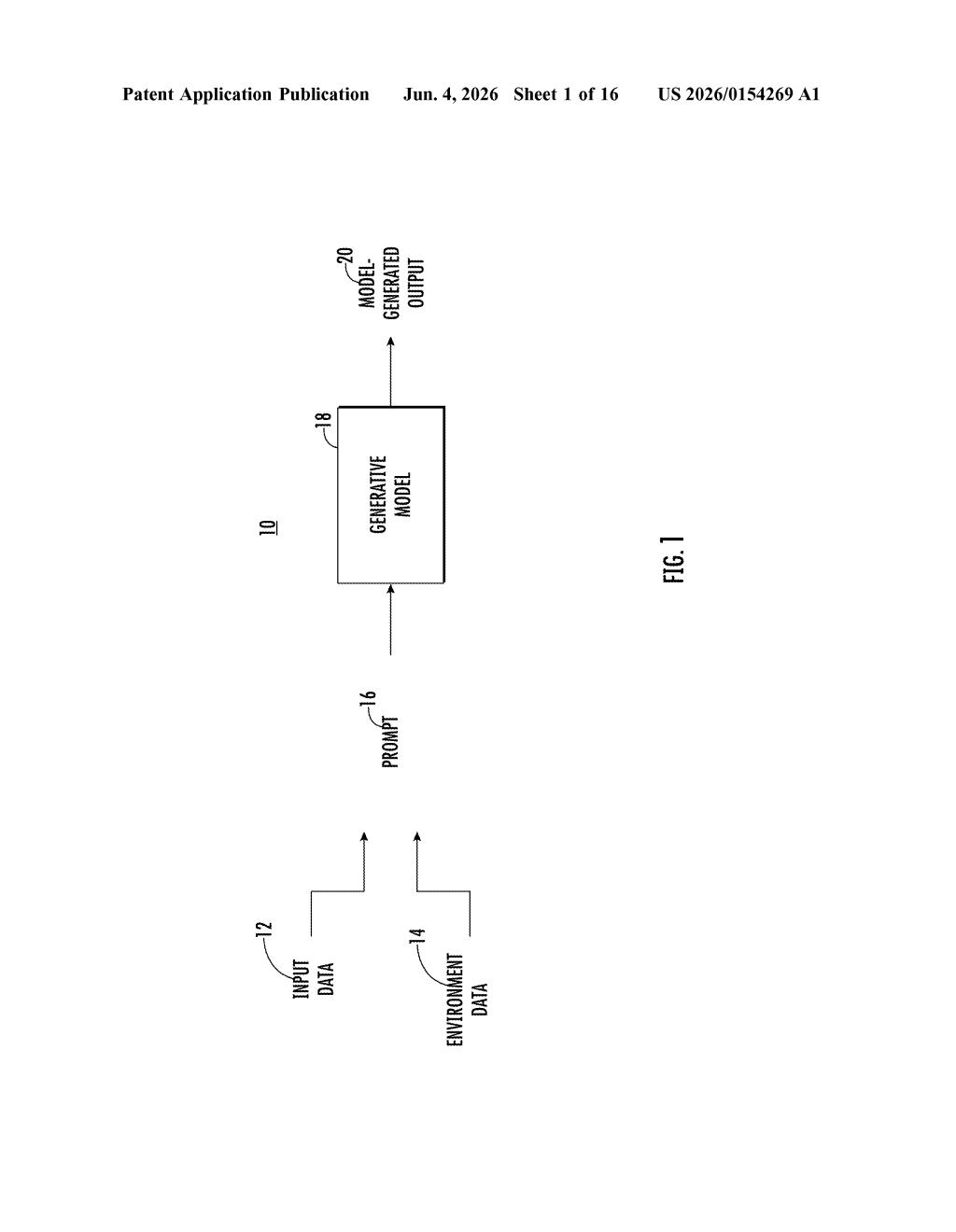
All of that — the image you captured, the content visible on the second device, and the device capability map — gets bundled into a prompt fed to a generative model fine-tuned for multi-device orchestration (meaning the AI has been specifically trained to reason about which device should do what, not just what to say).
The model's output includes predicted features: the actual response content plus a routing decision about which device should receive and display it. The system then transmits the output directly to that chosen device — bypassing the phone if something else is better suited.
What this means for ambient AI in your home or office
Right now, AI assistants are essentially single-device experiences. Ask Gemini something on your phone, you get the answer on your phone — even if there's a 65-inch TV two feet away. This patent lays out the architecture for breaking that constraint, turning an AI companion into something that's aware of your whole environment and can act across it intelligently.
For you as a user, that could mean a future where pointing your phone at your laptop and asking a question surfaces the answer on whichever screen is most useful — without you having to manually cast, copy, or switch apps. It also hints at deeper integration between Google's hardware ecosystem (Pixel phones, Nest displays, Chromebooks) and Gemini, where the AI treats your devices as a unified, room-scale output surface rather than isolated silos.
This is one of the more genuinely interesting ambient-computing patents to come out of Google in a while. The camera-as-environment-scanner trigger is clever UX — it solves the 'how does the AI know what I'm looking at?' problem without requiring always-on sensors. Whether this ever ships as a polished feature depends entirely on Google's ability to execute cross-device integration, which has historically been its weak spot, but the underlying idea is solid and worth watching.
There are more where this came from
We read every patent application Big Tech publishes and send you the ones worth knowing. Plain English, free, every week.
Want this weekly breakdown for a company we don't cover? Patentlyze Pro →