
Google Patents a Network of AI Agents That Monitor Software Connections
When one piece of software stops talking to another, things break fast. Google has filed a patent for a team of AI agents that watch those connections around the clock and flag problems before they cascade.
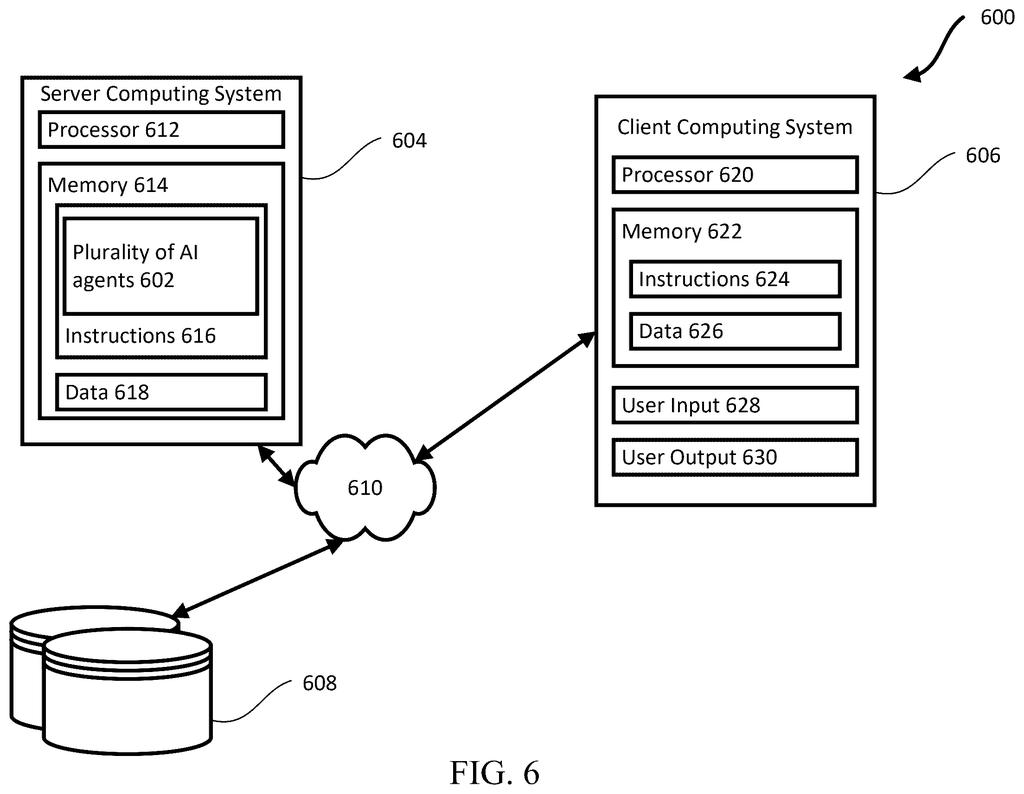
What Google's AI agent system actually watches over
You're using an app and it suddenly freezes, spins, or shows an error. Behind the scenes, the app was trying to fetch data from another service, and that connection failed. These invisible links between software systems are called APIs, and when they misbehave, the user pays the price.
Google's patent describes a system where multiple AI agents, each with a specific job, keep tabs on all those connections at once. One agent reads the rulebook (what an API is supposed to do), another watches live performance (what it's actually doing), and a third compares the two to spot any drift. When something looks wrong, a fourth agent traces the problem back through a map of dependencies to find the root cause.
When you or a developer asks a question about what's going wrong, a front-facing agent figures out what you need and routes your question to whichever specialist has the answer.
… performing, with the one or more processors, compliance checks by identifying differences between API performance specified in the API metadata and actual performance; and generating, with the one or more processors, a response based on analysis of the compliance check.
Translation: The system checks if software connections are acting as promised and creates a report on the results.
How the agents split up tasks and share what they find
The system pulls in two types of data for every API it manages. API metadata is the spec sheet: what the API is supposed to do, how fast it should respond, what formats it accepts. Runtime data is the live feed: what the API is actually doing right now, response times, error rates, traffic volumes.
The system then maps those two data streams together, comparing expected behavior against actual behavior. This is the compliance check: a continuous audit that flags whenever an API drifts outside its promised performance envelope. If an API is supposed to respond in 200 milliseconds but is taking 900, that gap gets logged and analyzed.
When a problem is detected, a specialized agent walks a dependency graph (think of it as a wiring diagram showing which services depend on which other services) to trace where the failure originated. Multiple agents share a common memory or storage layer so they don't duplicate work or contradict each other.
A user-facing agent handles incoming questions in plain language, determines what the person is actually asking, and routes that query to whichever specialized agent holds the relevant data. The response comes back as a synthesized answer covering API health, detected issues, and likely causes.
These agents obtain and analyze API metadata and runtime data to monitor performance, perform compliance checks, and determine root causes through dependency graph analysis.
Translation: Multiple bots review how software pieces connect to find the exact source of any errors.
What this means for developers and app reliability
APIs are the plumbing of every app you use, connecting your phone to weather data, your bank to payment processors, your streaming service to its content library. When that plumbing leaks, you see it as a crashed screen, a failed transaction, or a video that won't load. Today, tracking down why usually takes a developer hours of manual log-diving. A system like this could shrink that to minutes by having the analysis already done the moment the problem appears.
For teams running large software platforms with hundreds or thousands of APIs, the bigger value is continuous monitoring that catches small deviations before they become outages. Google's run of AI-agent infrastructure filings suggests this fits a broader push to automate the operational overhead that bogs down engineering teams.
Google's 24th filing we've tracked on collaborative AI systems since May builds on earlier work covering picking the right AI model and AI models grading their own answers.
The real-world promise of this system is simple: when an app you rely on breaks, the wait for a fix gets shorter. Right now, diagnosing why a digital service failed often takes engineers hours or days of manual investigation. A network of AI specialists, each responsible for a narrow slice of the problem, could shrink that window considerably.
Most people would never see the system directly. They would just notice that the banking app recovered faster, or that the outage message disappeared sooner. That invisibility is actually the measure of success here.
The honest caveat is that a well-designed system on paper still has to hold up when real products fail in unpredictable ways. The value of this approach lives entirely in its execution, and that only becomes clear once it runs in conditions that no filing can simulate.
There are more where this came from
We read every patent application Big Tech publishes and send you the ones worth knowing. Plain English, free, every week.
The drawings
6 drawing sheets from US 2026/0303483 A1 · click any drawing to enlarge


Want this weekly breakdown for a company we don't cover? Patentlyze Pro →
Be the first to weigh in