
Google DeepMind Files Patent for an AI That Rewrites Chip Instructions to Run Faster
Google DeepMind has filed a patent for an AI that writes the lowest-level instructions a chip understands, and keeps only versions that run faster and still give the right answer. It aims at everyday jobs like sorting and hashing that engineers have already tuned by hand.
What Google DeepMind's chip-code patent does
You tap to sort your photos or open a big file, and a tiny delay hangs in the air. Underneath, a chip is working through a long list of very basic steps, and trimming even a few of them adds up when the same job runs billions of times.
Google DeepMind's filing describes an AI that hunts for those savings. You hand it a job, like sorting a short list of numbers, and name the chip that will run it. The AI then writes that chip's own low-level instructions one at a time, checks that the answers still match the original, and keeps the fastest version that stays correct.
The filing says the goal is extra speed from everyday building blocks like sorting and hashing (a way of turning data into short digital fingerprints) that people have already polished by hand.
generating a candidate assembly program by adding a respective assembly instruction to the candidate assembly program at each of a plurality of time steps …
Translation: The system builds a potential new version of the code one instruction at a time across multiple steps.
How the AI builds a faster program step by step
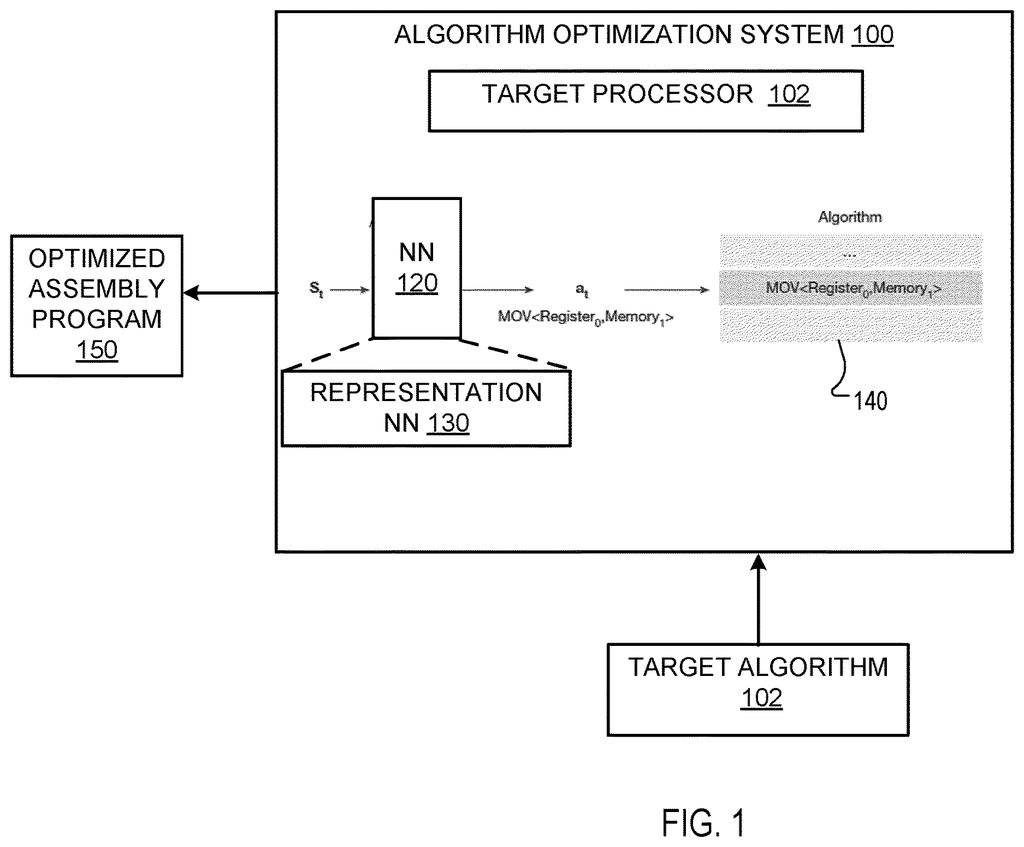
The system takes a target algorithm (the job to be sped up) and a target processor (the chip that will run it). It then produces an assembly program, which is a list of the plain, low-level instructions a specific chip understands, like moving a value between a register (a tiny storage slot on the chip) and memory.
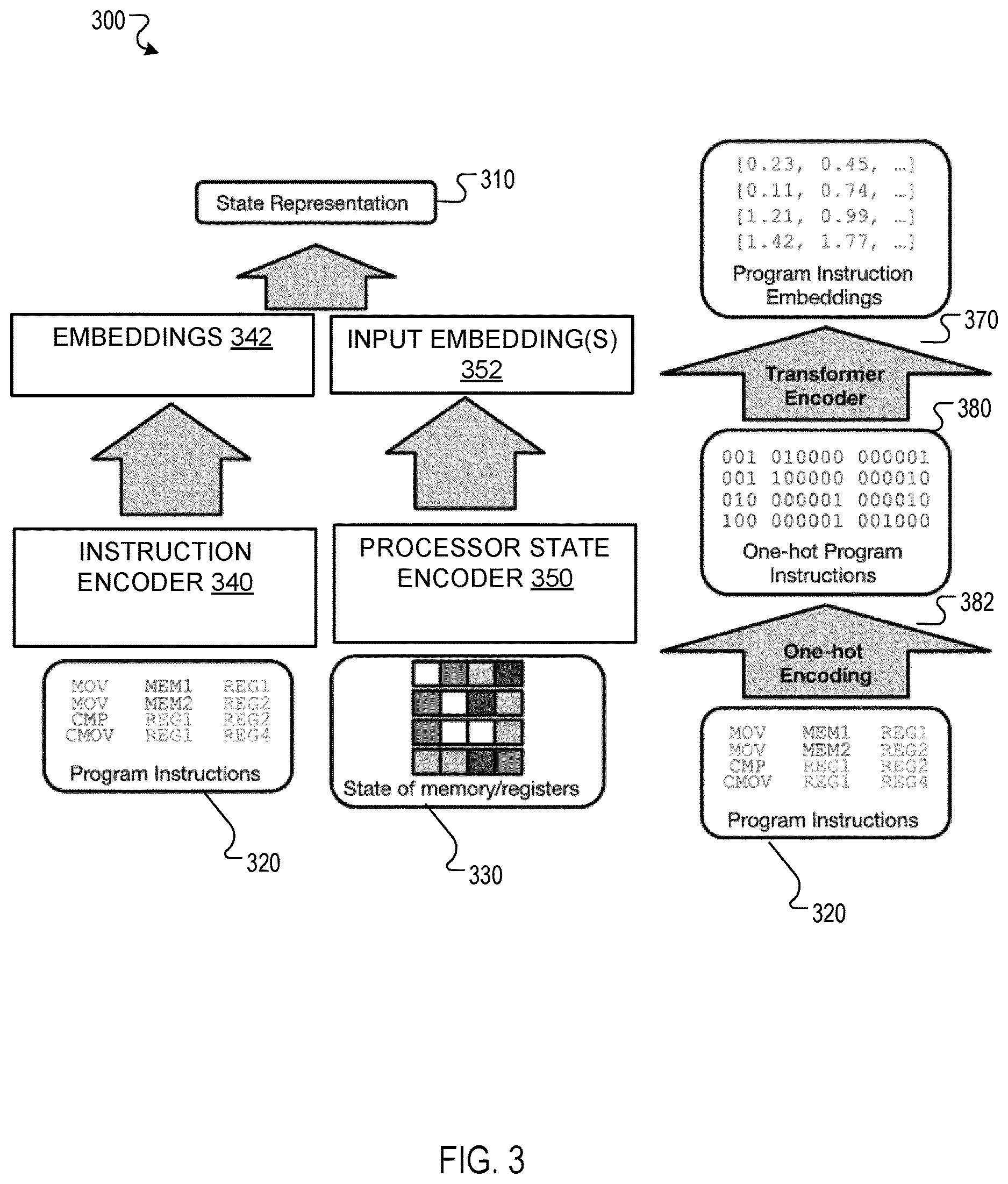
The program is built one instruction at a time. At each step the system describes the current draft to a representation neural network, a model that turns the draft into a set of numbers summarizing where things stand. That summary is used to pick the next instruction. The filing describes two ways to read the draft: a Transformer (the same family of model behind many chatbots) or a graph network that treats memory spots and registers as dots connected by data flow.
Each draft is scored two ways:
- Correctness: do its outputs match what the original algorithm produces?
- Latency: how long does it take to run? The filing allows a stand-in measure based on instruction count.
Those scores become training examples, so the network improves while it searches. The filing also describes a look-ahead search (Monte Carlo Tree Search, a method that tries out many possible next moves before committing) to choose instructions. At the end, the system picks the fastest program that is still correct.
Methods, systems, and apparatus, including computer programs encoded on computer storage media, for optimizing a target algorithm using a state representation neural network.
Translation: Google patented software that uses neural networks to make computer algorithms run faster.
Why faster sorting and hashing touches your apps
If this works as described, the payoff is quicker everyday software. Sorting, hashing and compression sit underneath a huge number of apps, and the filing says speeding them up can lift overall performance. The result could be stored in a programming library, so any program that uses that library gets the gain without its authors doing anything.
The filing also points at a harder problem than it first looks. One wrong instruction can ruin a whole program, which makes the search tricky. The filing says the approach can improve even algorithms that people have already tuned, and it can also help when a job was never written for a particular chip. For Google, that means more speed from the same hardware.
This is the 25th Google patent we've tracked in the AI chip wars since July, a run that includes a sectioned chip with split memory and a voice assistant priority system.
The trade here is compute and flexibility for speed. Searching through instruction combinations while training a neural network sounds expensive, and the payoff arrives only for small, heavily reused routines like sorting a short list. Most programs are far too big to rewrite this way, so the gain stays narrow.
The design also ties each result to one specific chip. A program tuned for one processor design may be useless on another, so the work has to be repeated. The correctness check runs on a set of sample inputs, and the filing admits that set may only be representative of all inputs, so a rare input could slip through unless the set covers everything.
Still, the trade reads as worth it. A routine that runs billions of times can repay a lot of one-time search effort, and the filing builds in an automatic check for wrong answers. The idea works best as a specialist tool for the code that matters most.
Get our take in your Top Stories
Liked this breakdown? Add Patentlyze as a preferred source on Google, and our plain-English take shows up more often in your Top Stories the next time Google patent news breaks.
There are more where this came from
We read every patent application Big Tech publishes and send you the ones worth knowing. Plain English, free, every week.
The drawings
4 drawing sheets from US 2026/0339634 A1 · click any drawing to enlarge



Want this weekly breakdown for a company we don't cover? Patentlyze Pro →
Be the first to weigh in