
Google Patents a Way to Fix Misplaced Map Locations Using Your Own Feedback
You walk into a coffee shop, your phone thinks you're at the dry cleaner next door, and Google Maps learns nothing. This patent describes a system that would actually fix that, using your own taps to correct the record.
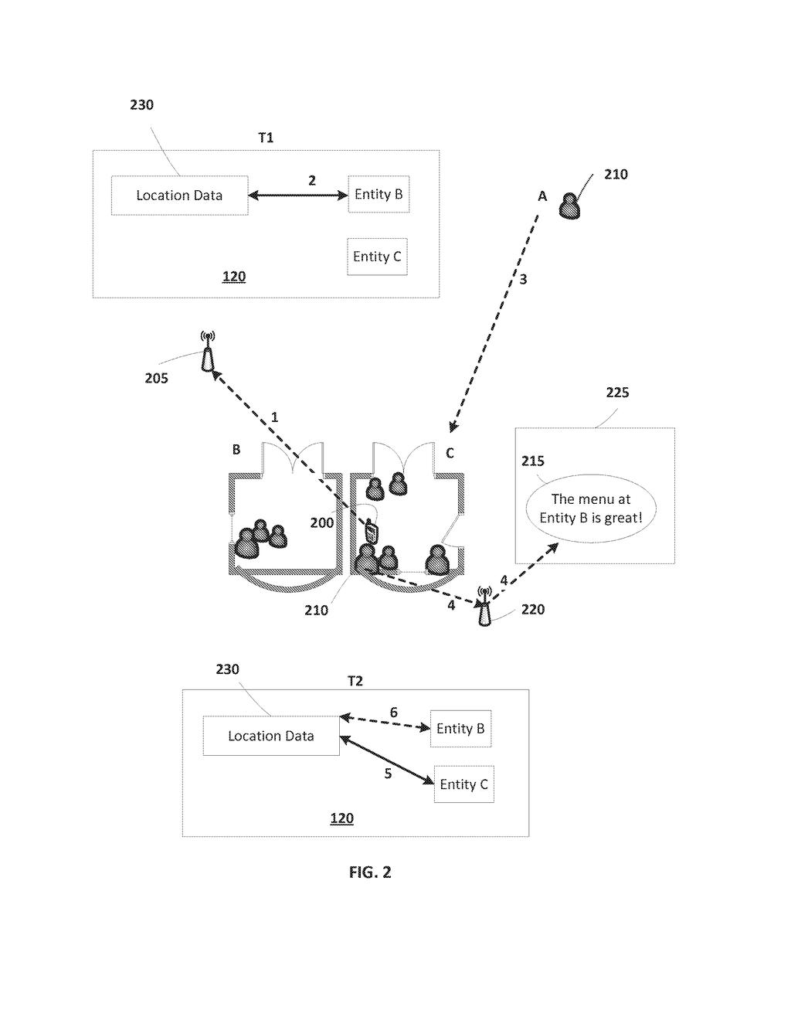
How Google uses your check-ins to fix wrong map pins
Every time your phone registers where you are, apps behind the scenes decide which nearby business to attach that location to. Most of the time they get it right. But addresses overlap, GPS drifts, and storefronts sit shoulder-to-shoulder, so the system occasionally tags you at the wrong place.
Google's patent describes a way to clean that up using your own input. If the map points to the wrong spot, your correction (a check-in tap, a rating, a manual pin drag) becomes a signal that updates which business is actually linked to that location. The old, wrong association can be dropped entirely, and the correct business gets a more accurate pin on the map.
The end result is that map listings get corrected faster, and the fixes come from real people in the real place rather than from someone guessing at a desk.
… one or more affirmative user inputs may indicate that a second entity is additionally, and/or alternatively associated with location data. Accordingly, location data may be associated with the second entity.
Translation: When users report that a map label is wrong, the software links that location to the correct place instead.
How the system reassigns a location to the right business
The patent describes a server-side process that continuously matches phone location data to a database of points of interest (POIs), meaning named places like restaurants, stores, or offices.
When your phone reports a location, the system identifies the POI it thinks is associated with that spot. That's the first association. But if you then provide what the patent calls an affirmative user input (any deliberate action that ties your phone to a specific place, like a check-in, a review tap, or a manual correction), the system reads that as evidence that the existing association might be wrong.
From there, the system has two options:
- If your input confirms the same POI but suggests a different physical location for it, the pin moves.
- If your input points to a completely different POI at that address, the wrong POI loses its link to that location and the correct one is assigned instead.
The corrected data then feeds back into map displays, so other users searching for that POI see the updated, more accurate result. The whole loop runs without requiring a formal error report from anyone.
What this means for Google Maps accuracy and local businesses
For everyday users, a misplaced map pin is a minor annoyance. For a small business, it can mean customers walking into the wrong door or a food delivery showing up at the wrong building. A system that passively collects corrections from foot traffic and folds them into the map could reduce that kind of error without requiring anyone to file a formal dispute.
For Google, more accurate location data also makes ad targeting, local search rankings, and navigation more reliable, all of which feed the core Maps and Search business. Google's long bet on location data means even incremental accuracy improvements carry real commercial weight.
Google's 814th filing we've tracked since May in our Google coverage adds to a run that includes refining image searches with text and AI filling task gaps mid-chat.
The patent is almost entirely software. There's no new hardware dependency here, just a revised data pipeline that sits between phone location signals, a POI database, and a map display. That makes the path to shipping this relatively short compared to patents that need new chips or sensors.
The trickier part is defining what counts as a reliable correction. A single user tapping a check-in button could be wrong themselves, drunk, or just careless. The patent doesn't describe how many signals are needed before the system commits to a change, which is probably where most of the real engineering work lives.
If Google has already solved the signal-quality problem internally, this reads like documentation of something close to deployed infrastructure rather than a distant research concept.
There are more where this came from
We read every patent application Big Tech publishes and send you the ones worth knowing. Plain English, free, every week.
The drawings
6 drawing sheets from US 2026/0300329 A1 · click any drawing to enlarge


Want this weekly breakdown for a company we don't cover? Patentlyze Pro →
Be the first to weigh in