
Google Patents a Way to Train Search AI on Full User Sessions, Not Just Clicks
Most AI models learn from isolated signals, like which link you clicked. Google's new patent describes teaching a neural network the whole story: the query you typed, the results you saw, and everything you did next.
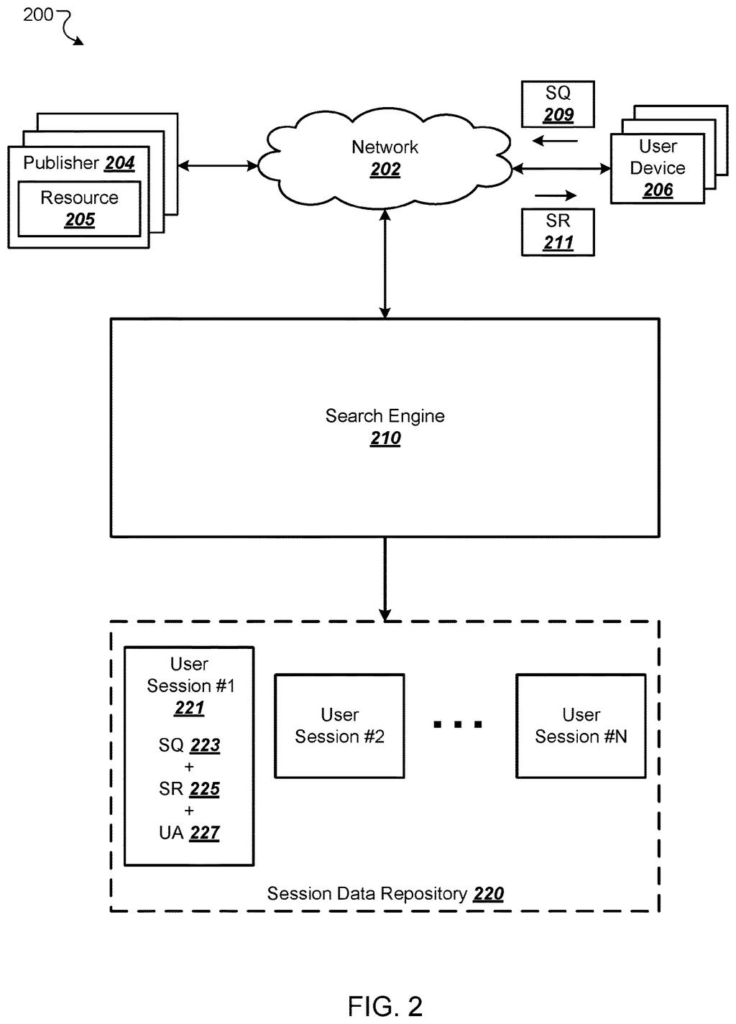
How Google turns your search sessions into AI training fuel
A person opens Google, types a question, scrolls past a few results, clicks one link, then comes back and tries a different search. That whole arc of behavior tells a richer story than any single click. Most people don't think about it, but that arc is exactly what Google now wants to use as teaching material for its AI.
This patent describes a method for taking a complete search session, everything from your first query to your last action, and packaging it into a structured sequence that a neural network can learn from. The idea is that understanding context matters: a click on a result means something different depending on what you searched for first and what you did afterward.
By training on these full sessions rather than isolated events, Google's AI could get a more accurate picture of what people are actually looking for. The patent covers the method for generating these structured training sequences and using them to teach the model.
A training sequence is generated from the session data. For each user session, the training sequence includes subsequence blocks arranged one after another in a predetermined order.
Translation: The system turns user history into organized step by step training data.
How session data gets packaged into training sequences
The patent describes a training pipeline that converts raw search session logs into a structured format a neural network can learn from.
Each user session covers one continuous visit to the search engine, which might include multiple queries, the results returned for each, and every action the user took in response (clicking a link, ignoring results, refining the query, and so on). The system takes that session and breaks it into a series of subsequence blocks, one block per query-result-action cycle, arranged in the order they actually happened.
Each block contains three parts:
- Search query subsequence: a representation of the query the user typed
- Search result subsequence: a representation of the results the engine returned
- User action subsequence: a record of what the user did with those results
The neural network is then trained on these structured sequences by optimizing a pre-training objective function, meaning the model is given a learning goal (predicting missing parts of the sequence, for example) and adjusts its internal settings to get better at that goal. This is a standard pre-training approach, the same style used to train large language models, but applied here specifically to search behavior data.
What this means for how Google Search understands you
For everyday search users, the practical implication is a model that understands intent more deeply. If Google's AI learns that people who search a certain way tend to follow up with a related query, it can start anticipating that need rather than treating each search as a blank slate. That could mean fewer wasted clicks and results that feel more relevant to what you were actually trying to do.
For Google as a business, this is about squeezing more signal out of data it already has. Search sessions are generated by the billions every day. Google's run of session-based training filings suggests the company is systematically building infrastructure to turn that behavioral history into a training advantage that outside researchers cannot easily replicate.
Google's 96th filing in Language AI we've tracked since May adds to a run that includes one on copying image text styles and one on summarizing sensor data.
Packaging search activity into ordered sequences preserves the story of what a user was trying to accomplish across an entire session, rather than treating each query as an isolated event. That context is valuable, and the design logic holds up.
The cost is fragility. Real sessions are messy: users abandon searches halfway through, open results in new tabs and never come back, or fire off a query and do nothing. The more structure you require from your training data, the more often real-world behavior fails to fit that structure. The patent describes the approach at a level that sidesteps these problems entirely, leaving the hard cleanup work to implementation.
Whether this produces a noticeably better search experience depends on how well those gaps get handled in practice. The concept is sound; the execution is where it either earns its keep or falls apart.
There are more where this came from
We read every patent application Big Tech publishes and send you the ones worth knowing. Plain English, free, every week.
The drawings
8 drawing sheets from US 2026/0300752 A1 · click any drawing to enlarge


Want this weekly breakdown for a company we don't cover? Patentlyze Pro →
Be the first to weigh in