
Google Patent: Reusing CPU Vector Instructions to Accelerate AI Matrix Operations
Google has patented a way to let a processor do matrix math, the kind that powers AI models, without adding new silicon. A single software switch tells the chip to treat its existing instructions differently.
What Google's instruction-reuse trick actually does
You're running an AI model on a chip that was originally designed for a different kind of math, and the chip keeps hitting a wall because it wasn't built for the heavy lifting AI requires. That gap between old hardware and new demands is a real headache in chip design.
Google's patent describes a fix that lives almost entirely in software. A processor has a small internal setting called a configuration register, think of it as a mode dial. One instruction flips that dial, and from that point on, the chip reads its existing math instructions in a new way, treating them as matrix operations instead of the simpler calculations they were written for.
Matrix math is what makes AI workloads tick: ranking words in a sentence, processing pixels, running a neural network layer. Instead of building a brand-new chip to handle all that, Google's approach repurposes the instructions already there. Your code changes very little; the chip just interprets it differently.
1 . A processor configured to implement an instruction set architecture having an instruction that in operation sets a configuration register of the processor with one or more values that cause the processor to reinterpret one or more vector instructions as matrix instructions.
Translation: A special chip instruction changes a setting so normal vector commands run as matrix operations instead.
How the config register flips vector into matrix mode
Most modern processors have a set of vector instructions, commands that apply the same operation to a whole row of numbers at once. Think of multiplying a list of ten prices by a discount factor in a single step instead of one price at a time. That's a vector operation.
AI and machine-learning workloads, however, live in matrix operations, which work on grids of numbers simultaneously (rows times columns, not just rows). Chips designed for matrix math are faster at AI tasks, but retrofitting old instruction sets typically means adding new chip area and rewriting software stacks.
Google's patent threads a narrower path:
- The processor's instruction set architecture (the complete vocabulary of commands the chip understands) includes a special instruction for writing to a configuration register, a small storage cell inside the chip that controls behavior.
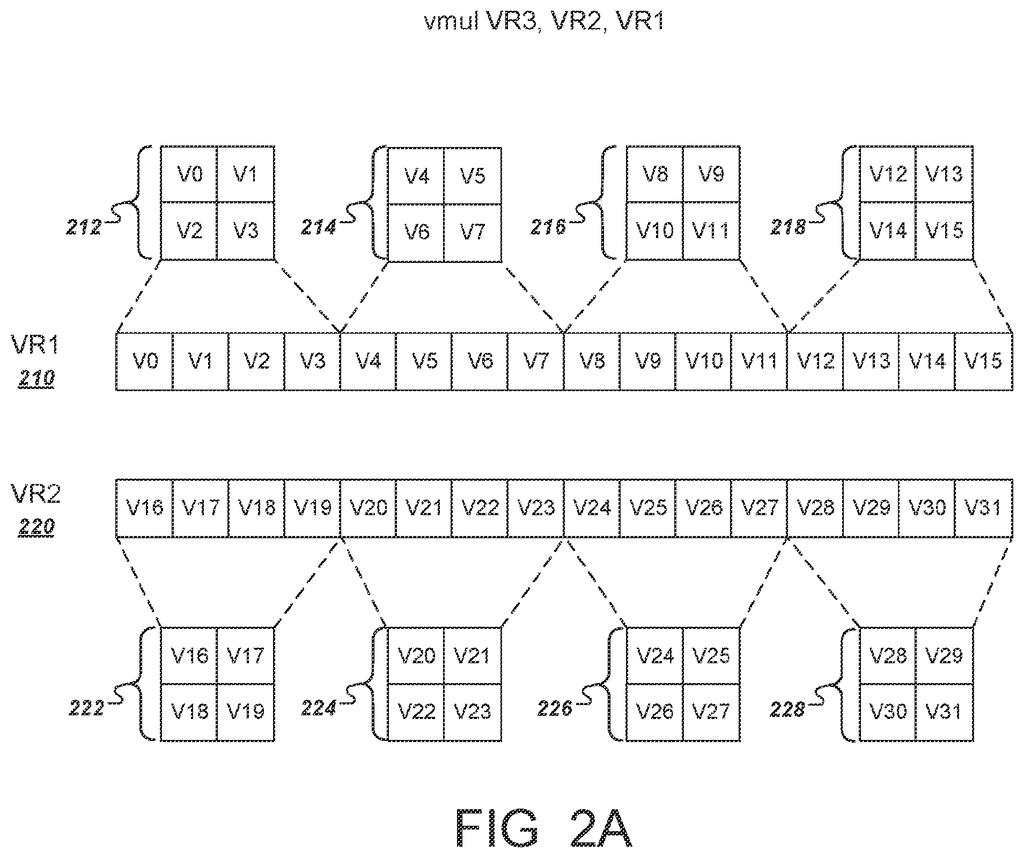
- When software executes that instruction, it sets a value in the register that effectively tells the chip: treat incoming vector instructions as matrix instructions.
- From that moment, the same binary commands that would have done vector math are reinterpreted at the hardware level to perform matrix operations instead.
The key phrase in the claim is "reinterpret," not "translate" or "emulate." The patent argues the chip is performing real matrix operations, just triggered by an existing opcode, which could sidestep the need for entirely new instruction encodings.
… when one or more vector instructions are received, based on information set in the configuration register the one or more vector instructions are reinterpreted as matrix instructions.
Translation: Once the register is updated, incoming vector commands are automatically treated as matrix math tasks.
What this means for AI chips and legacy code
For chip designers, this approach means you could ship a processor with a smaller, simpler instruction set and still unlock matrix-math capability through a firmware or driver update. That is a meaningful cost saving when tape-out schedules are measured in years and budget overruns.
Google's run of custom-silicon filings suggests the company is working hard to close the gap between its AI software ambitions and the hardware it controls. If a configuration-register trick can squeeze matrix performance out of chips already deployed in data centers, that is real money. For everyday users, the benefit is indirect: AI features in Google products could run on a broader range of existing hardware, rather than requiring the newest generation of custom chips.
Google's 13th filing we've tracked in the AI chip wars since July builds on earlier work like feeding data into quantum systems and fixing quantum errors.
The trade this design makes is straightforward: you gain flexibility and backward-compatibility, and you give up clarity. When the same instruction can mean two different things depending on a register state, debugging becomes harder. A developer chasing a performance bug now has to ask not just 'what did this instruction do?' but 'what mode was the chip in when it ran?' That context-dependence is a known source of subtle errors in processor design.
There is also a performance question the patent does not answer. Reinterpreting a vector instruction as a matrix operation sounds efficient, but the chip's underlying data paths were built around vector shapes. Whether the reinterpretation is lossless, or whether it leaves some matrix-math throughput on the table, is the kind of detail that will matter enormously in practice and is not resolved here.
The core idea, a mode bit that shifts how an entire class of instructions behaves, is well-trodden territory in processor architecture. The trade reads as defensible for embedded or cost-sensitive deployments where adding new silicon is not an option, but it would be a surprising choice for a flagship AI accelerator where raw throughput is the point.
There are more where this came from
We read every patent application Big Tech publishes and send you the ones worth knowing. Plain English, free, every week.
The drawings
5 drawing sheets from US 2026/0259731 A1 · click any drawing to enlarge


Want this weekly breakdown for a company we don't cover? Patentlyze Pro →