
IBM Patents Data Transfer to the Cloud That Keeps Corporate Networks Locked Down
Most companies moving data to the cloud have to punch holes in their corporate firewall, which makes security teams nervous. IBM's new patent describes a way to skip that entirely by flipping who initiates the connection.
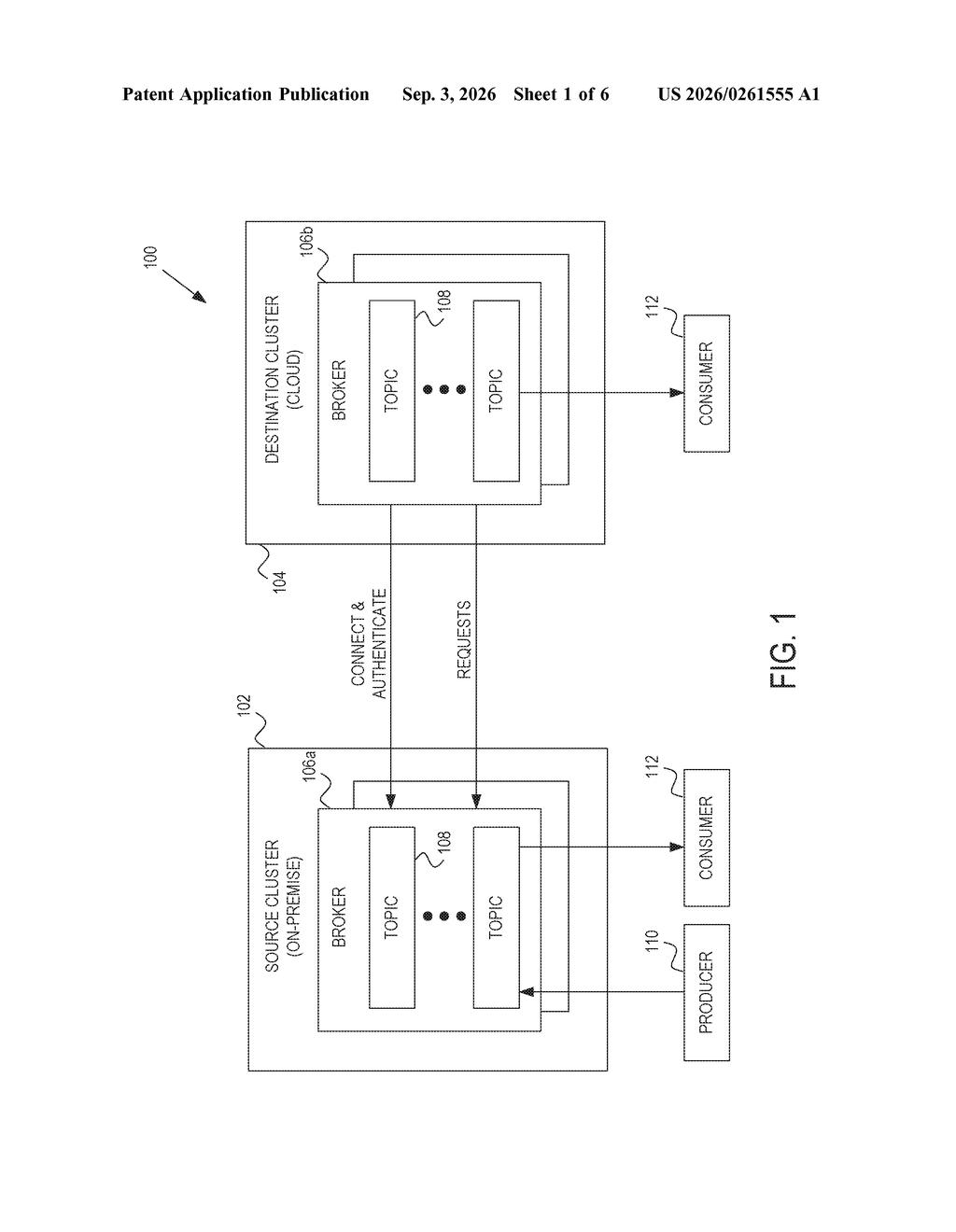
What IBM's reversed-connection data transfer actually does
Corporate firewalls are designed to block incoming connections from the internet, but most standard cloud data pipelines require exactly that: an inbound door left open for cloud servers to reach in. That tension forces security compromises that IT teams dislike.
IBM's patent describes a system where your company's internal servers always make the first move, reaching out to the cloud, never the other way around. Once that initial connection is established, the two ends swap roles, so the cloud side can effectively pull data as if it made the connection itself. No firewall rules need to change, and no inbound port needs to open.
The idea is aimed at event-streaming platforms (systems that move large volumes of real-time data, like transaction logs or sensor readings) that need to replicate data between a company's own data centers and a cloud service. It is the kind of plumbing problem that never makes a product brochure but causes real headaches for engineering teams.
Initially, a controller server in a source on-premise cluster establishes a persistent connection to a controller server in a destination cloud cluster.
Translation: An on-premise server first opens a steady link to a server in the cloud.
How the connection flip works step by step
The patent describes a two-cluster architecture built on top of a distributed streaming platform (think Apache Kafka, the widely used system for moving real-time data between services). One cluster lives on company premises behind a corporate firewall; the other lives in the cloud.
Here is how the connection handoff works:
- A controller server on the company side opens an outbound connection to its counterpart in the cloud. That direction is fine with firewalls because it originates internally.
- The cloud controller then sends a request back through that channel asking the on-premises side to open additional connections, one for each pair of servers that needs to exchange data.
- Each on-premises server establishes its own outbound connection to a cloud server and authenticates (proves its identity). Then both ends flip the roles of that connection: the cloud end stops treating it as an incoming connection and starts using it as an outgoing client channel, and the on-premises end does the opposite.
- After the flip, the cloud side can send data requests to the on-premises server over a connection that, from the firewall's point of view, was always outbound.
The patent calls this "connection and request direction decoupling" because the physical direction the connection was opened and the direction data flows afterward are two different things. Authentication happens before the flip, so the cloud server has verified who it is talking to before any data moves.
… the adding enabling a client at the destination to send requests to the source server for data over the reversed connection.
Translation: This switch lets the cloud side pull data from the local network safely.
What this means for companies moving data to the cloud
For companies that run real-time data pipelines between their own servers and a cloud service, firewall management is a constant friction point. Security policies at large enterprises often forbid inbound connections from outside the corporate network, which makes standard cloud-replication tools difficult or impossible to deploy without months of policy negotiation. IBM's approach would let those pipelines run without asking the security team for an exception.
The practical target appears to be IBM's own event-streaming products, which compete in a market dominated by managed Kafka services from AWS, Confluent, and others. IBM's run of hybrid-cloud streaming filings suggests the company is trying to differentiate on security posture for regulated industries like finance and healthcare, where data leaving the premises through an open port is a compliance problem, not just an IT preference.
IBM's 321st filing in our IBM coverage since May follows work like spotting fake virtual-world behavior and AI security clearances.
The security trick here is that a company's own servers always make the first call outward to the cloud, so no outside system ever gets a foot in the door. That respects the hard lines corporate security teams draw around inbound connections while still letting data flow both ways.
This runs entirely on existing server infrastructure, no new hardware required, which puts it unusually close to a product. The one thing that has to exist first is a shared coordinator that both sides already trust, and IBM's managed cloud offerings plausibly fill that role today.
The natural buyers are banks, hospitals, and insurers that want cloud computing without opening holes their compliance auditors will flag. A software update that solves that problem without a hardware purchase is a short sales conversation.
Get our take in your Top Stories
Liked this breakdown? Add Patentlyze as a preferred source on Google, and our plain-English take shows up more often in your Top Stories the next time IBM patent news breaks.
There are more where this came from
We read every patent application Big Tech publishes and send you the ones worth knowing. Plain English, free, every week.
The drawings
6 drawing sheets from US 2026/0261555 A1 · click any drawing to enlarge


Want this weekly breakdown for a company we don't cover? Patentlyze Pro →
Be the first to weigh in