
Samsung Patents a Fix for Uneven Brightness in E-Ink Displays
E-ink screens can look subtly washed out near the edges — not because the pixels are bad, but because the electrical field driving them weakens the farther a pixel sits from the bezel connection. Samsung's new patent tackles that problem at the driver level.
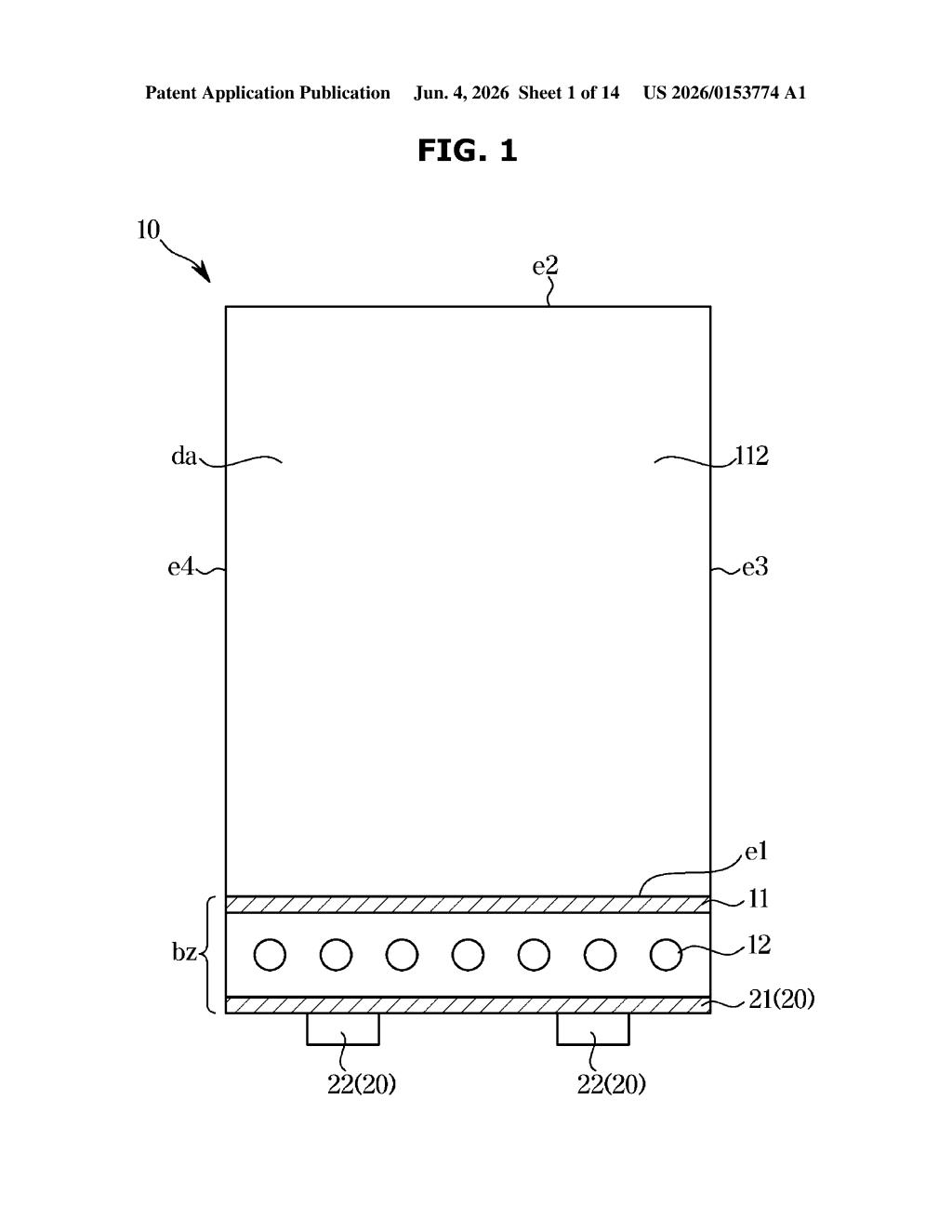
What Samsung's per-pixel voltage fix actually does
Imagine reading on an e-ink tablet and noticing the text near the edges looks slightly faded compared to the center. It's not a smudge or a defect — it's physics. The voltage that tells each tiny ink particle where to move has to travel different distances depending on where the pixel sits on the screen, and that uneven journey can cause uneven results.
Samsung's patent describes a display driver that knows where every pixel lives relative to the bezel — the frame around the screen where the electrical connection comes in — and automatically adjusts the voltage each pixel receives to compensate for that distance. Pixels far from the bezel get a slightly boosted signal; pixels close to it get a toned-down one.
The goal is a screen where every pixel gets exactly the right amount of electrical push, no matter where it sits. For e-readers, digital price tags, or any device that uses e-paper, that translates to more consistent, uniform-looking text and images across the whole display.
How the driver calculates distance-based voltage corrections
The display stack here is a classic electrophoretic setup: a bottom substrate carrying individual pixel electrodes, a top substrate carrying a uniform reference voltage, and a display medium layer — the ink — sandwiched in between. The electric field between the two voltages pushes charged ink particles up or down to create light or dark pixels.
The problem is that the bezel — the physical frame — is where the electrical connection enters the first substrate, and it only connects along one edge. That means current has to travel farther to reach pixels on the opposite side of the screen. The longer the path, the more resistance builds up, and the weaker the effective voltage becomes at distant pixels.
Samsung's solution is a distance-aware driver: software (or firmware) inside the display controller that calculates each pixel's distance from that bezel-connected edge and applies a corrected data voltage — essentially a per-pixel compensation table. Pixels that are farther away receive a higher raw voltage so that, after resistive losses, they still end up with the same effective field as pixels sitting right next to the connection.
The claim is written broadly enough to cover any correction scheme tied to pixel-to-bezel distance, which means the actual math — whether it's a linear ramp, a lookup table, or something more complex — is left open.
What this means for e-readers and e-paper devices
For e-ink devices — think e-readers, electronic shelf labels, digital signage, and smart notebooks — display uniformity is one of the hardest quality problems to solve, because the physics of electrophoretic ink makes it sensitive to even small voltage differences. A fix baked into the driver rather than requiring a hardware redesign is appealing because it could improve existing panel architectures without adding cost.
Samsung is a significant player in display manufacturing, and a patent like this fits naturally into their e-paper panel business. If this correction technique makes it into production, you might end up with an e-ink screen that looks noticeably more consistent edge-to-edge — especially on larger panels where the distance gradient is more pronounced.
This is a focused, practical engineering patent — not a moonshot. It solves a real and well-known problem in e-ink displays (edge-to-center voltage drop) with a driver-level software fix, which is the kind of low-cost improvement that actually ships. It's not exciting reading, but it's exactly the type of incremental refinement that adds up to noticeably better screens over time.
There are more where this came from
We read every patent application Big Tech publishes and send you the ones worth knowing. Plain English, free, every week.
Want this weekly breakdown for a company we don't cover? Patentlyze Pro →