
Meta Patents a Way to Put You in a Virtual Space Using Only Your Phone
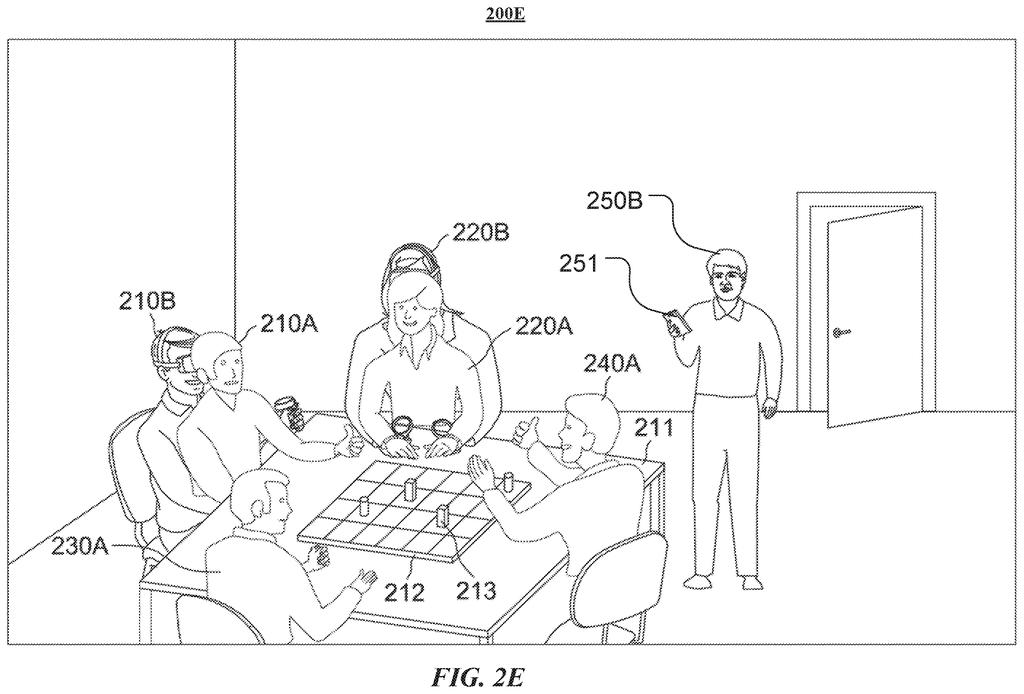
Meta is exploring a way to drop you into a shared virtual world using nothing but your smartphone's front camera, no headset required. The system tracks your head movements through the phone itself, then uses that data to animate your avatar and position virtual objects around you.
What Meta's phone-based AR avatar system actually does
You're holding your phone up at a group call and wishing you could actually feel like you're in the same room as the people on screen. That gap between "video call" and "actually being somewhere together" is exactly what this patent is trying to close.
Meta's system uses your phone's front-facing camera to figure out where your head is pointed, how it's tilted, and roughly what you're doing with your face. It then uses that information to move your avatar inside a shared virtual space in real time, so other people in the session see a version of you that reacts naturally as you look around.
The clever part is what gets filtered out. The system is deliberately designed to show only meaningful actions, skipping over minor or unintentional movements so your avatar doesn't flicker around distractingly. The whole thing runs on the phone itself, which matters a lot if Meta ever wants to reach people who don't own a Quest headset.
rendering a first avatar associated with a first user in a virtual space based on a head pose of the first user in a real-world space …
Translation: Your phone tracks where your head is pointing to draw your digital character in the virtual world.
How face-tracking drives avatar and scene rendering
The patent describes a pipeline with three moving parts working together in real time.
First, the phone's sensors (camera plus motion sensors) establish a device pose, meaning the system knows where the phone is sitting in physical space and which direction it's facing. Think of this as anchoring the whole experience to a fixed point in your living room.
Second, the system runs face-tracking on the front camera to derive your head pose, a precise description of the direction your head is facing and how it's oriented relative to the phone. This is the core input that drives everything else. Rather than needing external sensors or a headset with built-in trackers, all the tracking happens through the phone's existing hardware.
Third, the system uses that head pose to do two things at once:
- Render your avatar in the virtual space, animating it to match where your head is pointing
- Position virtual objects in the scene from your perspective, so the virtual world shifts correctly as you move your head
The claim also specifies a selective rendering rule: the system generates a representation of some actions but deliberately skips others. The patent frames this as distinguishing a "first action" from a "second action," though it leaves the exact filtering criteria open. The practical effect is an avatar that behaves naturally without mirroring every micro-twitch of your head.
… determine a head pose of a first user associated with the handheld device based on face-tracking data of the handheld device …
Translation: The phone uses its camera to track your face so it knows how your head is moving.
What this means for headset-free social AR
Most social AR and VR experiences today require dedicated hardware. A Quest headset costs several hundred dollars, and even then the audience is relatively small. A phone-based system that approximates head-tracked presence would let Meta bring social virtual spaces to the billion-plus people who already own a capable smartphone, without waiting for them to buy anything new.
For you as a user, the immediate implication is the possibility of joining a virtual meeting, game, or social space from your phone and having your avatar actually look like it's paying attention, glancing around, reacting, rather than being a static placeholder. Whether Meta ships this as a standalone app or folds it into a product like Horizon Worlds remains to be seen, but the building blocks described here are software-side, which makes the path to a product shorter than patents that require new chips or sensors.
Meta's 161st filing in our Meta coverage since May adds to a growing body of eye-tracking work that includes single-beam room scanning and gaze-plus-hand selection.
The hardware this patent needs already exists in most people's pockets. A front-facing camera, a phone that can track your face, and a connection to Meta's social platforms are the only physical ingredients required, which means the shortest path to a shippable product here is mostly a software and design problem rather than a manufacturing one.
The harder question is whether anyone will hold a phone up to their face long enough for this to feel like a real experience. The patent describes the system carefully but says nothing about fatigue, and that omission matters more than any technical detail in the document.
The piece of this that carries the most weight is the filtering logic, meaning how the system decides which small head movements are real enough to pass along to your avatar in the shared space. If that works well, someone joining through a phone could feel present rather than like a puppet with a bad connection.
There are more where this came from
We read every patent application Big Tech publishes and send you the ones worth knowing. Plain English, free, every week.
The drawings
13 drawing sheets from US 2026/0295410 A1 · click any drawing to enlarge


Want this weekly breakdown for a company we don't cover? Patentlyze Pro →
Be the first to weigh in