
Meta's New Patent Teaches AR Glasses to Filter Out the Digital Clutter
Imagine walking into a store and your AR glasses are technically aware of a hundred digital overlays attached to products around you — but only show you the ones that actually make sense right now. That's exactly the problem Meta is trying to solve with this patent.
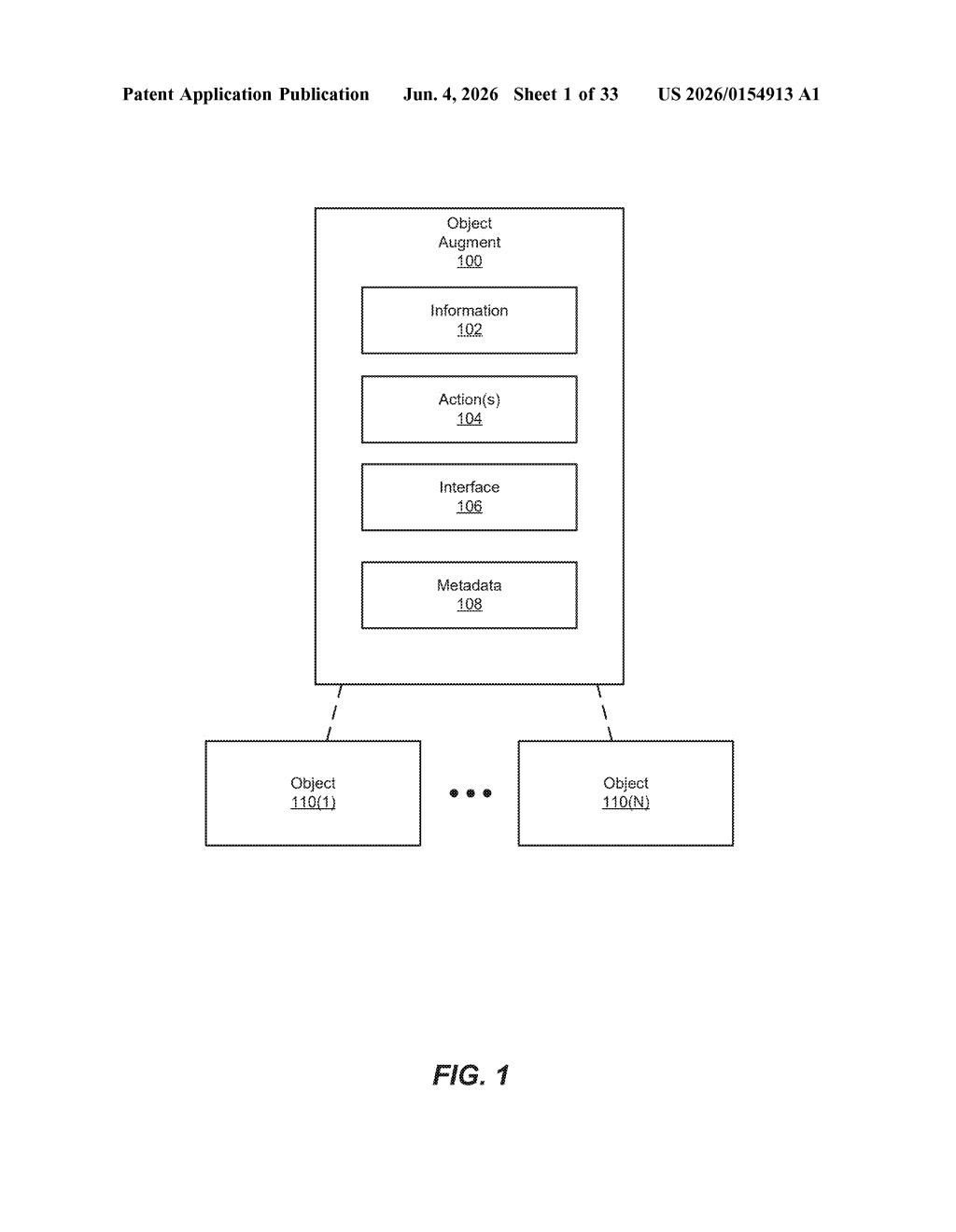
What Meta's AR overlay filtering system actually does
Picture putting on a pair of AR glasses and walking through a grocery store. Every product on the shelf could theoretically have a digital tag floating above it — price comparisons, allergen warnings, reviews — but if your glasses tried to show all of them at once, you'd see nothing but chaos. Meta's patent describes a system for deciding which of those floating labels to actually show you, and which to hold back.
The core idea is that each digital overlay (called an object augment) has conditions attached to it. Maybe a restaurant menu overlay only appears when you're within ten feet and it's lunchtime. If those conditions are met, your glasses prioritize showing it. If not, it gets suppressed — kept in a database but invisible for now.
This is less about flashy new visuals and more about the invisible plumbing that makes AR feel useful rather than overwhelming. Getting that filtering logic right is arguably one of the hardest unsolved problems in consumer AR.
How Meta's system scores and gates object augments
The patent describes a pipeline with five core steps:
- Maintaining a database of object augments — digital overlays tied to specific real-world objects
- Detecting objects in the user's environment that have augments mapped to them (think computer vision scanning what you're looking at)
- Evaluating presentation conditions — rules that determine whether an augment should be shown right now
- Prioritizing display when conditions are satisfied
- Constraining display (suppressing the augment) when conditions aren't met
The presentation condition is the key concept here. It's essentially a gating rule — a logical check that each augment must pass before it earns screen real estate on your lenses. Conditions could be proximity-based, time-based, context-based, or set by the augment's publisher.
This matters because real-world AR environments are dense. A single room could contain dozens of objects each mapped to multiple augments. Without a principled filtering and prioritization layer, the display becomes unusable. The patent is essentially formalizing that arbitration logic as a system-level feature rather than leaving it to individual app developers to figure out.
Notably, the first independent claim was canceled — which sometimes happens during prosecution when claims are refined — so the exact legal scope is still being shaped.
What this means for Meta's Ray-Ban and Quest strategy
For Meta, this is foundational infrastructure for its AR ambitions. Whether it's Ray-Ban smart glasses evolving to include a display, or a future standalone headset, the core challenge is the same: the real world is full of AR-addressable objects, and showing everything is as bad as showing nothing. A robust prioritization and suppression system is what separates a useful AR layer from a cluttered mess.
For you as a future AR user, this is the difference between glasses that feel like a helpful assistant and ones that feel like a pop-up ad generator strapped to your face. It also has implications for developers and brands who want to attach augments to their products — Meta would effectively be the gatekeeper deciding whose overlays get surfaced and when.
This patent is unglamorous but genuinely important. The hard part of consumer AR isn't rendering graphics — it's knowing when NOT to show them. Meta filing on a prioritization and suppression system suggests they're thinking seriously about the UX layer, not just the hardware. If they get this right, it's a meaningful competitive moat.
There are more where this came from
We read every patent application Big Tech publishes and send you the ones worth knowing. Plain English, free, every week.
Want this weekly breakdown for a company we don't cover? Patentlyze Pro →