
Meta Patents a Camera Where the Front Lens Sits Open to the Air
Most cameras hide every lens element behind glass or a sealed housing. Meta's new patent proposes letting the front lens sit exposed to the open air, which sounds risky but solves a real size problem for wearable devices.
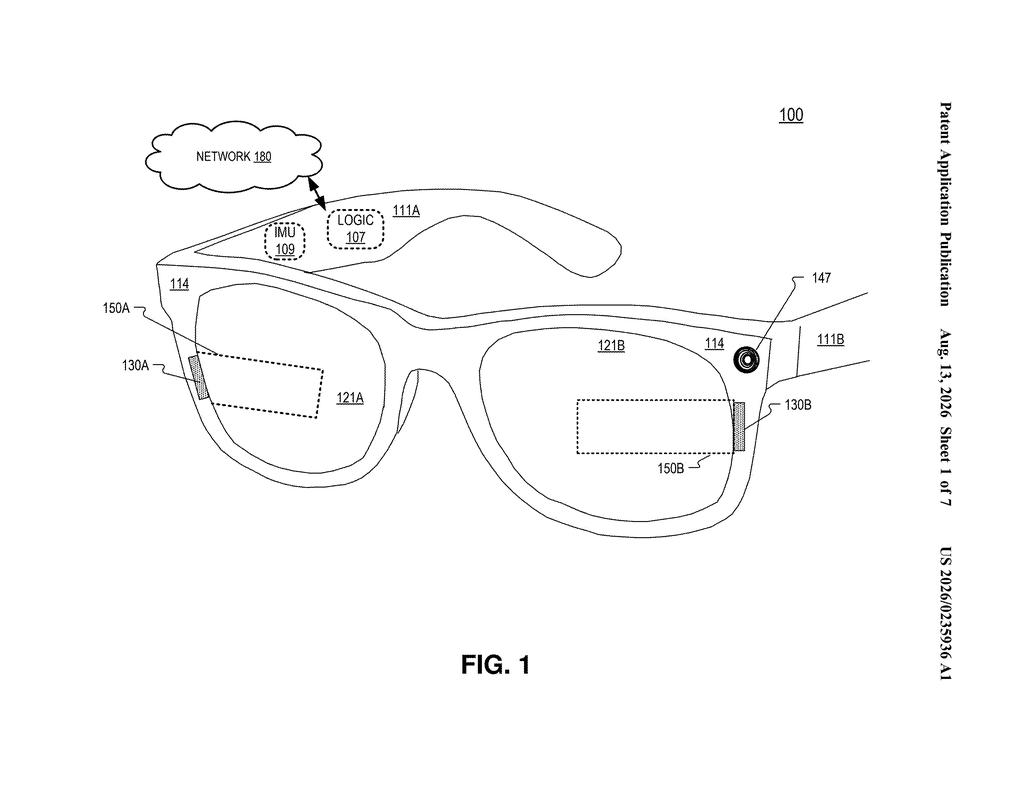
What Meta's exposed-lens camera design actually does
A security camera stares at an empty hallway all night, sealed behind thick protective glass that dulls the image and adds bulk. For a pair of AR glasses you actually want to wear in public, that kind of bulk is a dealbreaker.
Meta's patent describes a camera module where the front lens element is left open to the environment rather than enclosed in a traditional sealed barrel. Behind it sits an adjustable lens section that can shift focus, and then a third group of lenses closer to the image sensor. A protective sleeve wraps around part of the assembly to guard against bumps without sealing everything shut.
The payoff is a thinner, lighter camera that can still zoom or refocus, without the extra housing that normally adds millimeters to a device's profile. For something you clip onto your face all day, those millimeters matter.
a first lens group including a first lens element to be exposed to an external environment; an adjustable lens module; and a second lens group sharing an optical axis with the first lens group and the adjustable lens module …
Translation: The camera uses a series of lenses where the outermost piece is left completely uncovered and open to the outside air.
How the three-group lens stack focuses and adjusts
The patent describes a three-part lens arrangement inside a single camera module:
- First lens group: The front-most element, which faces the outside world directly with no protective cover glass in front of it. This is the "exposed" part the patent title refers to.
- Adjustable lens module: A middle section that can move or change optically (think of it like a zoom or autofocus mechanism sitting between the other two groups).
- Second lens group: Positioned between the adjustable module and the image sensor (the chip that actually captures the picture), this group handles final focusing onto the sensor.
All three groups share a single optical axis, meaning light travels in a straight line through the whole stack. A protective sleeve wraps around at least part of the lens assembly, offering some physical protection without the weight penalty of a full sealed housing.
The design trades the conventional sealed-barrel approach for a more open architecture. Removing the front cover glass or housing shrinks the total length of the module and can reduce the number of optical elements needed to compensate for that extra layer of glass.
A camera module includes a lens assembly and an image sensor. The lens assembly is configured to focus image light to the image sensor. A protective sleeve is disposed around at least a portion of the lens assembly.
Translation: The device uses a standard sensor and lens setup, but adds a protective sleeve around parts of the internal lens structure.
What this means for cameras in Meta's AR glasses
For a phone camera, a few extra millimeters of housing are invisible inside a thick body. For AR glasses, where the entire frame has to look like eyewear, every fraction of a millimeter spent on camera housing is a fraction stolen from battery, optics, or comfort. An exposed-lens design could let Meta pack a more capable camera into a slimmer frame than a conventional sealed module would allow.
The risk is durability: a front element sitting open to the world collects dust, condensation, and fingerprints more readily than a sealed system. Whether the protective sleeve is enough to handle real-world wear is the engineering bet this patent is placing. Meta's AR hardware push has generated a steady stream of camera and optics filings, and those following Big Tech patent news in the AR optics space will recognize this as part of a broader effort to shrink camera modules without sacrificing image quality.
The exposed-lens trade reads as calculated rather than careless: you give up a sealed, weather-ready housing and accept a more vulnerable front element in exchange for a thinner, lighter module. For a phone that lives in a pocket, that trade is probably a bad deal; for AR glasses that have to pass as normal frames, it may be the only path to a camera people will tolerate wearing. The sleeve offers partial protection, but dust on an unprotected front element in a product worn outdoors daily is a maintenance problem Meta still has to solve in manufacturing.
Get our take in your Top Stories
Liked this breakdown? Add Patentlyze as a preferred source on Google, and our plain-English take shows up more often in your Top Stories the next time Meta patent news breaks.
There are more where this came from
We read every patent application Big Tech publishes and send you the ones worth knowing. Plain English, free, every week.
The drawings
7 drawing sheets from US 2026/0235936 A1 · click any drawing to enlarge


Want this weekly breakdown for a company we don't cover? Patentlyze Pro →
Be the first to weigh in