
Microsoft Patents a Form Auto-Fill System That Loads Answers Before You Type
What if your device already had the right answers loaded before your fingers touched the keyboard? A new Microsoft patent describes exactly that, a system that fetches autocomplete suggestions for a form field before you start typing, then handles everything locally without going back to the server.
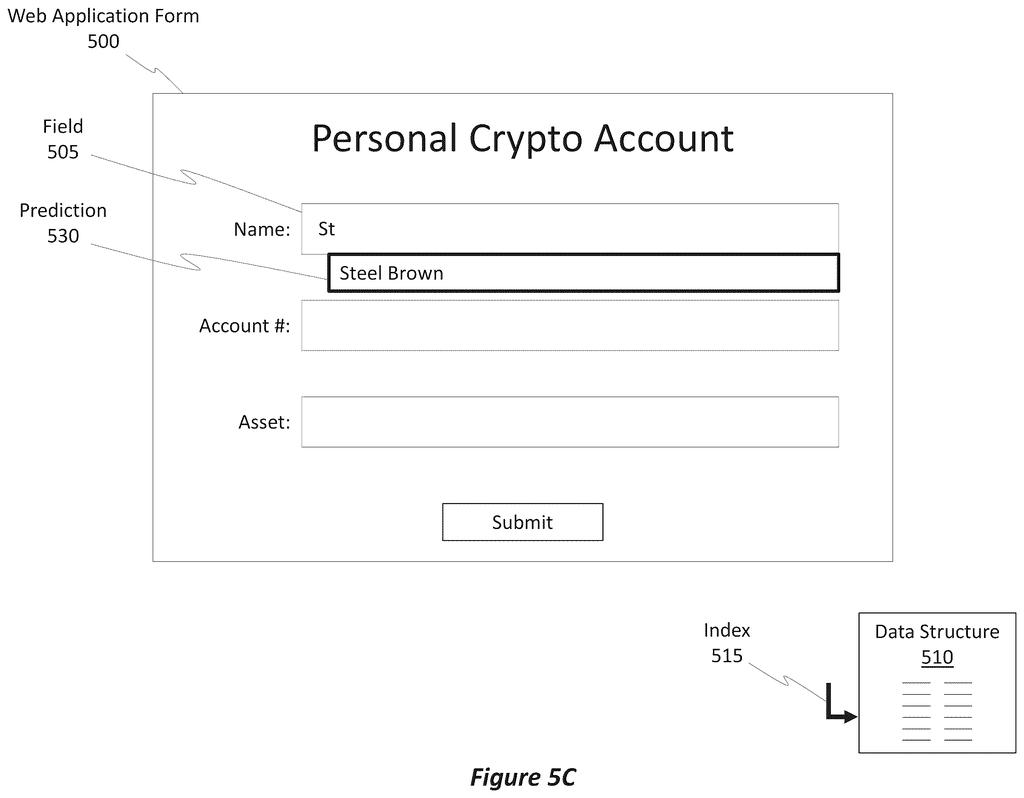
How Microsoft's pre-loaded form suggestions work
Every time you click into a form field on a website, your device often fires off a request to a server to fetch suggestions, and that round trip takes time. On a slow connection, or when the server is busy, those suggestions arrive late or not at all.
Microsoft's patent describes a different approach. The system fetches a full bundle of autocomplete suggestions for a field before you even click on it. That bundle gets stored on your device. The moment you start typing, your device searches through its local copy instantly, no waiting for the internet.
Once your device has that local bundle, it stops sending requests to the server entirely, until you finish filling in the field. That cuts down on back-and-forth network traffic and means suggestions pop up the instant you need them, even when your connection is patchy.
… prior to receiving user input directed to the field, receiving, from the server, an indexed data structure comprising a set of autocomplete predictions that are tailored to operate as the data value for the field …
Translation: The system downloads a list of potential answers to your web form before you even start typing anything.
How the client caches and queries predictions locally
The patent outlines a two-state system that governs when a device is allowed to ask a server for autocomplete data and when it goes quiet.
- Active state: The device is permitted to contact the server and request prediction data.
- Pre-fetch: Before the user types anything, the server sends down an indexed data structure (think of it as a pre-sorted lookup table) containing every autocomplete candidate the field might need.
- Paused state: Once that bundle arrives, the device stops all outbound requests for that field. It will not ask the server for more suggestions until the field is fully filled in.
- Local query: As the user types, the device searches its local copy of the lookup table using whatever characters have been entered, returning a matching suggestion in milliseconds.
The claim is specific about timing: the paused state kicks in after the pre-fetch arrives but before the user types a single character. The device shows an initial suggestion right away, then refines it as letters are entered, all from the cached data.
When the field is completed and a suggestion is accepted, the device returns to the active state, ready to fetch fresh data for the next field in the form.
The service causes the client device to then operate in a paused state. The indexed data structure is saved locally. The service then locally queries the locally saved data structure to display predictions for the field and avoids sending network calls to the server for more predictions.
Translation: Your device stops asking the server for help and instead uses the saved data to guess what you want to type.
What this means for web forms in Microsoft products
Form auto-fill is one of those features people notice only when it breaks. Laggy suggestions, missing options, or suggestions that pop up after you have already finished typing are daily annoyances on mobile and on slow office networks. This patent addresses that gap by moving the work off the network and onto the device.
For Microsoft, the obvious application is the web version of its productivity tools, forms inside SharePoint, Teams, or Outlook where address books, project names, or catalog entries typically require multiple server calls as you type. The new tech patents covering form-input optimization from major enterprise software companies are a steady thread, and this one sits squarely in that space, aiming to make data-entry feel as instant on a corporate VPN as it does on a local desktop app.
Microsoft's 359th filing in our Microsoft coverage since May adds to a run that includes a memory-access speed rule and a cross-chip fetch limit for video encoders.
Claim 1 is fairly specific in its mechanics: the paused state must begin after the pre-fetch lands and before any user keystroke, and it must hold until the field is fully populated. That sequence is tight enough that a competitor could sidestep it by triggering the pause slightly later, say after the first character, and still deliver most of the same user benefit.
What the claim does block, if granted, is the particular pattern of pre-fetching the whole prediction bundle, transitioning to a frozen-request state before typing begins, and then querying that bundle locally. That is a real and useful pattern, especially for enterprise software where forms are long and network calls are expensive.
The grant likelihood is medium at best. The USPTO will look hard at prior art in browser autocomplete systems, and the core idea of caching suggestions client-side is not new. The novelty here lives in the precise state-machine sequencing, and whether that is enough to clear the bar is genuinely uncertain.
There are more where this came from
We read every patent application Big Tech publishes and send you the ones worth knowing. Plain English, free, every week.
The drawings
12 drawing sheets from US 2026/0252795 A1 · click any drawing to enlarge


Want this weekly breakdown for a company we don't cover? Patentlyze Pro →