
Microsoft Files Patent for a Headset That Tightens Its Fit Using a Rolling Chain
Microsoft wants to resize a VR headset the way you might tug a bead-chain necklace, swapping the bulky central mechanism for a ball chain that loops around a curved track.
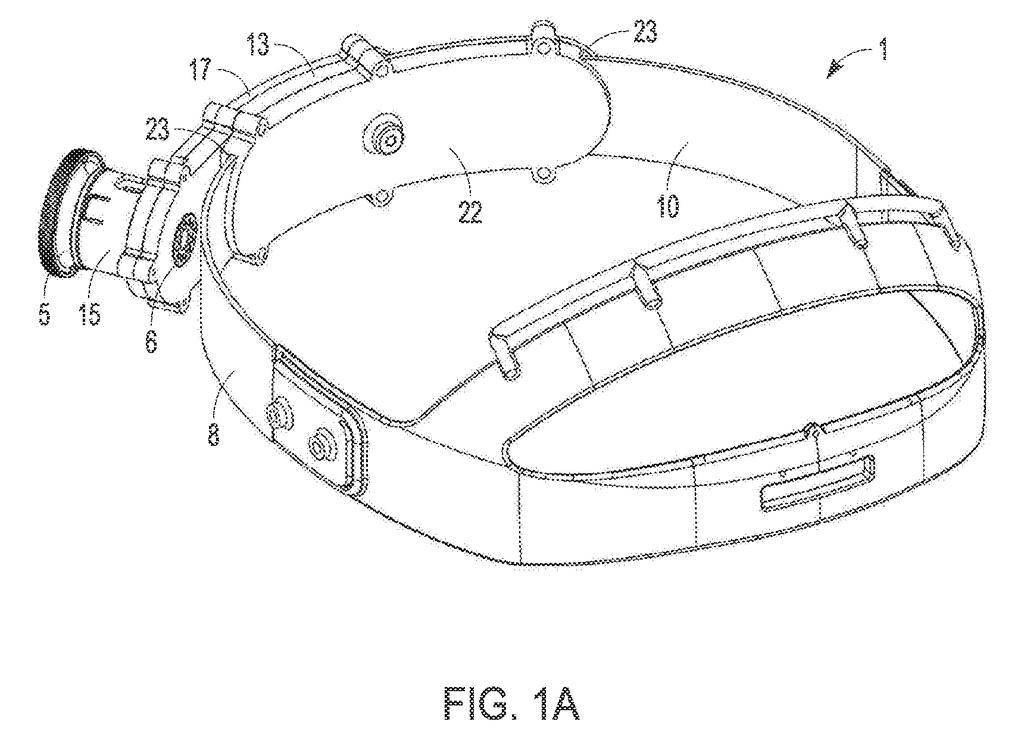
What Microsoft's ball-chain headset dial does
Imagine slipping on a VR headset and finding the band too loose. You reach to the side, turn a small dial, and both sides of the headset glide in or out until the fit feels right, with no pinching and no fumbling at the back of your head.
That is the experience Microsoft's patent application is aiming for. Most headsets today tighten with a mechanism built around a central dial, and the filing says that setup eats up a lot of room inside the headset. Microsoft's version moves the dial to the side and connects it to the headset's two arms with a ball chain, the same kind of bead chain you see on a pull-cord or a dog tag.
Turning the dial moves the chain, the chain turns a gear, and the gear slides the arms together or apart. Because the chain can bend around curves easily, the whole thing fits along the curve of your head.
… translating a ball chain along the first sprocket and a second sprocket responsive to rotation of the first sprocket, wherein the ball chain engages the first sprocket and the second sprocket such that the ball chain applies torque to the second sprocket as the ball chain translates along the first sprocket and the second sprocket; …
Translation: A beaded chain moves between two gear wheels to transfer turning force across the headset.
How the ball chain tightens and loosens the band
The patent describes a fit-adjustment mechanism for an AR/VR headset. It starts with a rotating actuator (a small dial) that has a driver gear on it. That gear turns a first sprocket, a toothed wheel with pockets shaped to catch the balls of the chain.
As the first sprocket turns, the ball chain travels along a curved channel and spins a second sprocket at the other end. The second sprocket is joined to a transmission gear, which meshes with teeth cut into the inside of two overlapping arms. When the gear turns, it pushes one arm one way and the other arm the opposite way at the same time.
A few supporting parts keep this working:
- Leaf springs (thin, flexible strips of material) press on the chain to keep it taut.
- Three curved supports (inner, middle and outer) hold the chain, sprockets and arms in place.
- A pin anchors the second sprocket and gear so they spin in place.
Turning the dial one way makes the arms overlap more, shrinking the headset. Turning it the other way makes them overlap less, enlarging it. All three independent claims are written as methods of adjusting the headset this way.
A first arm includes a first set of internal gear teeth, and a second arm includes a second set of internal gear teeth. The transmission gear engages the first and second sets of gear teeth such that rotation of the transmission gear moves the second arm relative to the first arm.
Translation: Interlocking gears push two parts of the headset frame closer together or further apart.
Why a side dial could free up headset space
For you, the main payoff is comfort. The filing says the design moves the dial to the side of the headset, where it is easy to reach, and that the arms move together so pressure spreads evenly around your head. That matters when you wear a headset for an hour or more.
For Microsoft, the pitch is space and cost. The filing says the old central mechanism forces a dial through the main circuit board, and moving it out frees room for electronics and could allow a more compact device or new features. It also says the design could lower production costs. The ball chain has no length limit, so the adjustment range isn't capped by the size of a cable spool.
Microsoft's 16th filing we've tracked since May in the AR glasses race builds on earlier applications covering animating avatars on calls and adaptive headset instructions.
A ball chain running between two sprockets, plus springs and curved supports, adds more small moving parts than a simple cable-and-dial setup. Each additional piece is another place where grit, wear, or a skipped link can cause problems after months of daily use.
The patent makes a reasonable case for the added complexity: the chain produces less friction than a nylon cable, cannot tangle, and frees up a few millimeters inside the headset where space directly affects fit and optics. Those are real functional gains.
The filing offers no durability data, though, so the trade reads as promising but unproven. For a mechanism most users will adjust every single day, that gap matters more than it would on almost any other part of the headset.
Get our take in your Top Stories
Liked this breakdown? Add Patentlyze as a preferred source on Google, and our plain-English take shows up more often in your Top Stories the next time Microsoft patent news breaks.
There are more where this came from
We read every patent application Big Tech publishes and send you the ones worth knowing. Plain English, free, every week.
The drawings
18 drawing sheets from US 2026/0319545 A1 · click any drawing to enlarge


Show the other 10 sheets


Want this weekly breakdown for a company we don't cover? Patentlyze Pro →
Be the first to weigh in