
Microsoft
Microsoft · Software · Filed Jul 21, 2026 · USPTO published Nov 12, 2026 · This week's release
Microsoft Patents a Chatbot That Jumps In When You Get Stuck in an App
Most chatbots sit in a corner and wait for you to ask a good question. In this Microsoft patent, the app itself notices you're in trouble, calls the chatbot, and hands over everything it knows about what went wrong.
- Publication number
- US 2026/0359579 A1(US20260359579A1)
- Applicant
- Microsoft Technology Licensing, LLC
- Filed · Published
- Jul 21, 2026 · Nov 12, 2026
- Inventors
- Constantin MIHAI, Nagarajan MANI, Deepak BANSAL, Madhusudhan Reddy AVANCHA
- Status when we published
- Waiting for an examiner
- Document
- 20 claims
- US classification
- 704/9
- Parent application
- Continuation of 18/166,309 (filed Feb 8, 2023)(18166309)
What Microsoft's self-summoning chatbot does
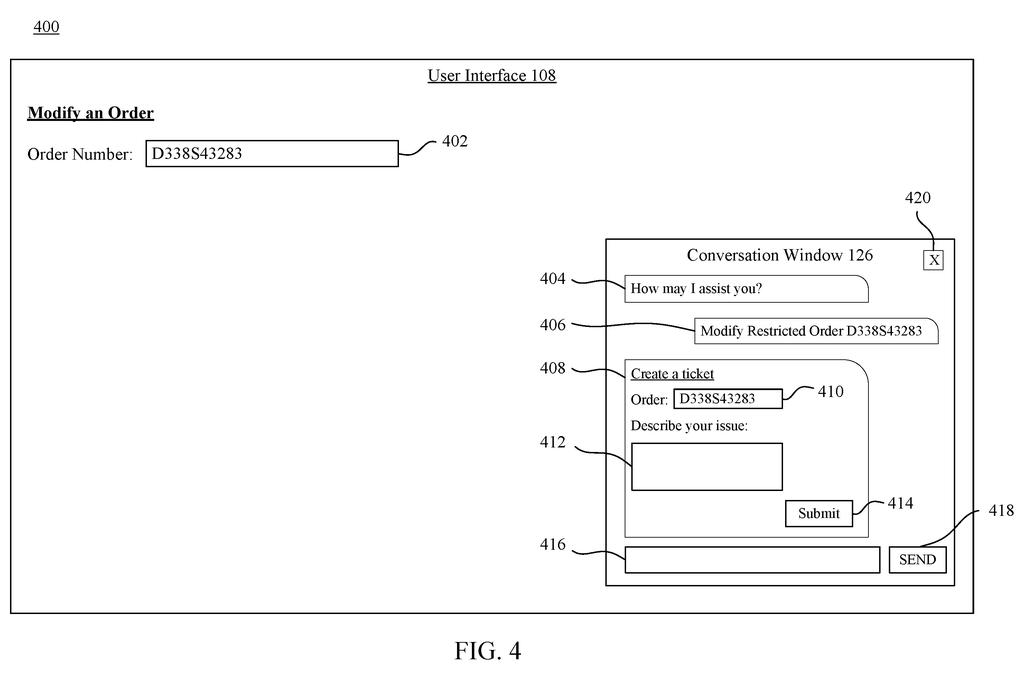
Imagine you're a customer support agent trying to change an order, and the system suddenly refuses because the order is restricted. You aren't sure why, and you wouldn't know what to ask a help bot even if you spotted one in the corner of the screen.
Microsoft's patent has the app handle that part. When you break a rule, hit an error, or sit idle too long, the app opens a chatbot for you and passes along what it knows: who you are, what you were doing, and the order number. The chatbot then shows a ready-made support-ticket form with the order number already filled in.
You check it, fix anything that's off, and keep going. Once the problem is sorted, the chat window can close and you're back in your original form.
responsive to determining that contextual information associated with a user interaction with a first application violates a rule, transmit, to a chatbot application, the contextual information associated with the user interaction …
Translation: When your app usage breaks a specific rule, it sends your current activity over to the chatbot.
How the app hands its context to the chatbot
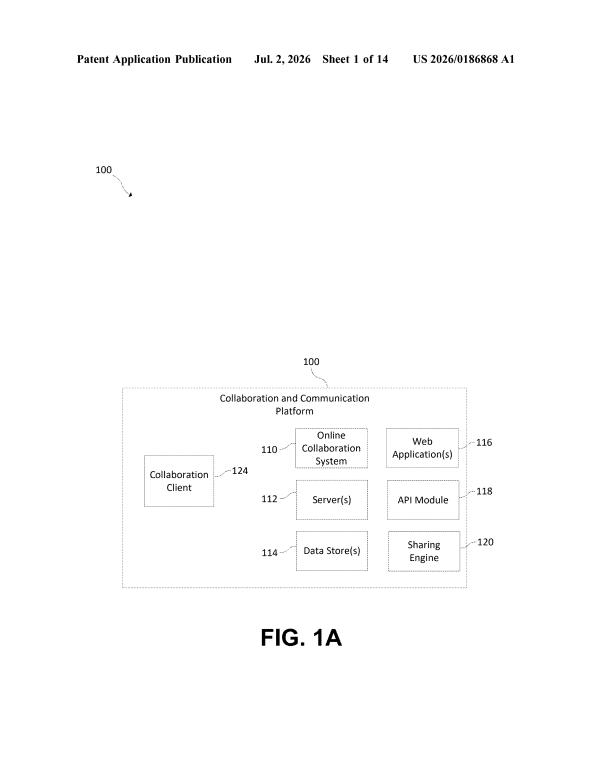
The patent describes two pieces of software working together. A host application (the program you're actually using, such as a web form) watches what you do and checks it against rules. The claims cover the case where your input violates a rule: the app then sends the surrounding details, called contextual information, to a chatbot application.
The chatbot sends back a populated conversational workflow (a scripted series of chat steps and form controls) with at least one control already filled in using those details. The app shows it in a window, collects what you type or click, and passes it back so the chatbot can move to the next step.
The filing also describes several variations:
- Triggers can be an error, a business rule, invalid input, or an idle timer.
- The chatbot can work out your intent (the reason you need help) using natural language processing (software that reads text for meaning), then pick a workflow from a library.
- Details can arrive as attribute-value pairs, such as a field name and its value, that map to specific form fields.
- The app can show a deep link (a link that opens a specific destination) that launches the chatbot with the context attached.
During chatbot invocation, the application provides contextual information to the chatbot to select a conversational workflow and input data to populate the controls of the selected conversational workflow.
Translation: The app hands over your context so the chatbot can pick the right help workflow and fill in the blanks.
Why prefilled help matters in work software
If a product like this appears, the practical change is that help finds you. In workplace software full of permission checks and strict forms, you would get a chatbot that already knows your account, your task and the entry that tripped the rule, so you don't have to describe the problem from scratch.
For software teams, the appeal is control. The developer who wrote the rules also decides when the chatbot appears and which workflow it runs, so the help is tied to real trouble spots instead of a general chat box. The filing's main example is a support agent changing a restricted order and getting a support ticket form with the order number prefilled.
Microsoft's 633rd filing in our Microsoft coverage since May follows applications like light-based AI chips and modular AI model add-ons.
Source: US 2026/0359579 A1 at the USPTO (PDF). Full patent text and figures are in the official publication.
Get our take in your Top Stories
Liked this breakdown? Add Patentlyze as a preferred source on Google, and our plain-English take shows up more often in your Top Stories the next time Microsoft patent news breaks.
Add Patentlyze on Google
One click.
There are more where this came from
We read every patent application Big Tech publishes and send you the ones worth knowing. Plain English, free, every week.
The drawings · 7 sheets
7 drawing sheets from US 2026/0359579 A1 · click any drawing to enlarge


More from Microsoft
All 646 Microsoft patents →

More in Software
All 753 Software patents →
Samsung
Samsung Files Patent for a TV That Stops Listening Once You Get What You Asked For
Apple
Apple Patents a Notification System That Knows When to Get Out of the Way
Samsung
Samsung Files Patent to Make Your TV Cursor Jump Ahead to Where You're Headed
Samsung
No comments yet