
Microsoft
Microsoft · Display · Filed May 8, 2025 · USPTO published Nov 12, 2026 · This week's release
Microsoft Files Patent for AI Chips That Multiply Numbers With Light
Microsoft describes a device where a tiny display shines light through a slab of tinted filters, and the brightness that comes out is the answer to a multiplication problem. The goal is to take some of the heaviest math in AI off the chip entirely.
- Publication number
- US 2026/0359597 A1(US20260359597A1)
- Applicant
- Microsoft Technology Licensing, LLC
- Filed · Published
- May 8, 2025 · Nov 12, 2026
- Inventors
- Teresa A. NICK
- Status when we published
- Waiting for an examiner
- Document
- 20 claims
- US classification
- 706/27
What Microsoft's light-based multiplier actually does
You ask a chatbot to translate a paragraph. Somewhere in a data center, a graphics chip is multiplying millions of pairs of numbers, and much of its time goes to fetching those numbers from memory.
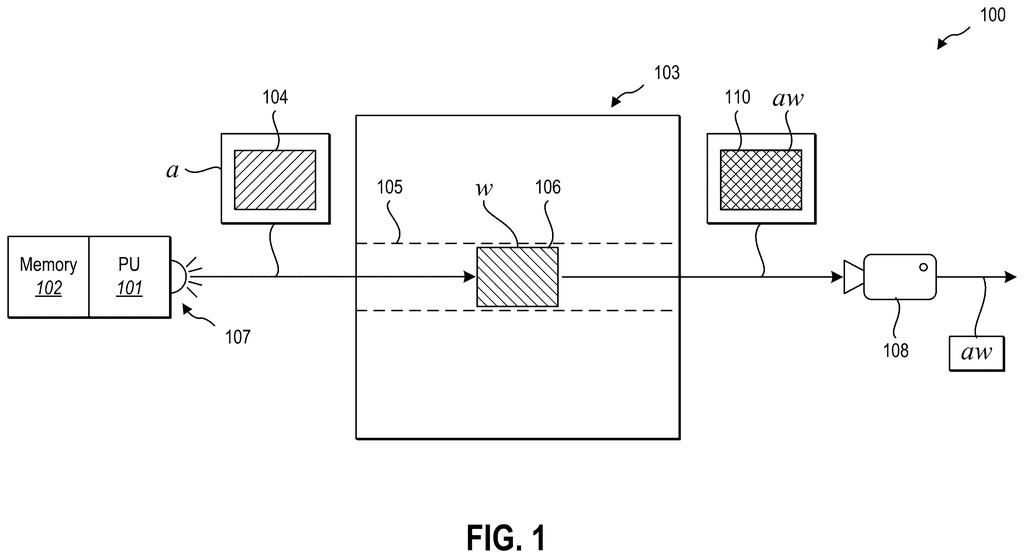
Microsoft's patent application tries a different route. A tiny display shows a number as a pattern of bright and dim lights. That light shines through a slab with small tinted windows, and the tints are permanently set to match what the AI model has already learned. A light sensor on the other side reads how bright each spot is.
Here's the trick: brightness adds up on its own, and a piece of school math (logarithms) turns adding into multiplying. So the sensor's reading, plus a quick final step, is the answer to the multiplication, with no chip crunching the numbers.
an input layer including at least one emitter for displaying electromagnetic signals encoded via an intensity of electromagnetic energy, wherein the at least one emitter is configured to emit electromagnetic energy at a low intensity, and to emit electromagnetic energy at a high intensity that is greater than the low intensity; …
Translation: The input part uses lights of different brightness levels to represent data signals.
How tinted filters turn addition into multiplication
The claimed device is built in layers. An input layer holds emitters (tiny light sources such as micro LEDs) that glow at either a low or a high brightness. Each emitter sends its light into an optical passage, a small channel through a slab of material. The filing compares these channels to through-silicon vias, the vertical holes chipmakers already drill, left empty so light can pass.
Inside each channel sits an optical filter with either high or low opacity (how much light it blocks). Together these filters form the static layer, which hard-codes the numbers an AI model has learned, called weights. Photodetectors in a detecting layer then measure the brightness that gets through, which lands on one of three levels:
- Dim light through a dark filter: the lowest level (0+0).
- Dim light through a clear filter, or bright light through a dark one: the middle level (1).
- Bright light through a clear filter: the highest level (2).
That lets light add two binary digits at once. To turn the addition into multiplication, the system first converts the input and the weight into logarithms (adding two logs gives the log of their product). The sensor reads the sum, and a final step reverses the logarithm to give the product. The method claims apply this to a whole layer of an AI model, then add up the results and pass them to the next layer.
The static layer includes a substrate having at least one optical passage therethrough corresponding with the at least one emitter. The input layer and the static layer are optically coupled such that the at least one emitter emits electromagnetic energy into the at least one optical passage.
Translation: Light from the input shines directly through specific channels in a stationary layer.
What Microsoft's light trick means for AI chips
If it worked as described, the payoff lands in the data centers that run AI models for you. The filing says one of the slowest parts of AI today is fetching huge tables of numbers from memory, and a fixed optical layer means those learned numbers never get fetched at all. It also says the approach could allow simpler processors in place of top-end graphics chips, and that the non-electronic layer could save energy.
The catch is that the filters are set in advance, so this suits running a finished model more than training one. The filing points back to two earlier applications on adding up signals with light, so Microsoft keeps filing on light-based computing, though nothing here names a product.
Microsoft's 26th filing we've tracked since July in the AI chip wars watchlist follows one using idle gaming PCs and one routing by green energy.
Source: US 2026/0359597 A1 at the USPTO (PDF). Full patent text and figures are in the official publication.
Get our take in your Top Stories
Liked this breakdown? Add Patentlyze as a preferred source on Google, and our plain-English take shows up more often in your Top Stories the next time Microsoft patent news breaks.
Add Patentlyze on Google
One click.
There are more where this came from
We read every patent application Big Tech publishes and send you the ones worth knowing. Plain English, free, every week.
The drawings · 11 sheets
11 drawing sheets from US 2026/0359597 A1 · click any drawing to enlarge


Show the other 3 sheets


More from Microsoft
All 646 Microsoft patents →
More in Display
All 730 Display patents →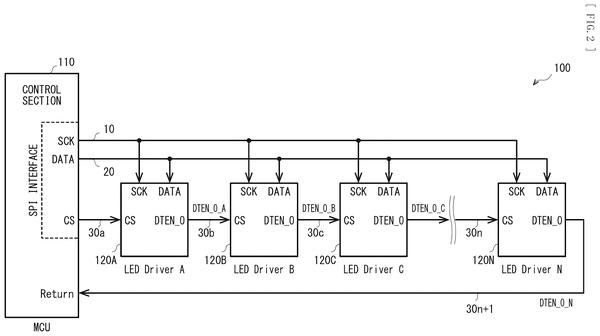
Sony
Sony Patent Connects Daisy-Chained Display Chips Through a Single Control Line
Intel
Intel Patents an AI System That Picks the Right Chip for Every Car Screen Task
Sony
Sony Files Patent for 3D Screens That Flash Their Backlight to Cut Ghosting
Sony
No comments yet