
Microsoft Patents Synthetic DNA Tags That Log a Product's Entire Supply Chain Journey
Imagine if every head of lettuce carried an invisible molecular diary of every farm, warehouse, and truck stop it passed through. That's essentially what Microsoft is patenting — using synthetic DNA as a physical tracking label you can decode like a barcode.
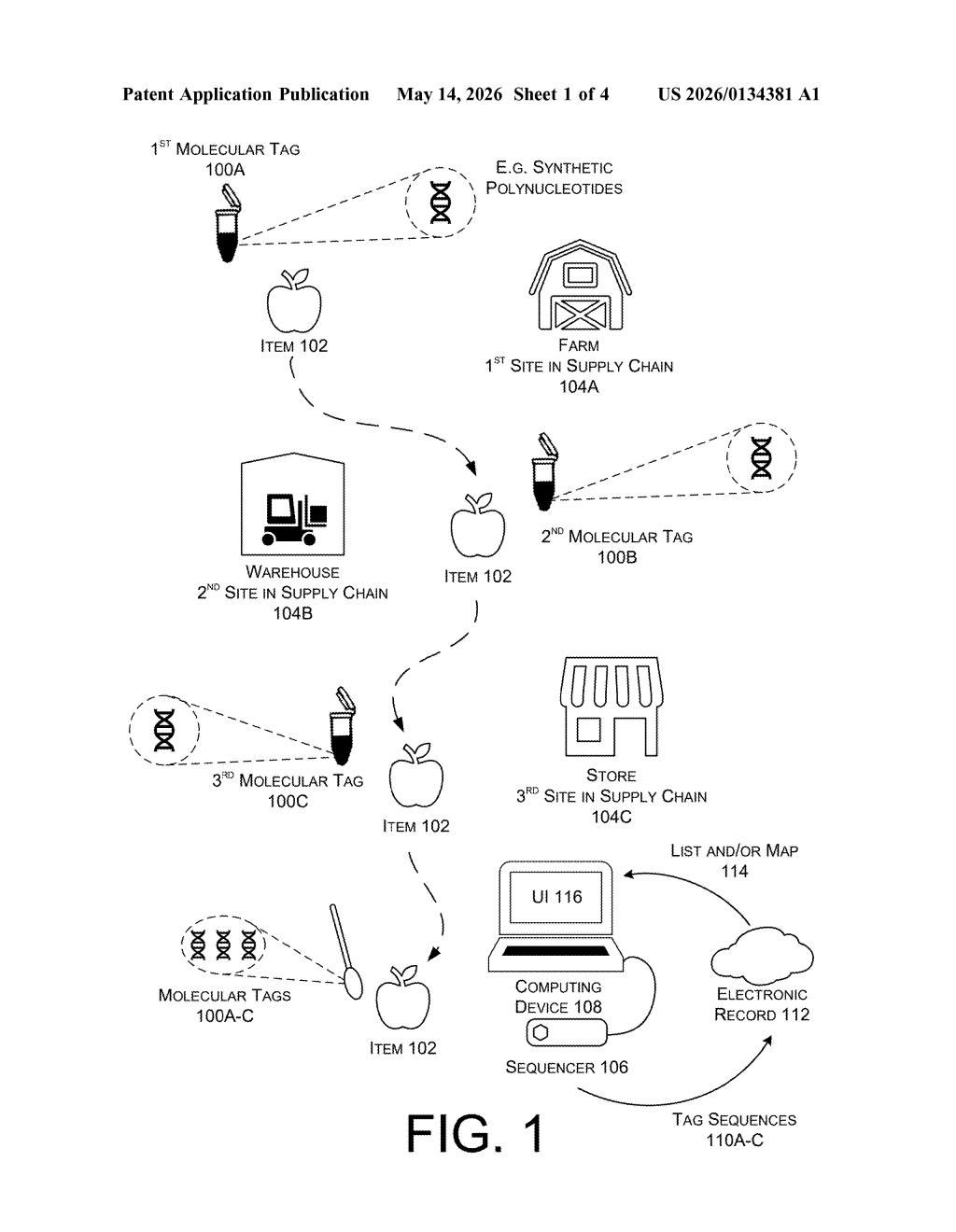
What Microsoft's DNA supply chain tags actually do
Think about the last big food recall — romaine lettuce, deli meat, frozen fruit. Health officials usually spend days tracing which farms and distribution centers were involved, and consumers have no way to know if the bag in their fridge is safe. Microsoft's patent describes a system that could change that.
The idea is to apply tiny synthetic molecular tags — engineered DNA sequences — to a product at each stop in its journey: the farm, the processing plant, the distribution hub. Each tag is unique to that location. The tags accumulate on the item like stamps in a passport, building up a physical record of everywhere it has been.
When a recall happens, you collect those tags from a suspect item and run them through a DNA sequencer. The sequences are matched against a cloud database that maps each tag to a specific location. If any of those locations are tied to the recall, the item is flagged automatically. No paperwork, no guesswork — just chemistry.
How Microsoft sequences tags to trace recalled items
At the core of the system are synthetic polynucleotides — artificially designed DNA or similar molecules — that act as unique identifiers. Unlike a printed barcode (which can be removed or damaged), these molecular tags physically adhere to the item or its packaging and can survive the supply chain journey.
Here's how the process works step by step:
- Tagging: At each supply chain site (a farm, a processing facility, a warehouse), a unique synthetic molecular tag is applied to the item.
- Recording: The association between that tag's sequence and the specific location is stored in an electronic record — think of it as a cloud-hosted lookup table.
- Collection and sequencing: When an item needs to be traced, the tags are collected from it and fed into a DNA sequencer (a device that reads the chemical letters of a DNA molecule). The output is a set of tag sequences.
- Lookup: Those sequences are compared against the electronic record to reconstruct the item's full route through the supply chain.
The recall-detection flow is essentially a set-intersection problem: if any of the item's tags map to a location flagged in a recall database, the item is marked as recalled. The patent is broad enough to cover any physical goods — food is explicitly called out, but the system applies to any item.
What this means for food safety and product recalls
Food safety tracing today is slow and relies heavily on paper records and voluntary reporting. The FDA's FSMA 204 rule is pushing for faster digital traceability, but most solutions still depend on QR codes and databases that can be falsified. A physical molecular record that can't be easily spoofed or removed is a genuinely different approach — and it could shrink a multi-day recall investigation to hours.
For Microsoft, this slots neatly into its cloud and enterprise services strategy. The electronic record component is exactly the kind of workload Azure is built for. The inventor list includes researchers from Microsoft's DNA storage group, which has been working on DNA as a data medium for years — so this feels like a natural extension of existing internal research into a real-world logistics application.
This is one of the more genuinely novel patents in Microsoft's recent filings — it's not another LLM fine-tuning tweak or a UI patent, but a cross-disciplinary bet combining synthetic biology with cloud infrastructure. The DNA storage team at Microsoft has real credibility here, which makes this more than a paper patent. Whether the per-unit cost of synthetic DNA tagging can ever get low enough for commodity food items is the open question, but the core idea is sound.
Get our take in your Top Stories
Liked this breakdown? Add Patentlyze as a preferred source on Google, and our plain-English take shows up more often in your Top Stories the next time Microsoft patent news breaks.
There are more where this came from
We read every patent application Big Tech publishes and send you the ones worth knowing. Plain English, free, every week.
Want this weekly breakdown for a company we don't cover? Patentlyze Pro →