
Microsoft Patents a Way to Tune Your Device's Vibrations to a Specific Pitch
Most phones buzz with whatever vibration their motor happens to produce. Microsoft has filed a patent for a system that treats that buzz more like a musical note, letting software tune it to a precise pitch.
What Microsoft's vibration pitch tuning actually does
You're using a controller or a laptop and it vibrates to signal an alert, a button press, or a game event. That buzz feels generic because it almost always is: the motor just does what it does, and nobody told it what "note" to hit.
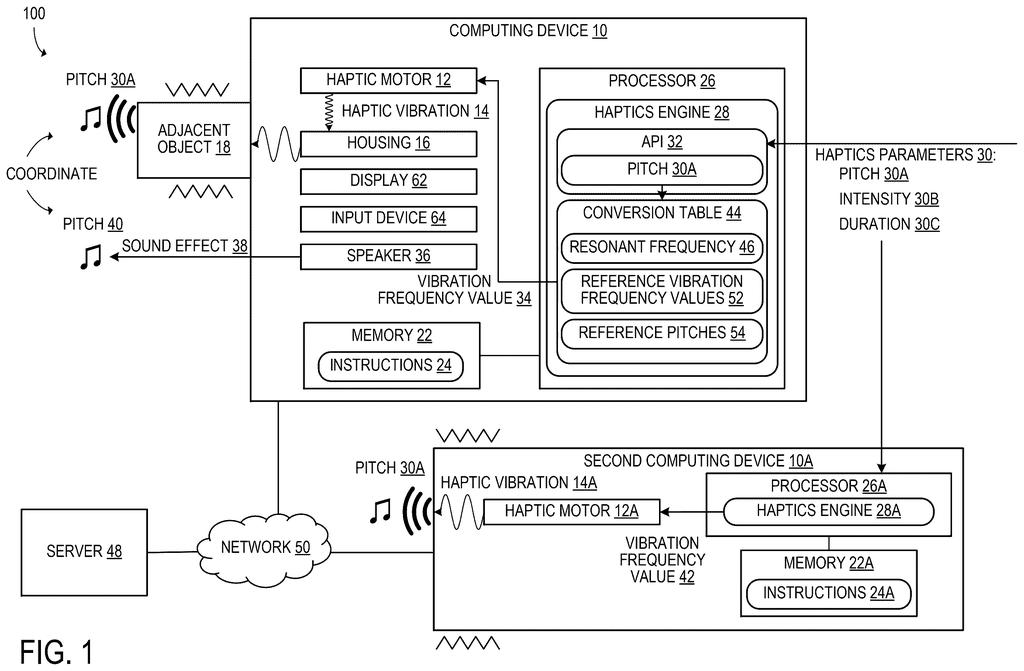
Microsoft's patent describes a system where the software explicitly sets a pitch for a vibration before it fires, the same way you'd pick a musical note. The device converts that pitch into the exact speed the motor needs to spin to produce that sound-frequency, then runs the motor at that speed. The result is a vibration tuned to a specific tone, not just "a buzz."
This means app developers could, in theory, assign different pitches to different types of alerts, so your device's physical feedback carries as much information as a sound effect does, but felt through your fingertips rather than heard through a speaker.
… receive haptic parameters including at least a pitch of a sound of the haptic vibration to be emitted; convert the pitch to a vibration frequency value; and control the haptic motor to emit the haptic vibration at the vibration frequency value such that the sound of the haptic vibration is tuned to match the pitch.
Translation: The system takes a desired sound pitch and turns it into a matching physical vibration frequency.
How the haptics engine converts pitch to motor frequency
The patent describes a haptics engine (a piece of software that controls the physical vibration motor) that accepts a new kind of input: a pitch value, expressed the way musicians think about notes rather than the way engineers think about motor speeds.
Normally, haptic systems work by telling a motor to run at a fixed power level or to follow a pre-recorded vibration pattern. This system adds a step: it takes the requested pitch and converts it to a vibration frequency value, meaning it calculates the exact number of oscillations per second the motor needs to produce to create that tonal sound when the device buzzes.
The motor is then driven at precisely that frequency. The key outcome is that the sound of the haptic buzz, the faint tone you can sometimes hear when a phone vibrates on a table, is no longer accidental. It is set deliberately to match whatever pitch the software requested.
- Software sends a pitch parameter (a musical or tonal value) to the haptics engine
- The engine converts pitch to a specific motor frequency
- The motor runs at that frequency, producing a vibration whose audible tone matches the target pitch
What this means for how devices give physical feedback
Right now, the physical feedback on most devices is a one-trick pony: a buzz is a buzz. This patent points toward a world where haptic feedback carries tonal information, the way a ringtone uses different notes to mean different things. An app could make a low-pitched rumble mean "warning" and a high-pitched tap mean "success," felt in your hands rather than just heard.
For gaming controllers, accessibility tools, and productivity devices, that distinction could add a real layer of communication. If you've ever wished your phone could tell you which app is buzzing without you having to look at the screen, this is the kind of technology that makes that possible.
Microsoft's second cell phone patent we've tracked since May follows their 3D video compression filing.
Haptic feedback on phones and controllers has been stuck at a single, generic buzz for years, and that limitation carries real costs: accessibility users who depend on physical cues get less information than sighted or hearing users do, and anyone in a loud environment loses a communication channel entirely. A buzz that can carry pitch, the way a tone carries meaning in speech, is a substantially richer signal.
Mapping a musical pitch value to a motor's vibration frequency is a direct answer to that gap. Developers who already think in audio terms can design physical feedback the way they design sound, without learning a new vocabulary.
Whether that matters in practice depends on whether enough developers actually build with it. A tuning system that sits unused helps nobody, and the filing itself cannot answer that question.
There are more where this came from
We read every patent application Big Tech publishes and send you the ones worth knowing. Plain English, free, every week.
The drawings
4 drawing sheets from US 2026/0299692 A1 · click any drawing to enlarge


Want this weekly breakdown for a company we don't cover? Patentlyze Pro →
Be the first to weigh in