
Microsoft's New Patent Carries Private Pre-Meeting Chats Into the Live Call
You've been whispering with a colleague in a private chat before a big call — and now Microsoft wants that conversation to follow you seamlessly into the meeting the moment a private thread with the same people opens up.
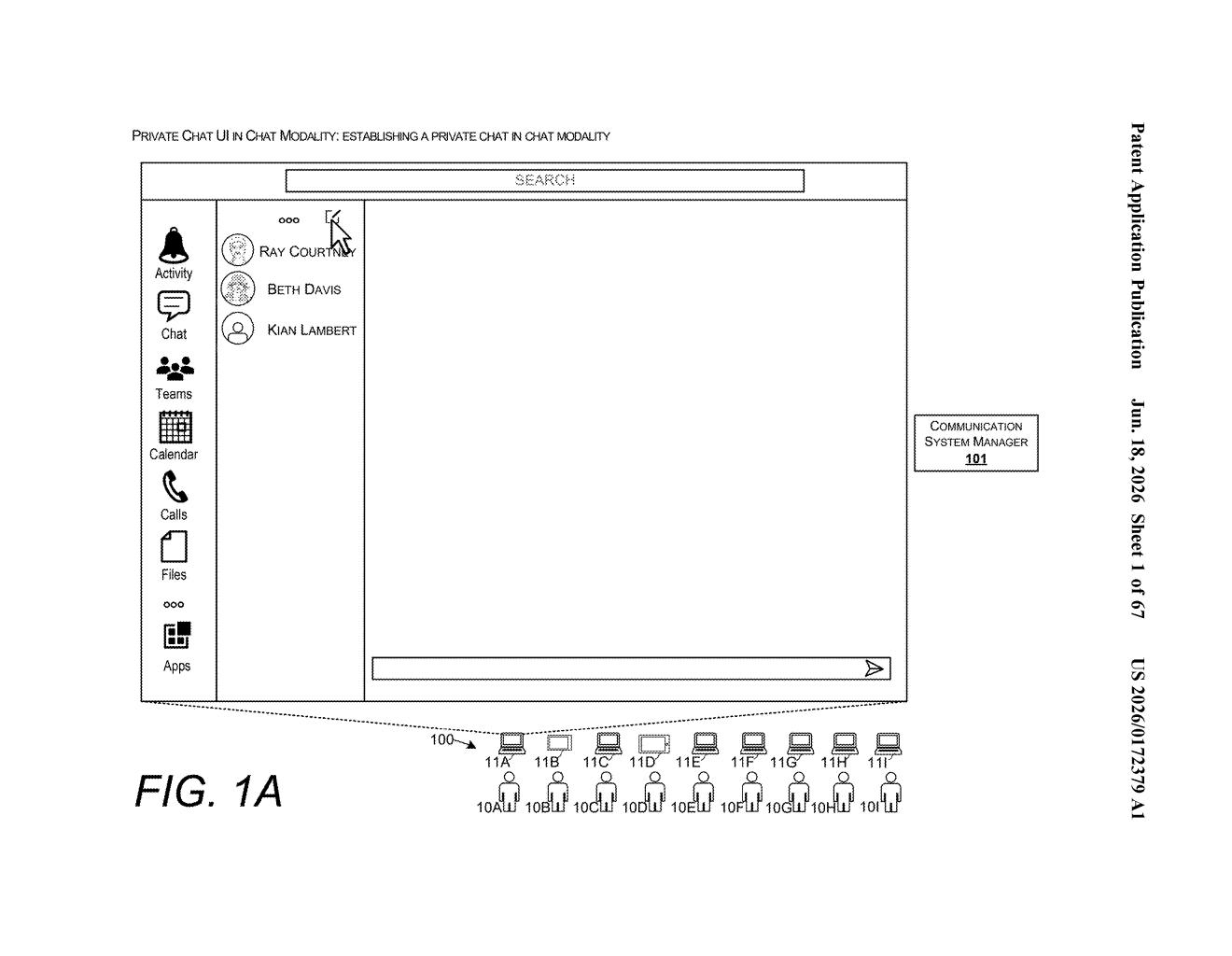
How Microsoft wants to unify your before-and-during meeting side chats
Imagine you and two coworkers are using Microsoft Teams to privately trade notes — "watch out for what the client asks about pricing" — before a meeting even starts. Right now, when the meeting begins and someone opens a new private group chat inside the call, that earlier conversation is gone from view. You'd have to dig back through your chat history to remember what was said.
Microsoft's new patent would fix that. If you open a private side chat during a meeting with the same people you were privately chatting with beforehand, the system automatically pulls in those earlier messages. No digging, no copy-pasting — your full private conversation history just shows up.
The key guardrail is the participant list. The pre-meeting and in-meeting private chats have to involve the same group of people. If they match, the two threads get merged into one continuous view. Everyone in that private group sees the full conversation, and nobody outside it can.
How the system links two private threads across the meeting boundary
The patent describes a system built around a meeting object — essentially a data record that governs who can see what, and when, across a meeting's entire lifecycle (before, during, and after).
Here's the basic flow:
- Before a meeting starts, a subset of attendees starts a first private thread. The meeting object logs their identities and grants only them read/write access to those messages.
- During the live meeting, that same group (or someone in it) opens a second private thread. The system checks whether the participant lists match against a configurable condition — for example, an exact match or a sufficiently large overlap.
- If the condition is met, the system creates a data structure linking the two threads and populates the in-meeting thread with the earlier messages. The result is one continuous private conversation spanning pre-meeting and in-meeting time.
Permissions stay locked throughout. The meeting object restricts the merged thread to only the participants in that private group — other meeting attendees, including the host, cannot see it. The patent also notes that the private thread persists after the meeting ends, giving participants a lasting record of both the before-call and during-call side conversation.
What this means for private conversations in Microsoft Teams meetings
For anyone who runs a lot of meetings — product reviews, client calls, board sessions — this solves a genuine workflow annoyance. Private coordination before a call and private coordination during a call currently live in two separate places. Bridging them automatically means less context-switching and a cleaner record of what was said and when.
For Microsoft, this is a relatively targeted improvement to Teams' chat-plus-meeting architecture. It doesn't reinvent anything, but it does make the private-chat feature more useful in enterprise settings where small groups inside larger meetings need their own persistent channel. If this ships, it would be one of those features that power users notice immediately and casual users might never think about.
This is a practical, unsexy improvement to a real pain point in collaborative meetings software. The technical approach — linking two thread objects and merging them when participant lists match — is straightforward, but the user experience payoff is real. Don't expect headlines, but do expect Teams power users to appreciate it.
There are more where this came from
We read every patent application Big Tech publishes and send you the ones worth knowing. Plain English, free, every week.
Want this weekly breakdown for a company we don't cover? Patentlyze Pro →